27 Wabi Sabi Bathroom Ideas That Feel Calm, Raw & Beautiful
Wabi sabi bathroom ideas open the door to a completely different way of thinking about design. Instead of chasing flawless surfaces, this approach celebrates texture, imperfection, and quiet character. Every rough edge or muted tone becomes part of the room’s charm. It’s a style built on individuality rather than uniformity.
There’s no single formula for this aesthetic, which is exactly what makes it so exciting to explore. From raw stone basins to handmade ceramic bowls, the possibilities stretch far beyond typical bathroom trends. Homeowners can mix textures, colors, and materials in endlessly personal ways. This variety keeps the style feeling fresh and inspiring for anyone who tries it.
Best Wabi Sabi Bathroom Ideas to Try
This section explores a wide range of wabi sabi bathroom ideas suited to different spaces and budgets. Some focus on materials, others on color, layout, or small decorative touches. Together, they offer a starting point for building a bathroom full of natural character.
Whether working with a full renovation or a few small updates, there’s an idea here for every situation. Each concept draws from the same core philosophy: imperfection, simplicity, and a connection to natural materials.
Natural Stone Sink Ideas
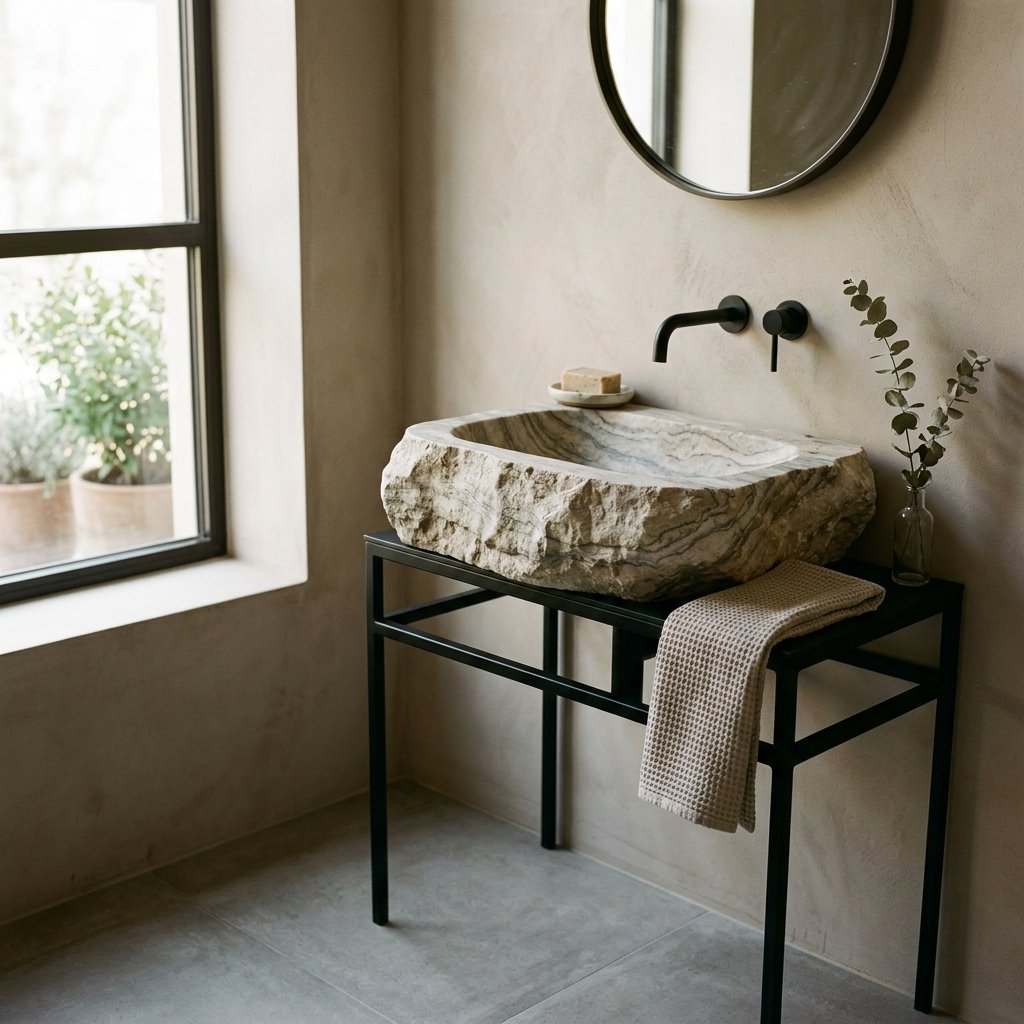
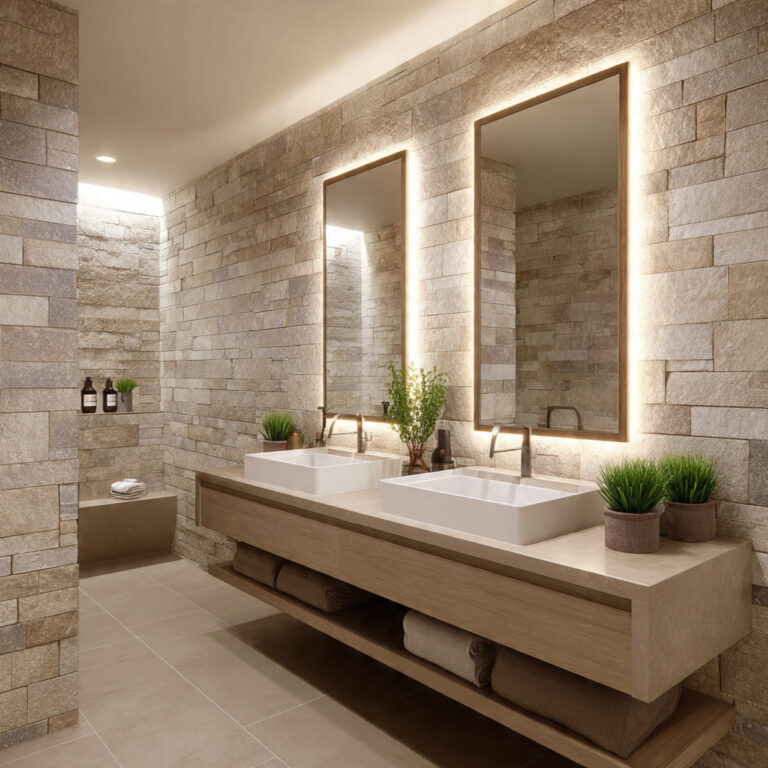
A natural stone sink is one of the easiest ways to bring wabi sabi character into a bathroom. Every basin carries unique veining, small pits, or uneven curves that machine-made sinks simply can’t copy. These imperfections aren’t flaws, they’re what give the piece its personality and story.
Choosing a stone sink in a soft, earthy tone keeps the overall palette calm and grounded. Pair it with simple brass or matte black fittings so the stone stays the visual centerpiece of the room.
Limewash Wall Finish Ideas
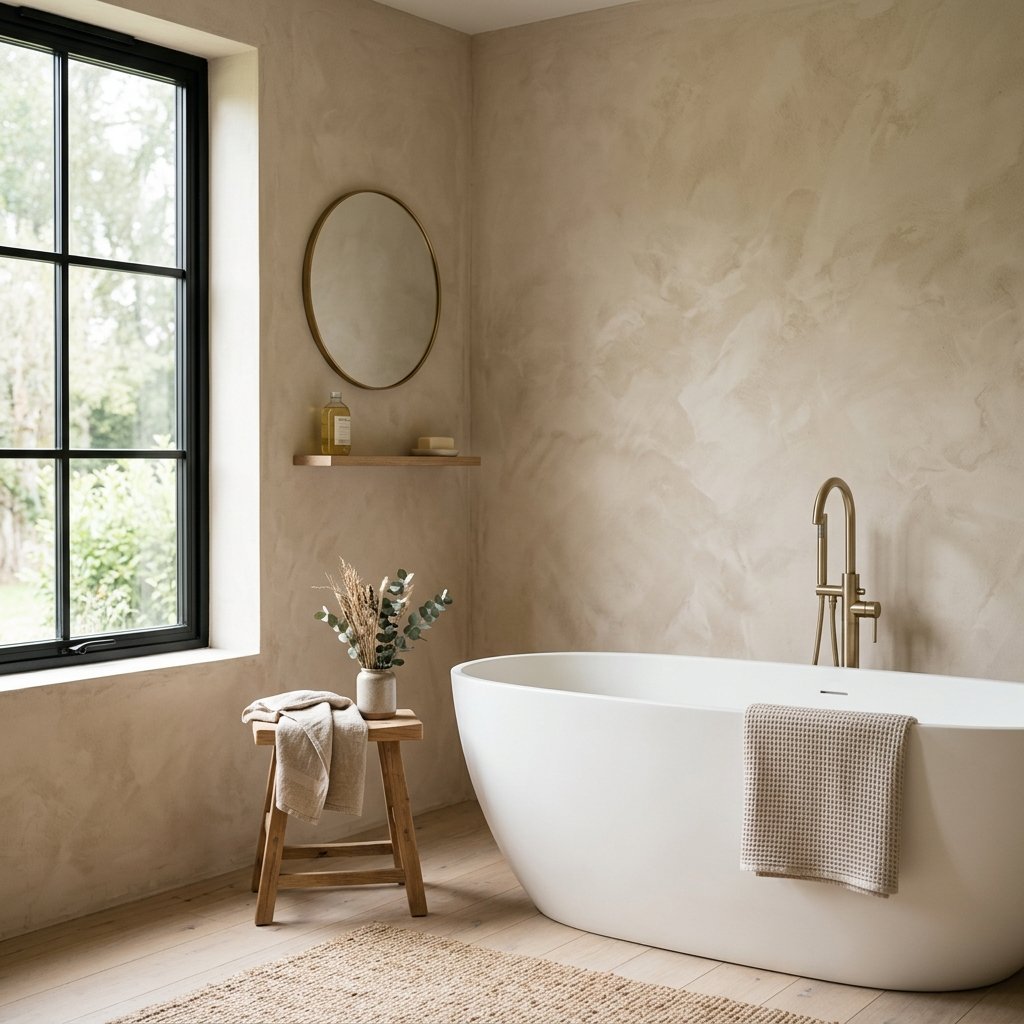
Limewash is a favorite finish for anyone building this style around soft, natural texture. The chalky surface reflects light differently throughout the day, creating subtle shifts in tone and mood. No two walls ever look exactly alike, which fits the philosophy perfectly. Even a single coat can transform a plain wall into something that feels lived-in and intentional.
Apply limewash in warm sand or muted clay shades for a cozy, lived-in feel. It works especially well as an accent wall behind a freestanding tub or open shower area.
Handmade Ceramic Bathroom Accessories Ideas
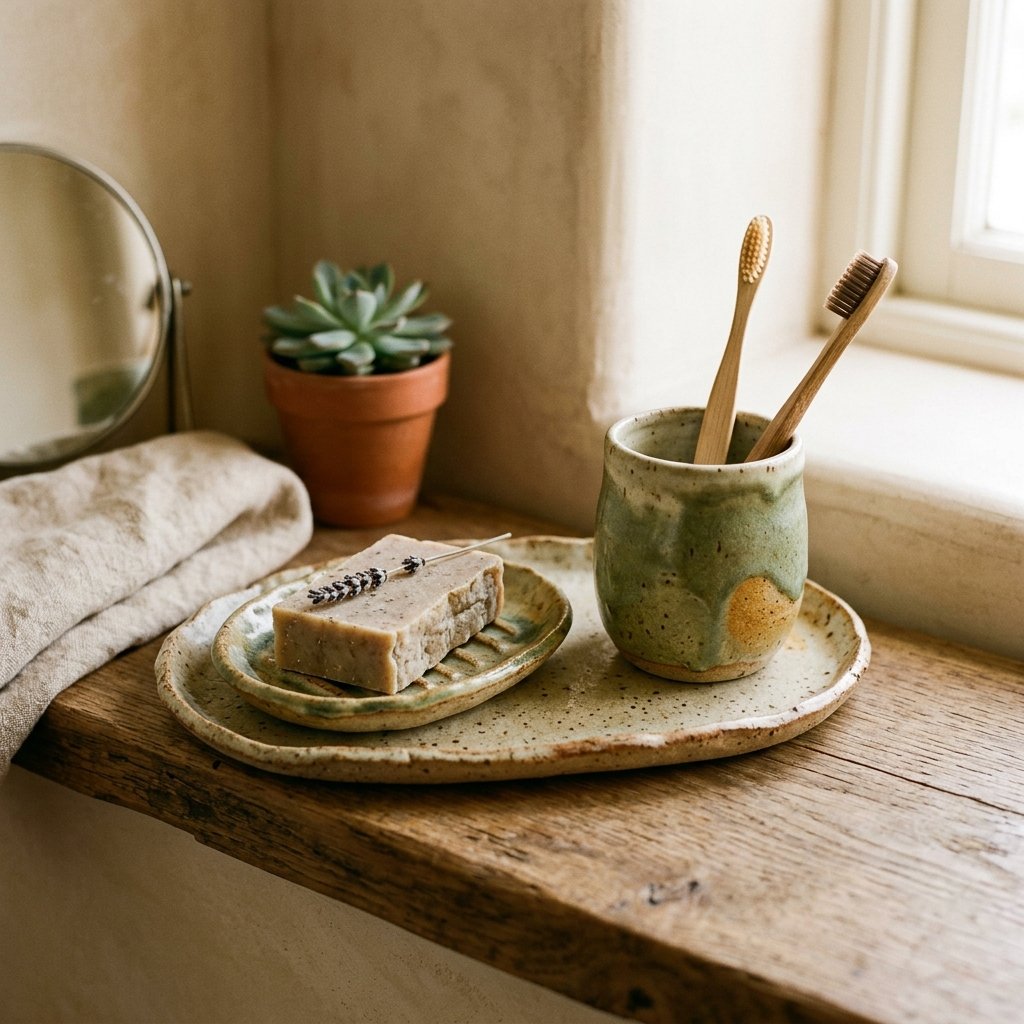
Small details matter in this style of space, and handmade ceramic accessories add that personal touch easily. Soap dishes, cups, and trays with slightly uneven shapes feel far more intentional than mass-produced plastic versions. Each piece looks like it was made with care rather than pulled off a factory line.
Look for ceramics with visible glaze drips, matte finishes, or muted earthy colors. These small objects quietly reinforce the room’s overall sense of warmth and authenticity.
Read More: 30 Sofa Trends Ideas That’ll Transform Your Living Room Instantly
Freestanding Stone Bathtub Ideas
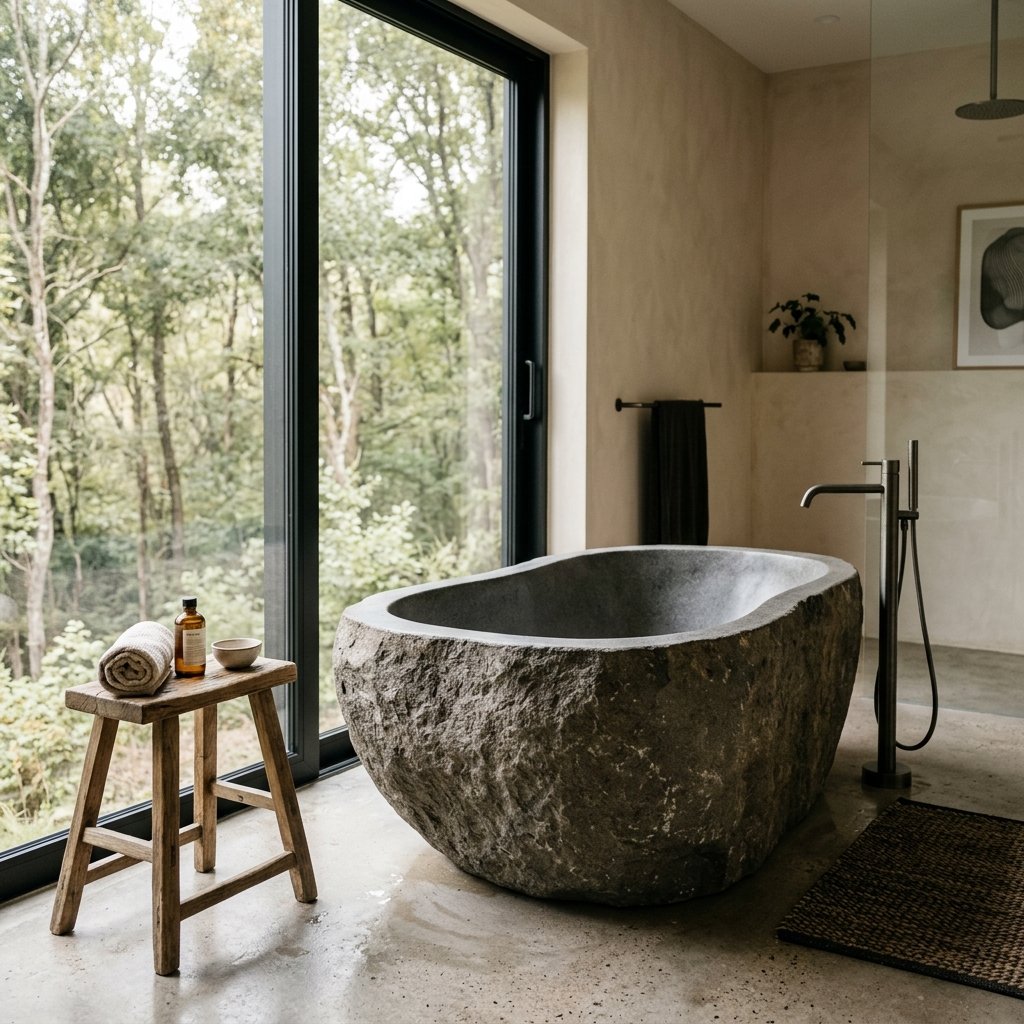
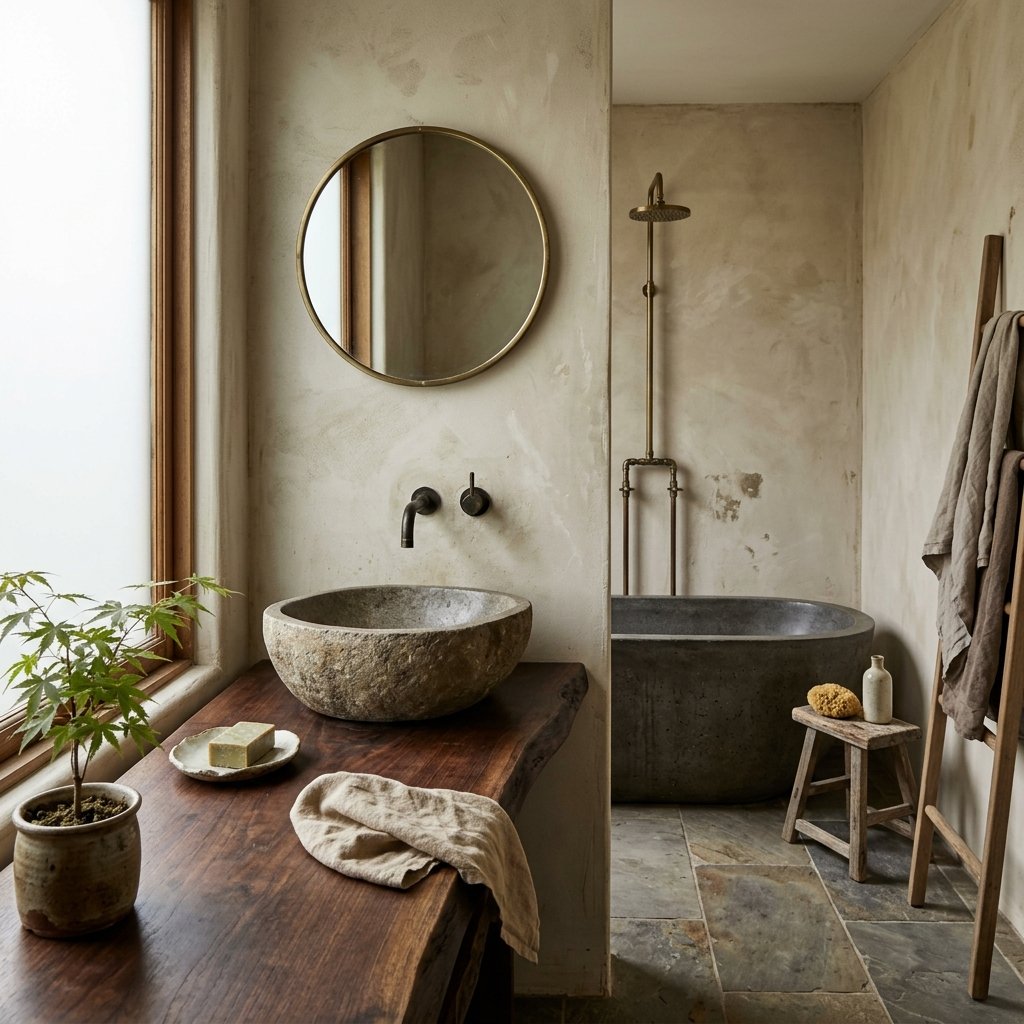
A freestanding stone bathtub often becomes the true focal point of a wabi sabi bathroom. Its raw, sculptural shape brings a sense of weight and calm that porcelain tubs rarely achieve. Positioning it near a window lets natural light highlight the texture of the stone throughout the day.
If a full stone tub isn’t in the budget, a concrete or textured resin alternative can offer a similar organic look. Either option anchors the room in quiet, grounded beauty.
Raw Wood Vanity Ideas
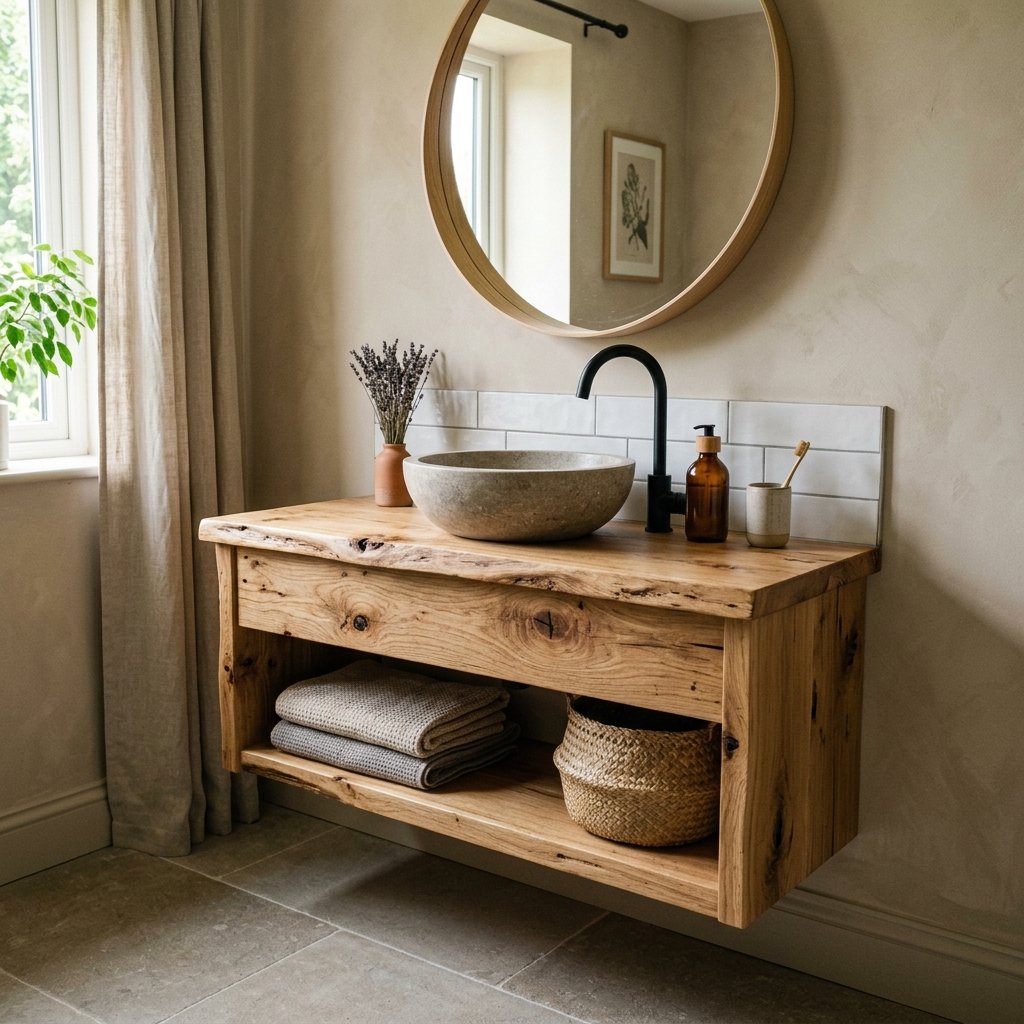
Raw or lightly treated wood vanities bring warmth into a space that can otherwise feel cold and clinical. Visible grain, small knots, and natural color variation all add character instead of taking away from it. This is one of the simplest wabi sabi ideas to bring into an existing space.
Pair a wood vanity with a stone or ceramic basin for contrast in texture. Keep hardware minimal so the wood itself remains the visual highlight.
Muted Earthy Color Palette Ideas
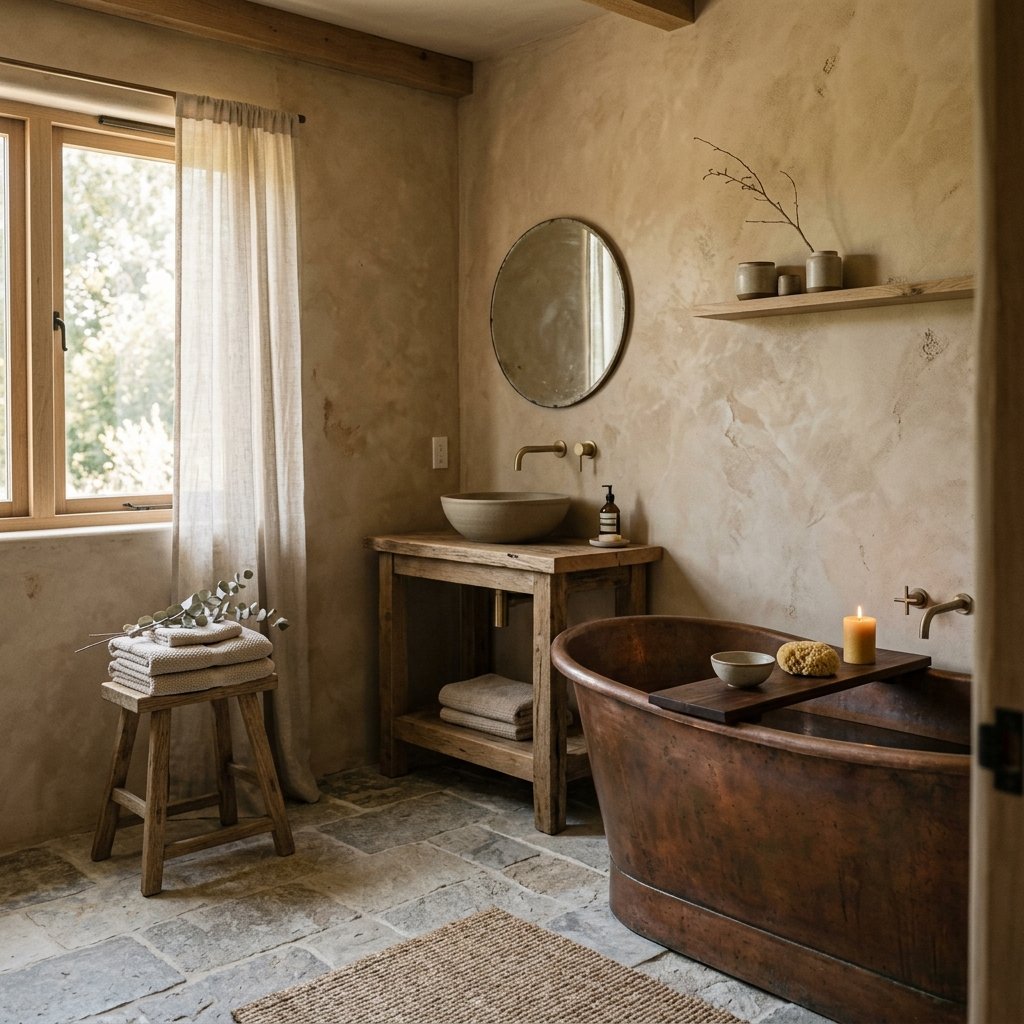
Color plays a huge role in shaping the mood of a space built around this philosophy. Soft neutrals like sand, clay, warm gray, and muted green create a calm, grounded backdrop for natural materials. Bright or saturated colors tend to clash with the quiet, understated feel this style relies on. Even small pops of color should stay muted enough to blend rather than stand out sharply.
Layer two or three earthy tones together rather than sticking to a single flat color. This subtle variation mimics the natural shading found in stone, wood, and clay.
Asymmetrical Bathroom Layout Ideas
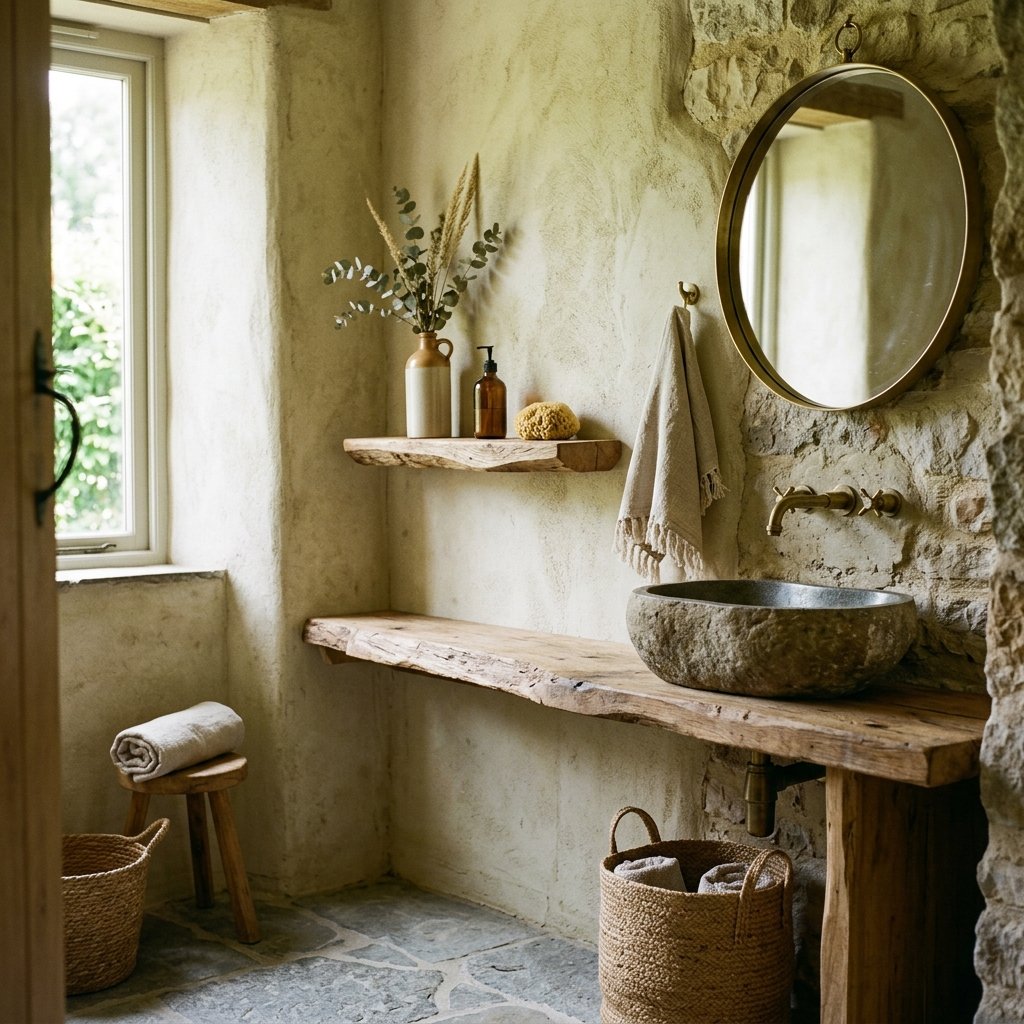
Traditional bathroom design often leans heavily on symmetry and matching fixtures. Wabi sabi takes the opposite approach, favoring slightly asymmetrical layouts that feel more organic and human. An off-center mirror or uneven shelf placement can make the whole room feel less staged.
This doesn’t mean the space should feel messy or unplanned. Every asymmetrical choice should still feel deliberate, balanced, and thoughtfully arranged.
Textured Plaster Wall Ideas
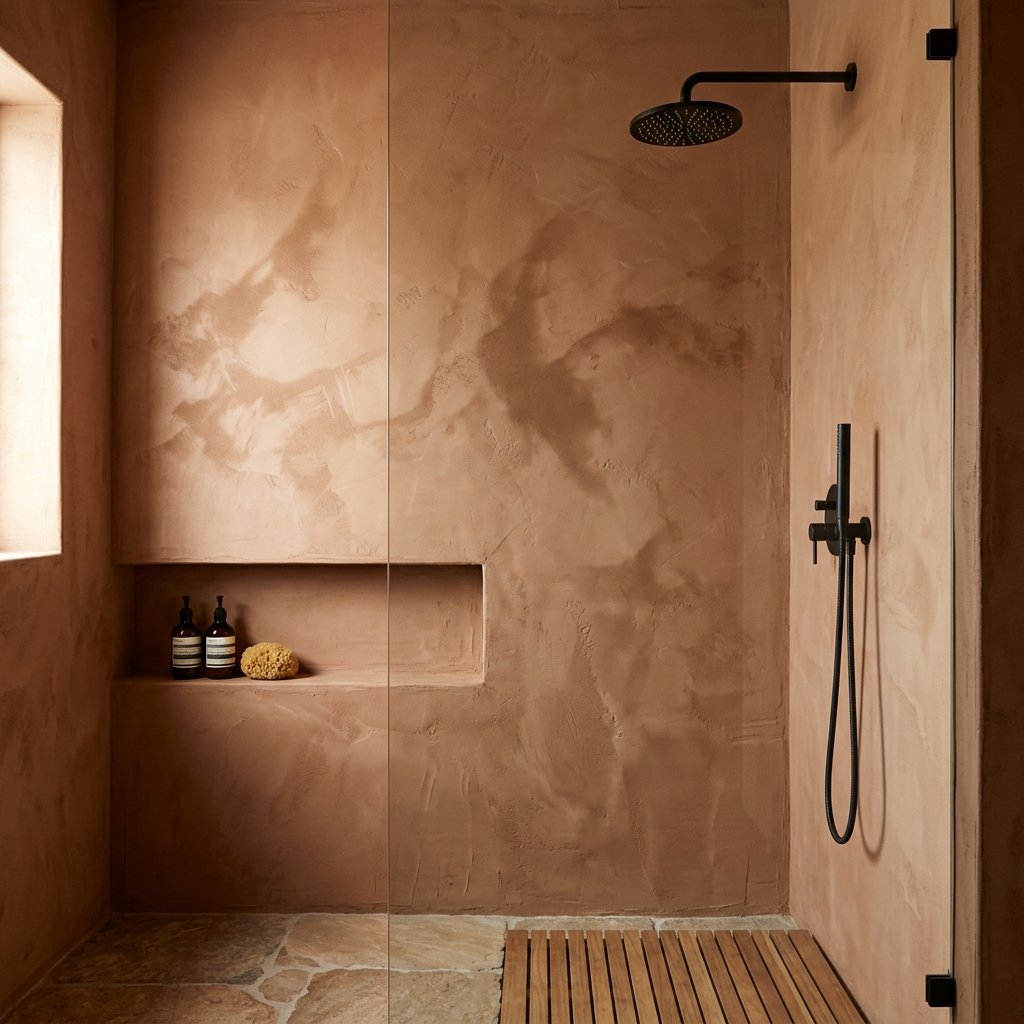
Textured plaster offers another layer of depth for anyone designing this kind of space from the ground up. Unlike smooth drywall, plaster catches shadows and light in ways that shift throughout the day. This creates a wall surface that feels alive rather than flat and static.
Hand-troweled plaster finishes work particularly well in shower areas or as a full accent wall. The slight imperfections in the texture only add to its charm over time.
Organic Modern Bathroom Ideas
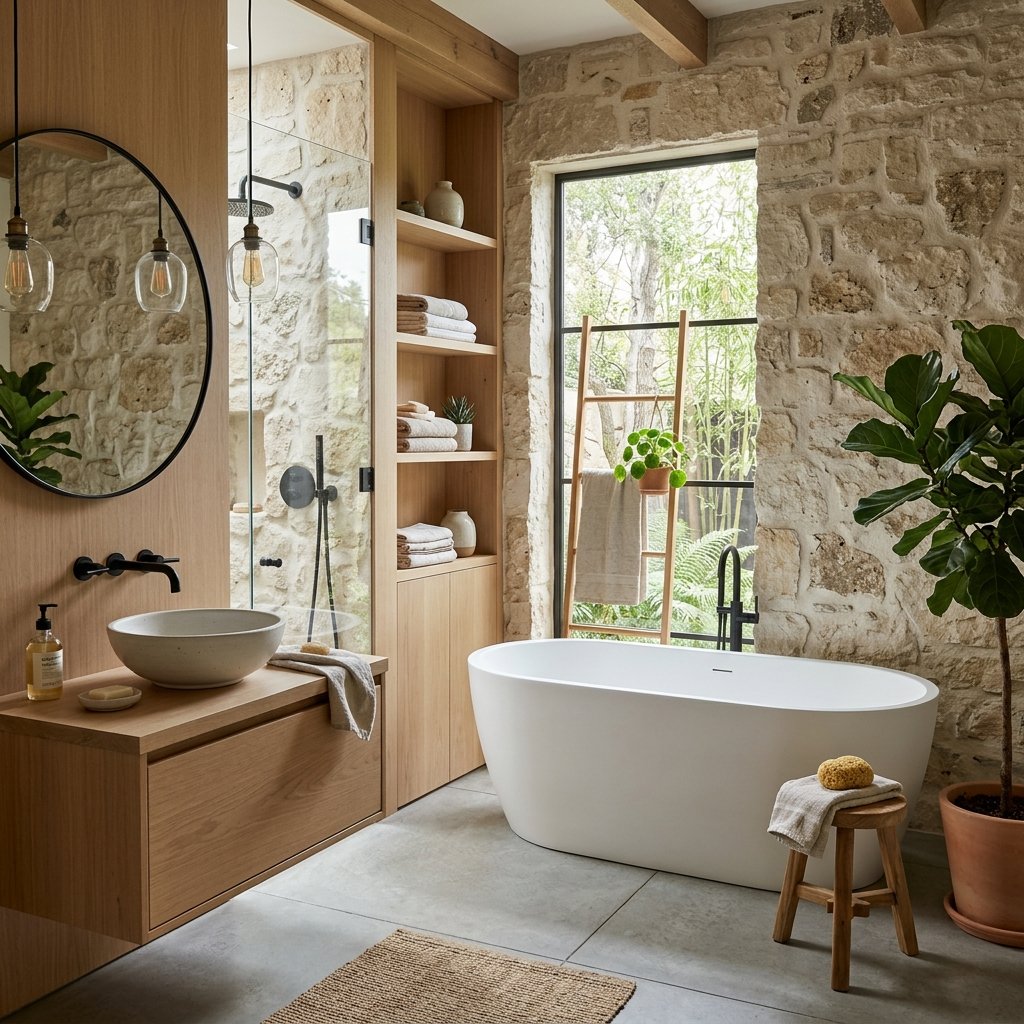
Organic modern design blends clean, simple lines with natural, textured materials for a balanced result. This pairing works beautifully within a wabi sabi bathroom, softening sharp modern edges with raw stone or wood. The result feels contemporary without losing warmth or personality.
Keep fixtures simple and uncluttered, then let the natural materials do most of the visual work. This balance between structure and texture defines the organic modern approach.
Linen Textile Bathroom Ideas
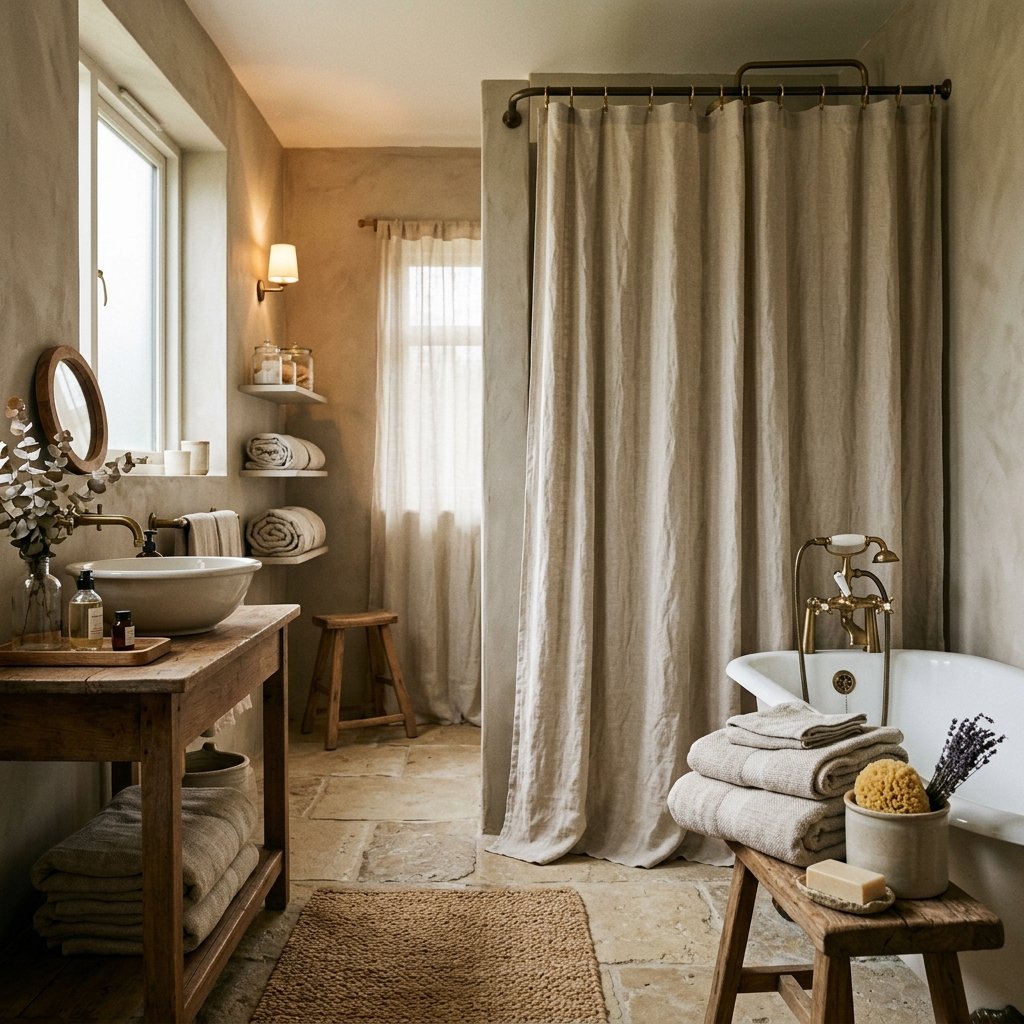
Soft linen towels, curtains, and bath mats add gentle texture without overwhelming the space. Linen has a naturally relaxed, slightly wrinkled look that fits perfectly within this design approach. It feels tactile, comfortable, and far from sterile or overly polished. Layering a few different linen weights adds subtle depth without cluttering the room.
Stick to neutral or muted linen tones like oatmeal, sage, or soft gray. These shades complement stone and wood surfaces without competing for attention.
Reclaimed Wood Shelving Ideas
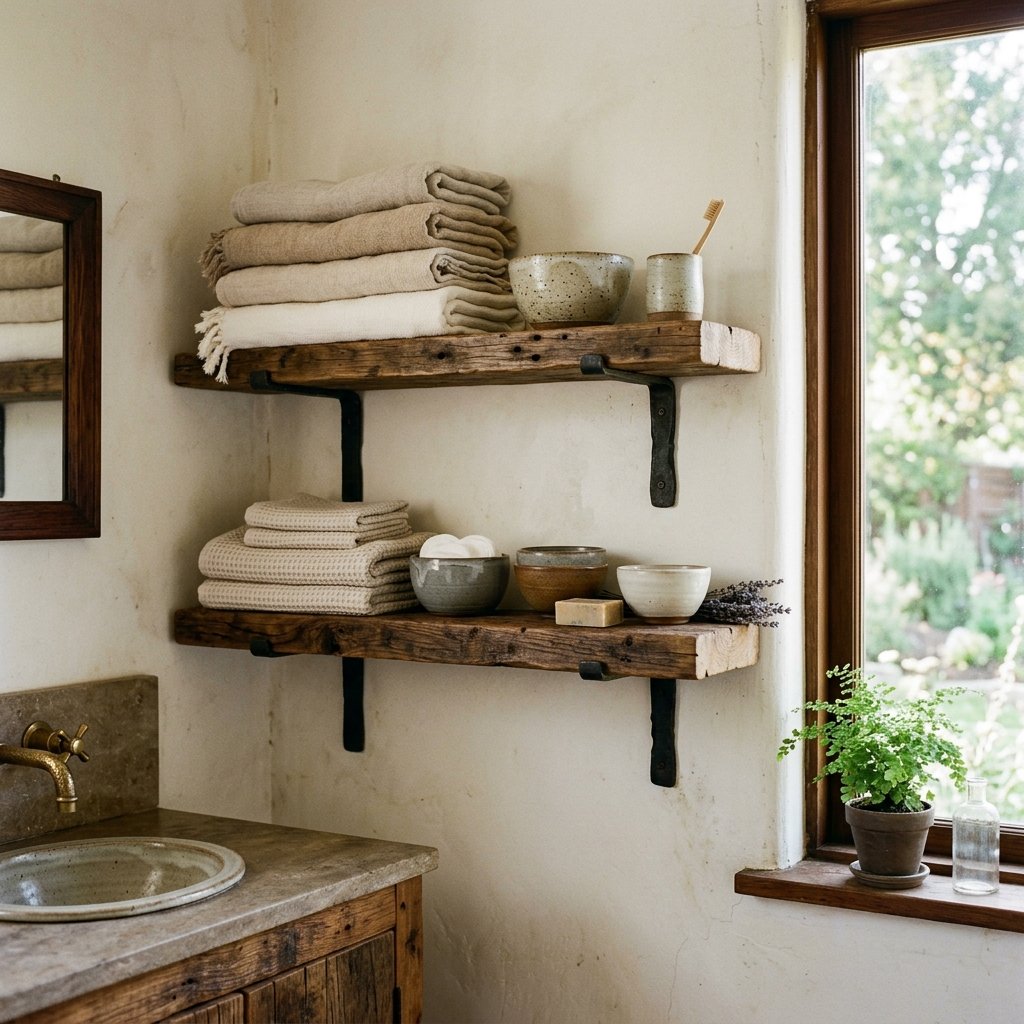
Reclaimed wood shelving brings history and texture into a bathroom in a very tangible way. Weathered grain, small nail holes, or faded color all tell a story that new materials simply can’t replicate. This makes reclaimed wood a natural fit for the wabi sabi philosophy.
Use open shelving to display ceramic bowls, folded linen towels, or small plants. Keeping items simple and spaced out avoids visual clutter.
Unglazed Ceramic Tile Ideas
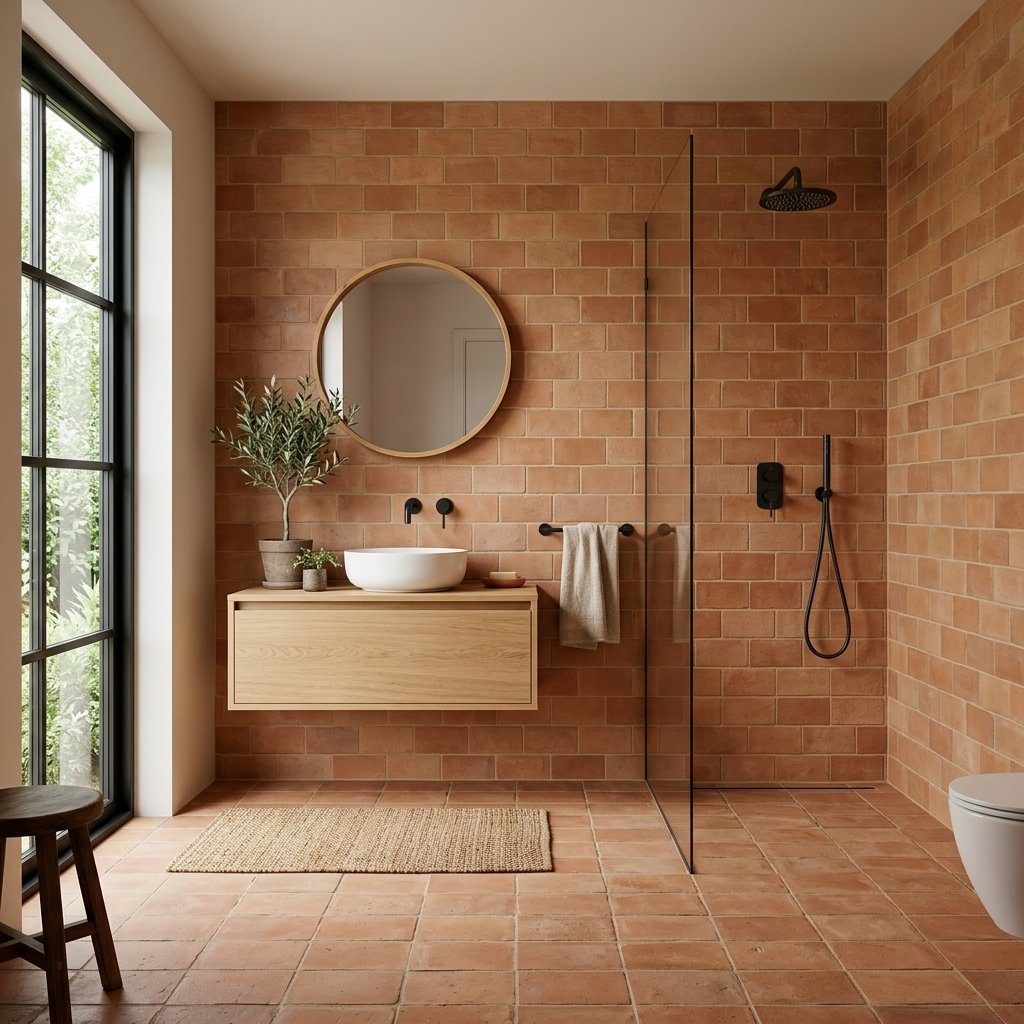
Unglazed ceramic tile has a soft, matte surface that feels more natural than shiny, polished alternatives. Its slightly porous texture and subtle color variation add depth to floors and walls alike. This tile choice fits seamlessly into almost any natural, earthy design.
Choose tiles in warm terracotta or muted clay tones for maximum impact. Irregular tile edges or hand-cut shapes add even more authentic character.
Minimalist Wabi Sabi Ideas
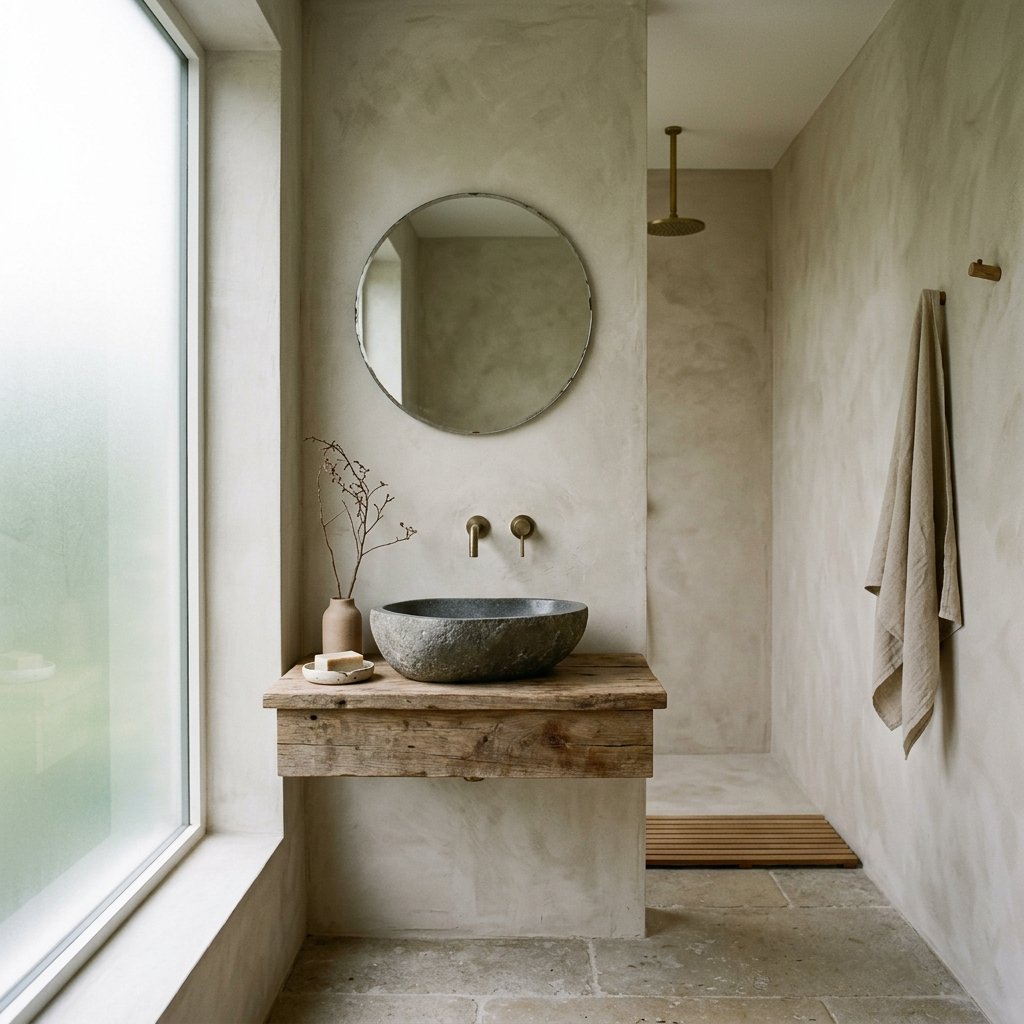
Minimalism and wabi sabi share a lot of common ground, but they aren’t identical. A minimalist wabi sabi bathroom keeps only what feels essential, functional, and honestly made. Empty space becomes part of the design rather than something to fill.
Avoid over-decorating with too many small objects or accessories. Every item left in the room should serve a clear purpose or bring genuine texture.
Japandi Bathroom Fusion Ideas
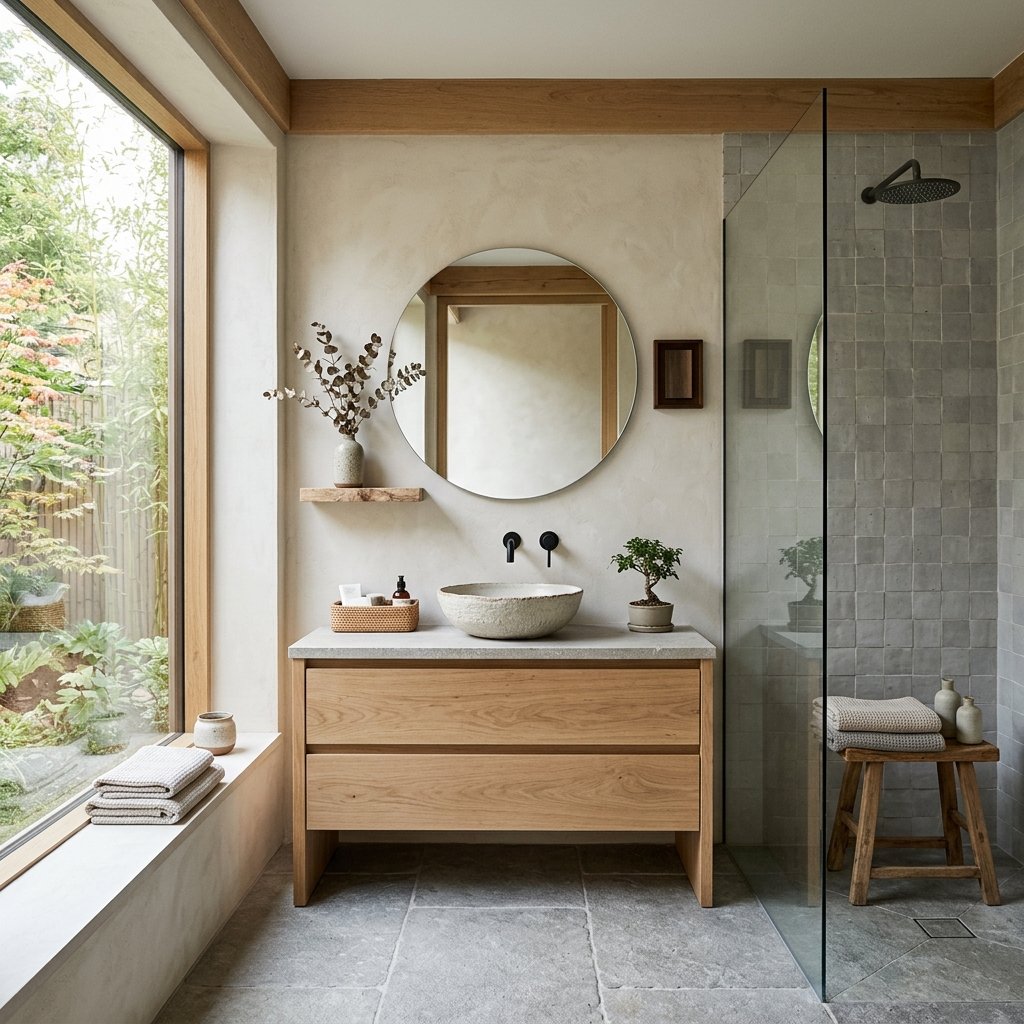
Japandi blends Japanese wabi sabi principles with the clean simplicity of Scandinavian design. This fusion often results in bathrooms that feel warm, calm, and quietly functional at the same time. Natural wood, soft neutrals, and simple fixtures define this hybrid style.
Combine a Japandi-inspired vanity with wabi sabi textures like limewash or unglazed tile. The two styles complement each other more naturally than most people expect.
Biophilic Bathroom Design Ideas
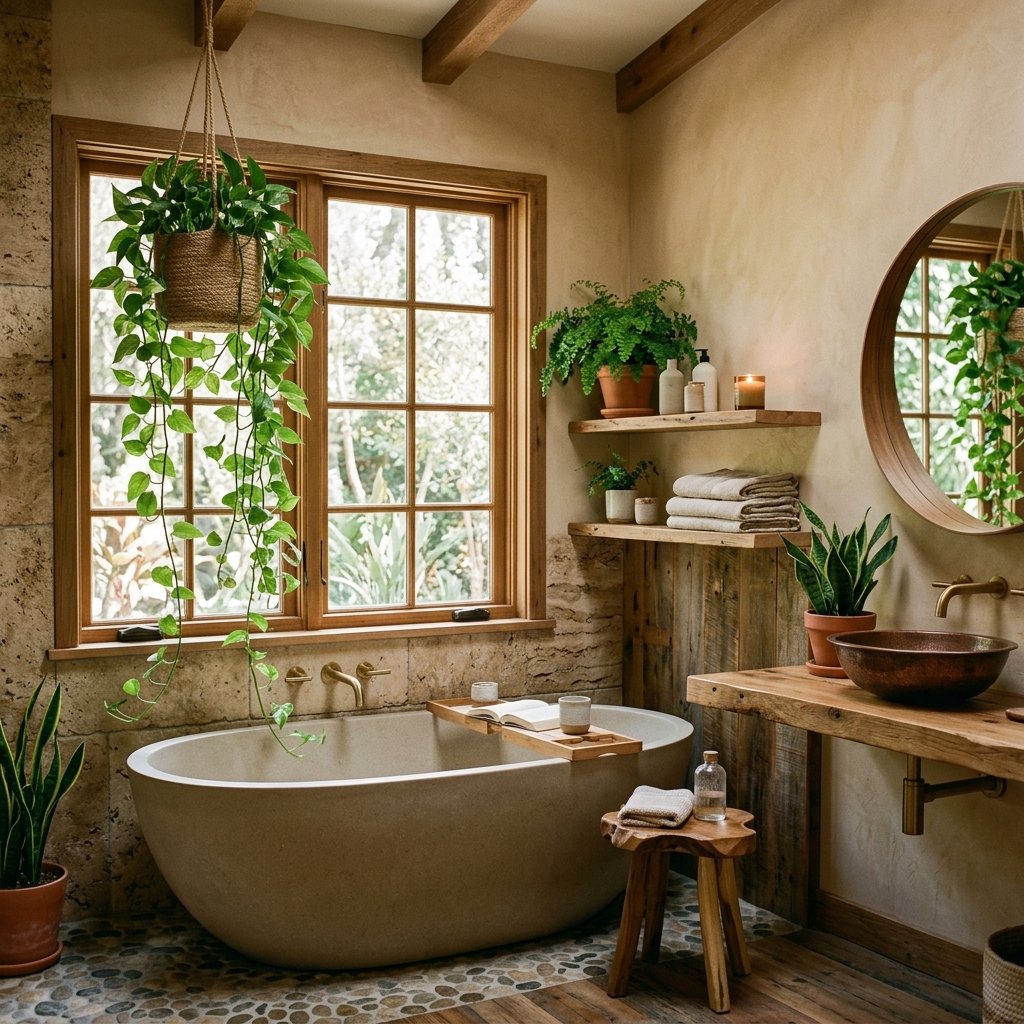
Biophilic design focuses on bringing natural elements indoors to support comfort and wellbeing. In this kind of space, that might mean adding a small plant, natural light, or organic materials. The goal is a space that feels connected to the outdoors rather than sealed away from it. Even a single trailing plant near the window can shift the entire mood of the room.
Position plants near natural light sources so they thrive and add visual softness. Stone, wood, and greenery together create a deeply calming atmosphere.
Woven Basket Storage Ideas
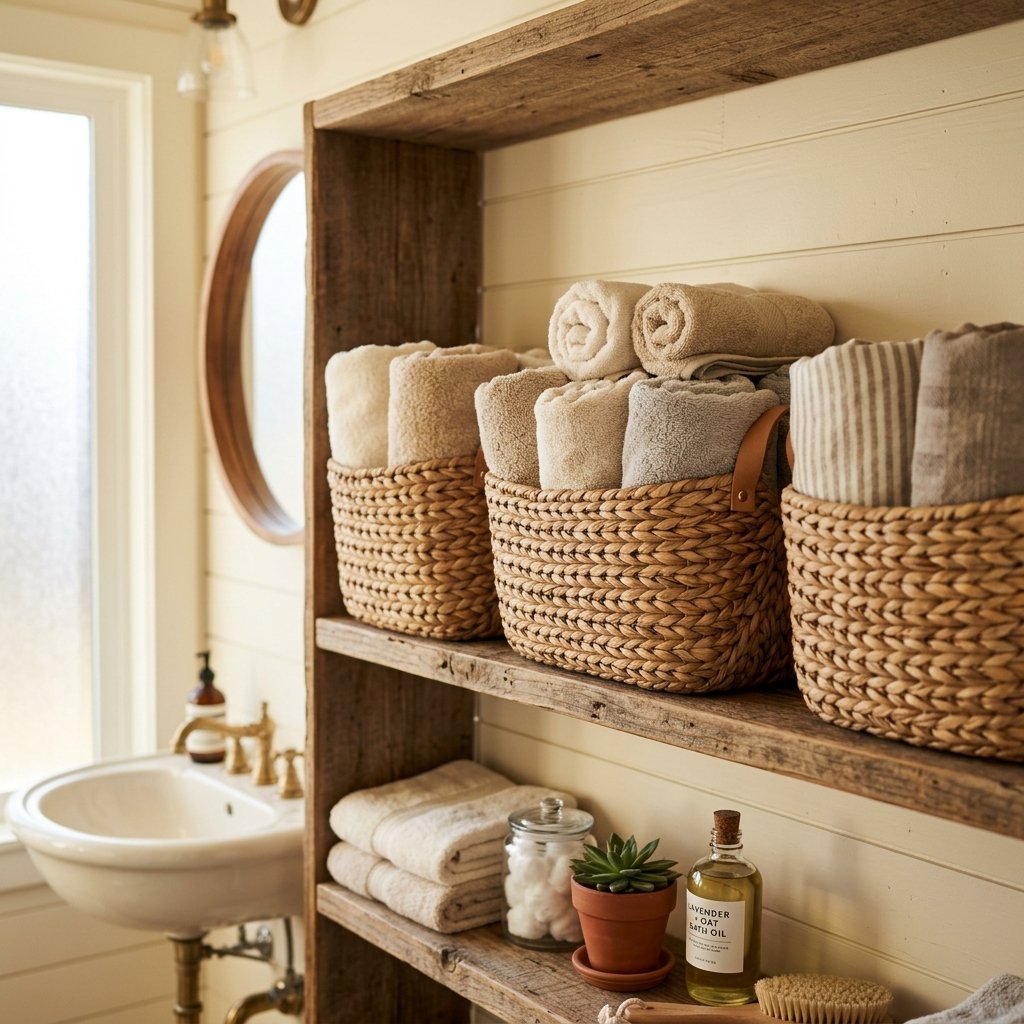
Woven baskets offer practical storage while reinforcing the natural, handmade feel of the space. They’re perfect for holding towels, toiletries, or extra linens without relying on plastic bins. This small addition makes a noticeable difference in the room’s overall texture and warmth.
Choose baskets in natural fiber tones like rattan or seagrass. Their slightly irregular weave pattern adds subtle visual interest without feeling busy.
Concrete Bathroom Surface Ideas
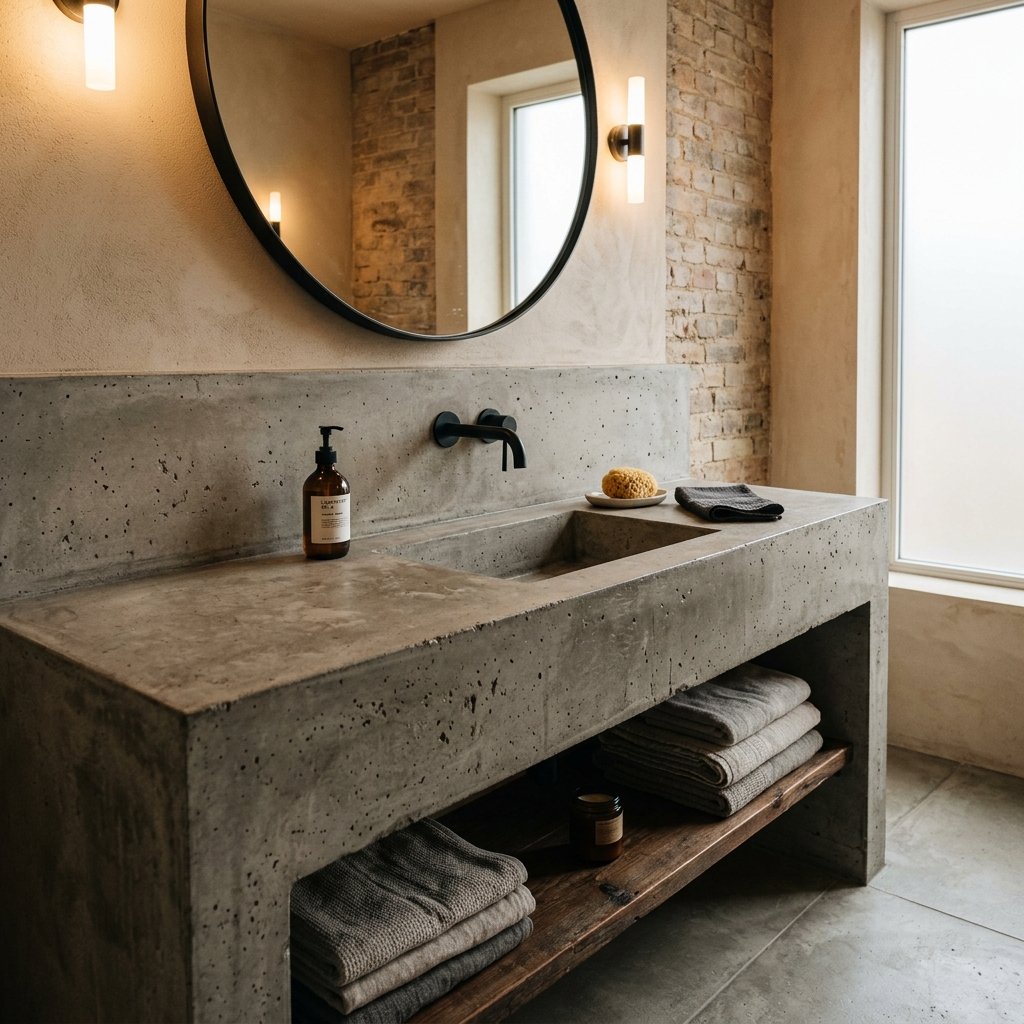
Concrete surfaces bring an industrial edge that still fits comfortably within wabi sabi design. Its slightly rough, uneven texture and muted gray tone work well for countertops, sinks, or flooring. Concrete also develops a natural patina over time, which only adds to its appeal.
Seal concrete surfaces properly to protect against moisture in bathroom environments. This keeps the material both practical and visually striking for years to come.
Neutral Stone Flooring Ideas
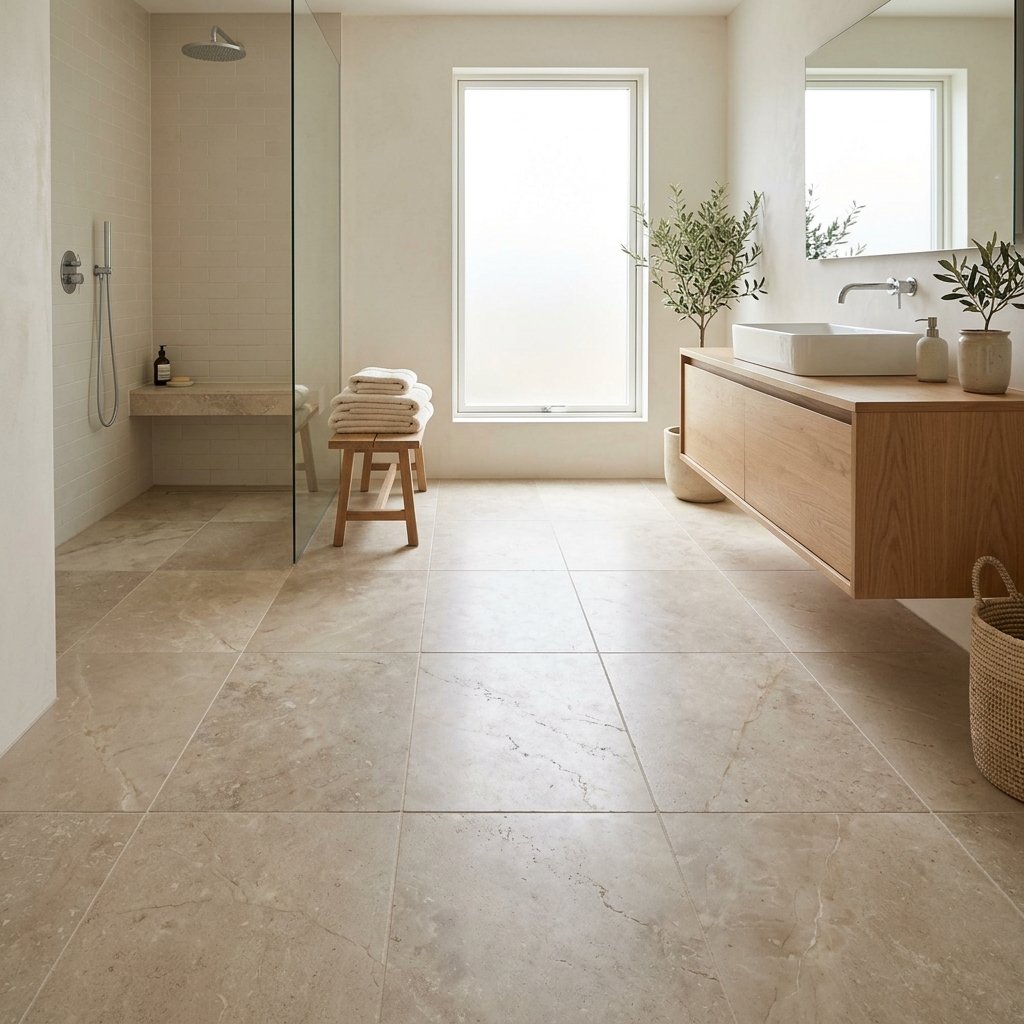
Stone flooring in soft, neutral tones grounds the entire room in natural texture. Materials like limestone, travertine, or slate all bring subtle variation underfoot. This variation mirrors the imperfect, organic feel found throughout the rest of the space. Choosing a honed rather than polished finish keeps the surface feeling soft and understated.
Large-format stone tiles reduce grout lines and keep the floor feeling calm and uninterrupted. Smaller, irregular-cut stone can offer a more rustic, handcrafted alternative.
Handcrafted Pottery Bathroom Ideas
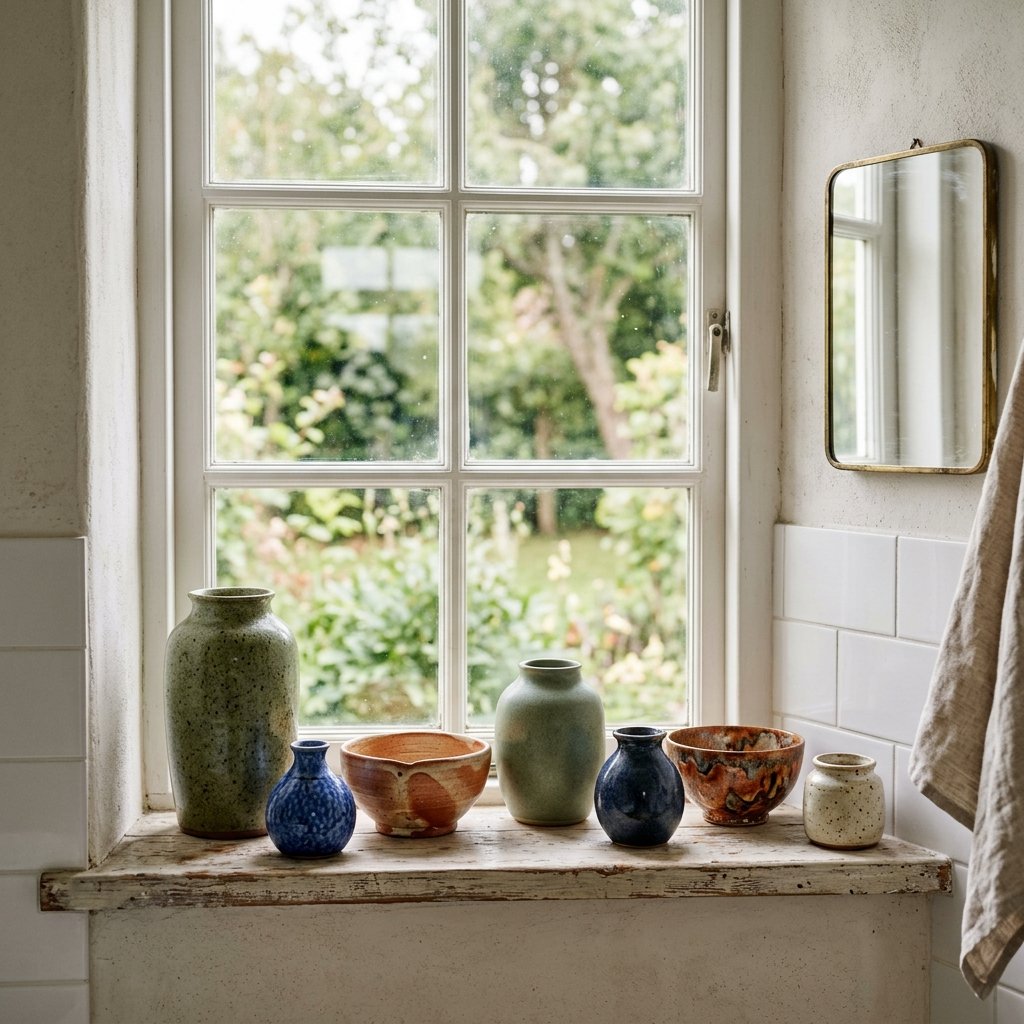
Handcrafted pottery pieces, from vases to small trays, add warmth and individuality to any bathroom. Each piece is slightly different, carrying small marks that reflect the hands that made it. This uniqueness aligns perfectly with the core values of wabi sabi design.
Group two or three pottery pieces together on a shelf or windowsill. This small styling choice adds character without requiring major renovation work.
Natural Light Bathroom Ideas
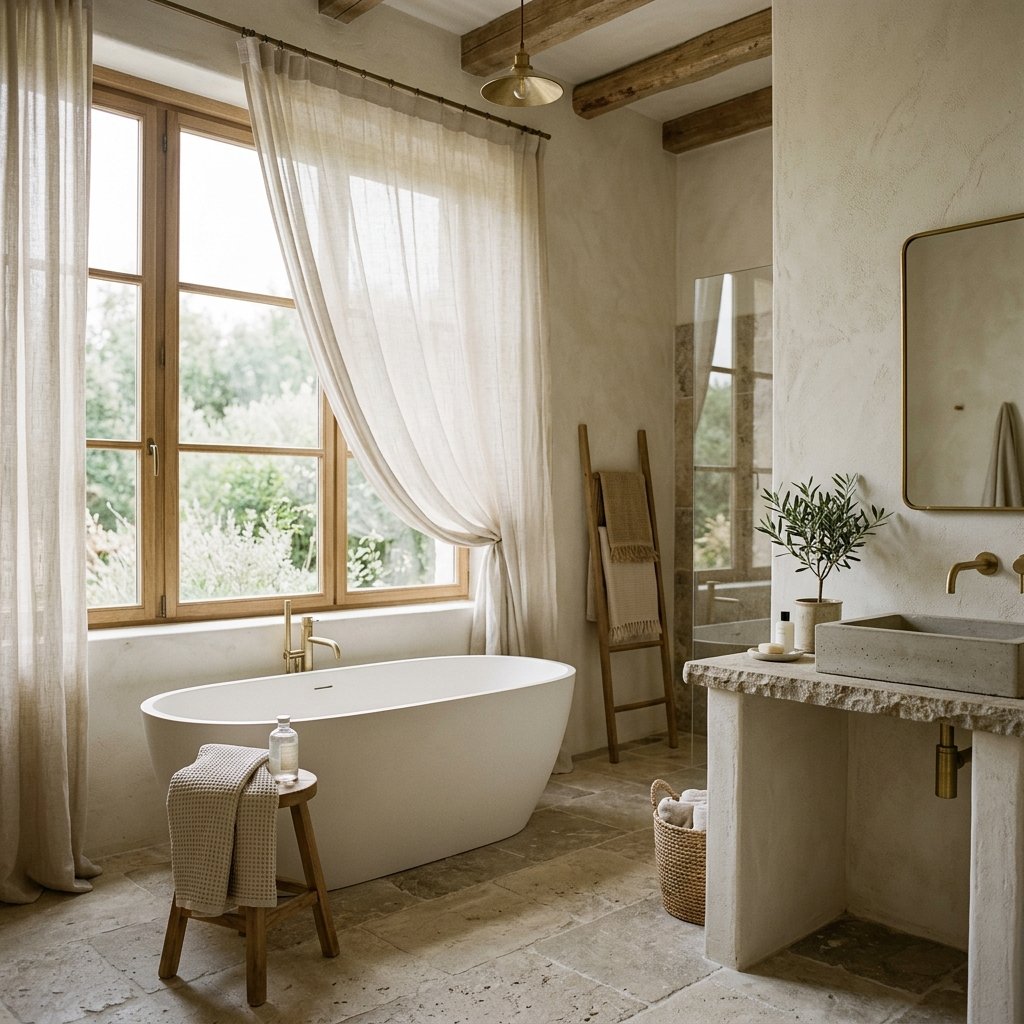
Natural light plays a major role in how a wabi sabi bathroom feels throughout the day. Soft, changing light highlights texture in stone, wood, and plaster in ways artificial lighting can’t match. Large windows or skylights work especially well when paired with this design style.
If privacy is a concern, frosted glass or sheer linen curtains can soften light without blocking it. This keeps the room bright while maintaining a sense of calm.
Rustic Wooden Stool Ideas
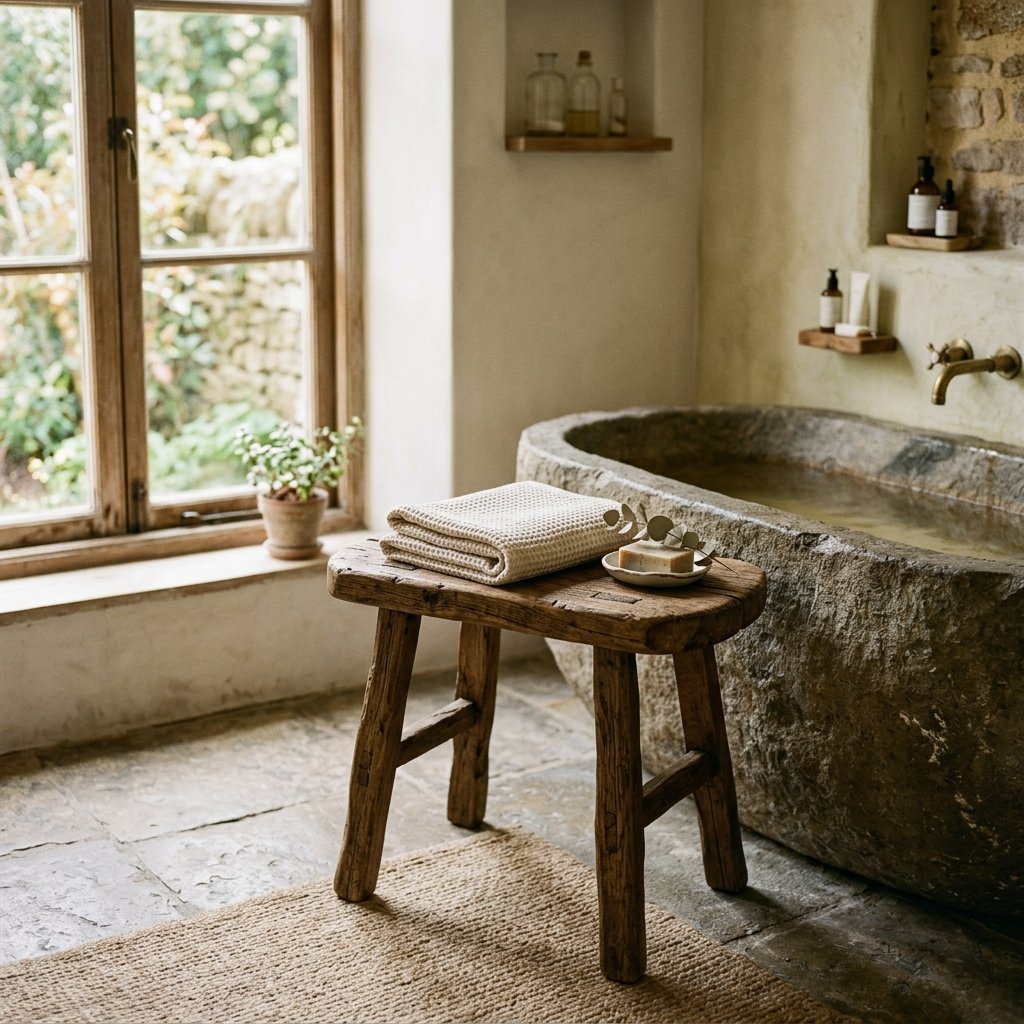
A simple wooden stool adds both function and texture to a wabi sabi bathroom setup. It can hold towels, plants, or bath products while contributing to the room’s natural material palette. Slightly worn or hand-carved stools feel especially fitting within this style.
Choose a stool with visible grain and minimal finish for the most authentic look. Its imperfections should feel intentional rather than accidental.
Clay Bathroom Accent Ideas
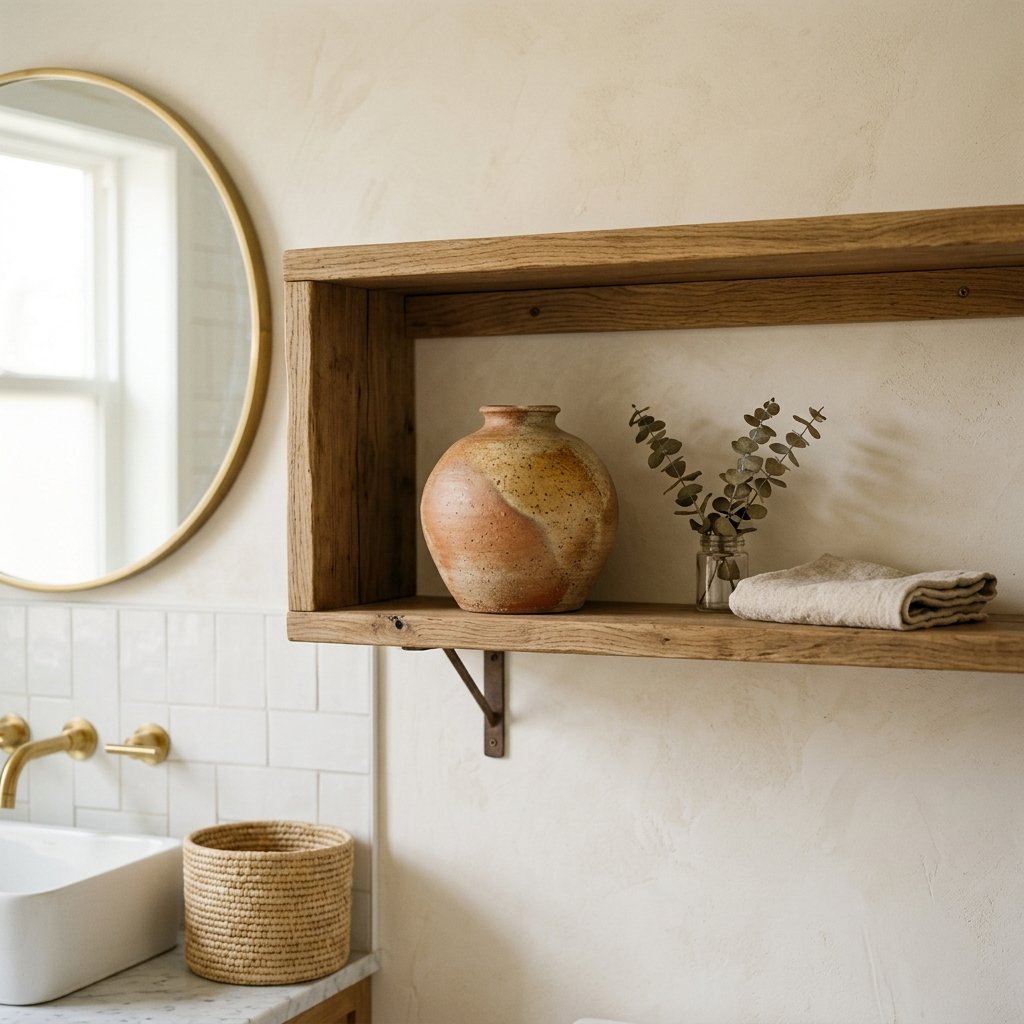
Clay-based accents, from tiles to decorative bowls, bring an earthy, tactile quality to the space. This material connects directly to the natural, handmade feel central to wabi sabi design. Even small clay details can shift the mood of an entire bathroom.
Use clay accents sparingly so they stand out rather than blending into the background. A single clay vessel on an open shelf can make a strong visual statement.
Soft Curved Bathroom Fixture Ideas
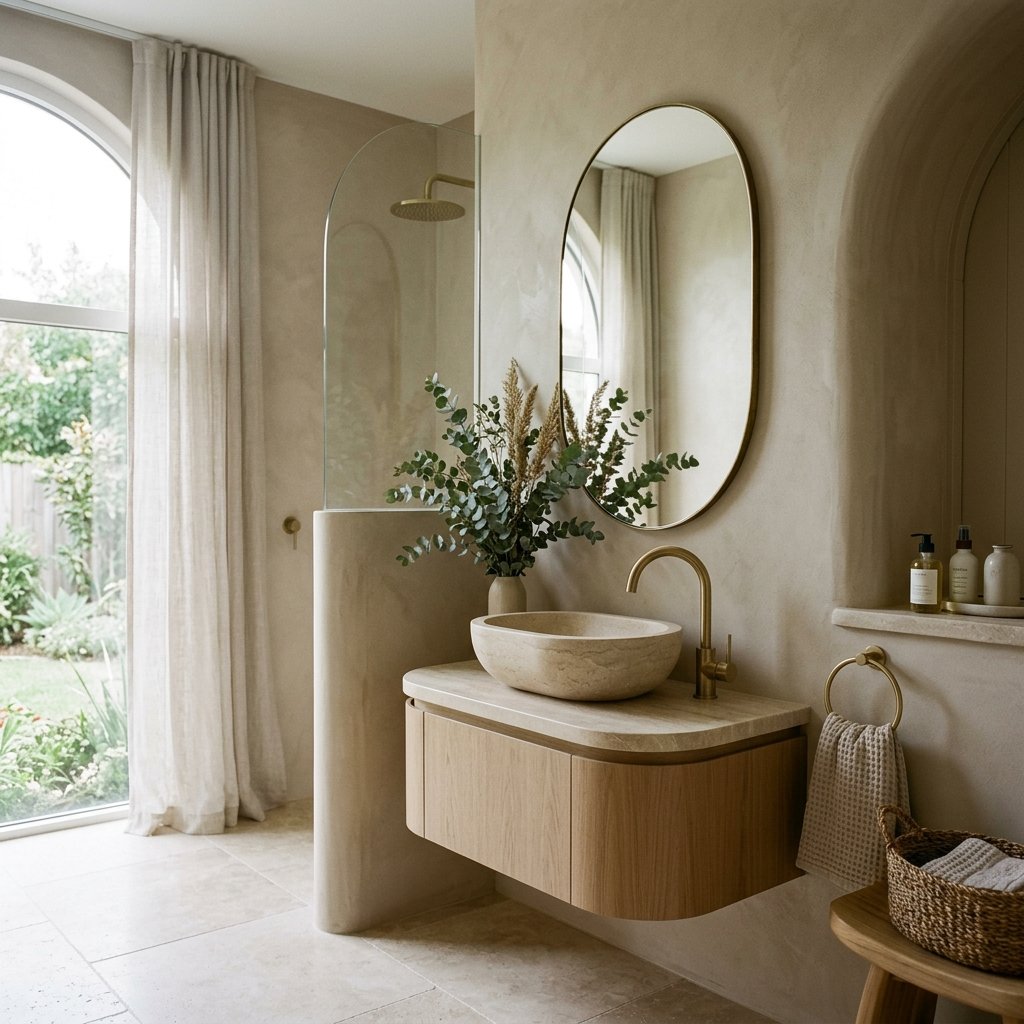
Curved fixtures soften the overall look of a wabi sabi bathroom compared to sharp, angular designs. Rounded sinks, oval mirrors, or curved tub edges all contribute to a gentler, more organic feel. This softness pairs naturally with rough textures like stone or plaster.
Balancing curves with straighter elements, like a simple wood vanity, keeps the space from feeling overly soft. The contrast creates visual interest without disrupting the calm mood.
Slow Living Bathroom Decor Ideas
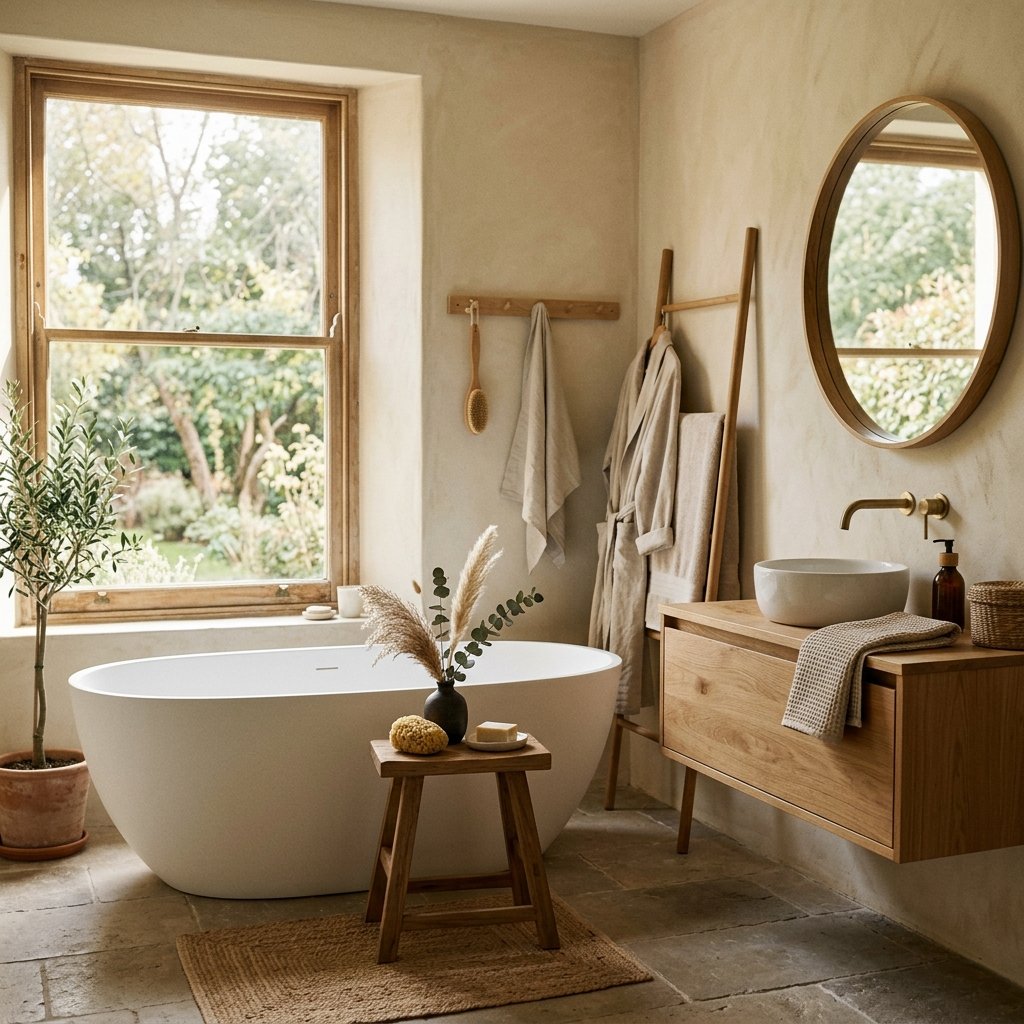
Slow living principles focus on intention, simplicity, and mindful use of space and objects. In a wabi sabi bathroom, this might mean fewer items, chosen carefully rather than collected quickly. Every object should feel meaningful rather than purely decorative.
Consider swapping disposable plastic items for durable, natural alternatives like glass or ceramic. This small shift supports both the aesthetic and the philosophy behind it.
Imperfect Tile Pattern Ideas
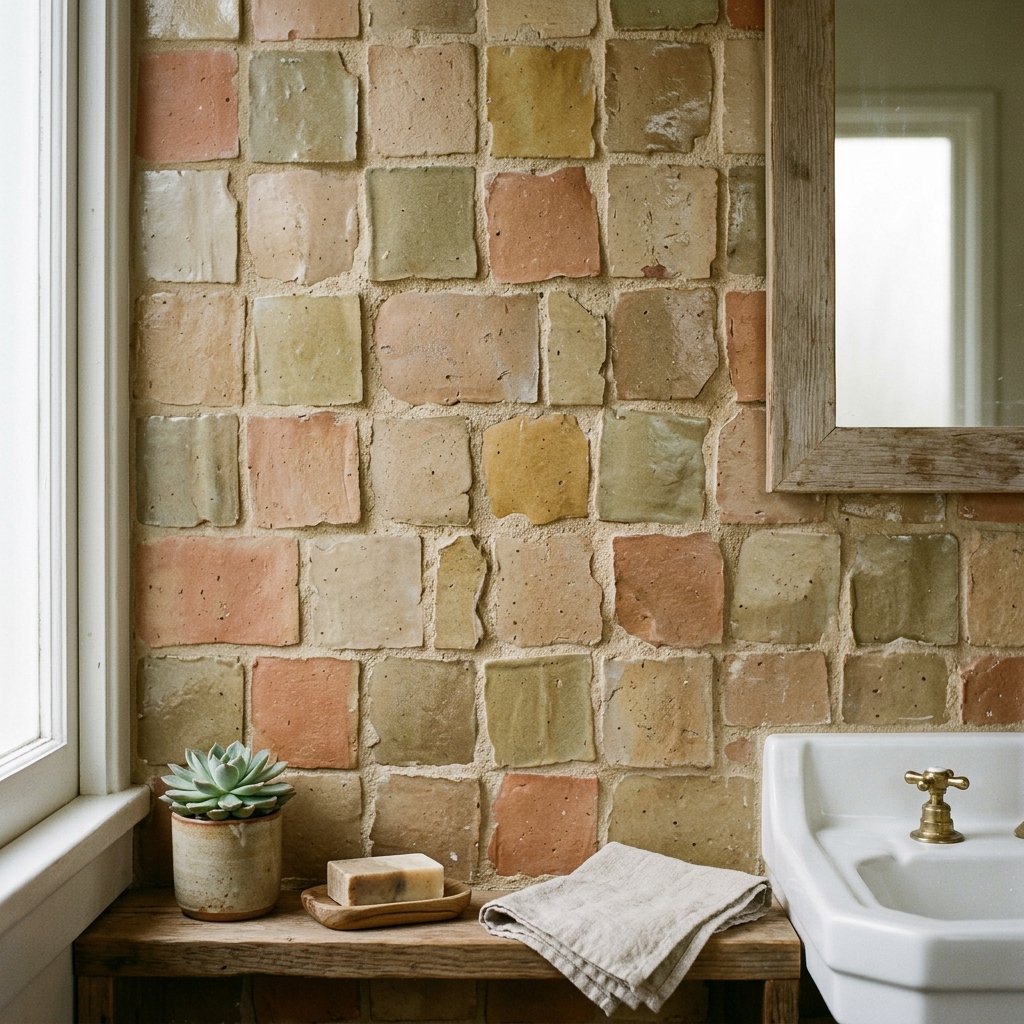
Imperfect or irregular tile patterns add movement and character to bathroom walls and floors. Hand-cut tiles, uneven grout lines, or mismatched shapes all reinforce the wabi sabi mindset. This approach rejects the idea that every tile needs to align perfectly.
Mixing two similar tile shades can enhance this effect without creating visual chaos. The goal is subtle variation, not obvious mismatching.
Sustainable Bathroom Material Ideas
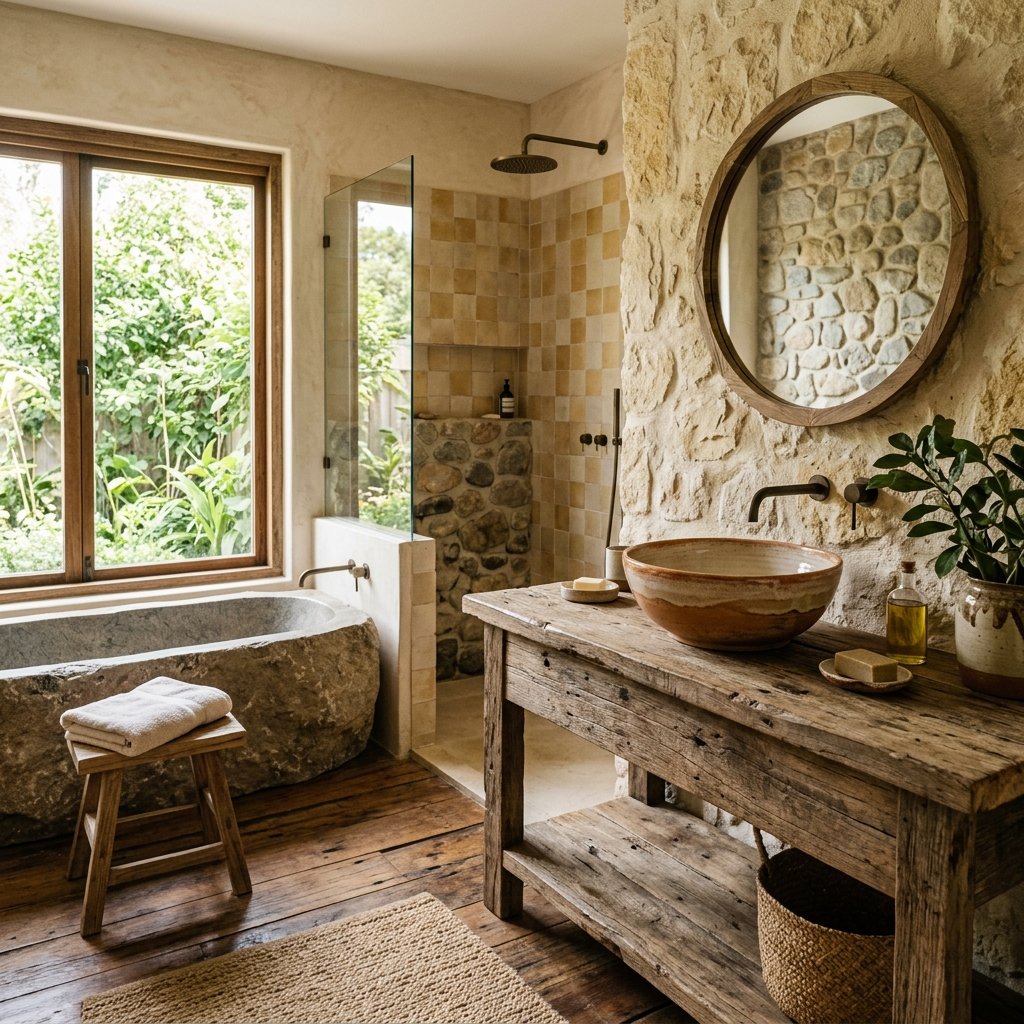
Sustainability fits naturally within wabi sabi design, since both value longevity over disposability. Reclaimed wood, natural stone, and handmade ceramics often last far longer than mass-produced alternatives. Choosing these materials supports both the aesthetic and a more mindful approach to consumption.
Look for local or small-batch suppliers when sourcing stone, wood, or pottery. This often results in more unique, higher-quality pieces for the space.
Small Wabi Sabi Bathroom Ideas
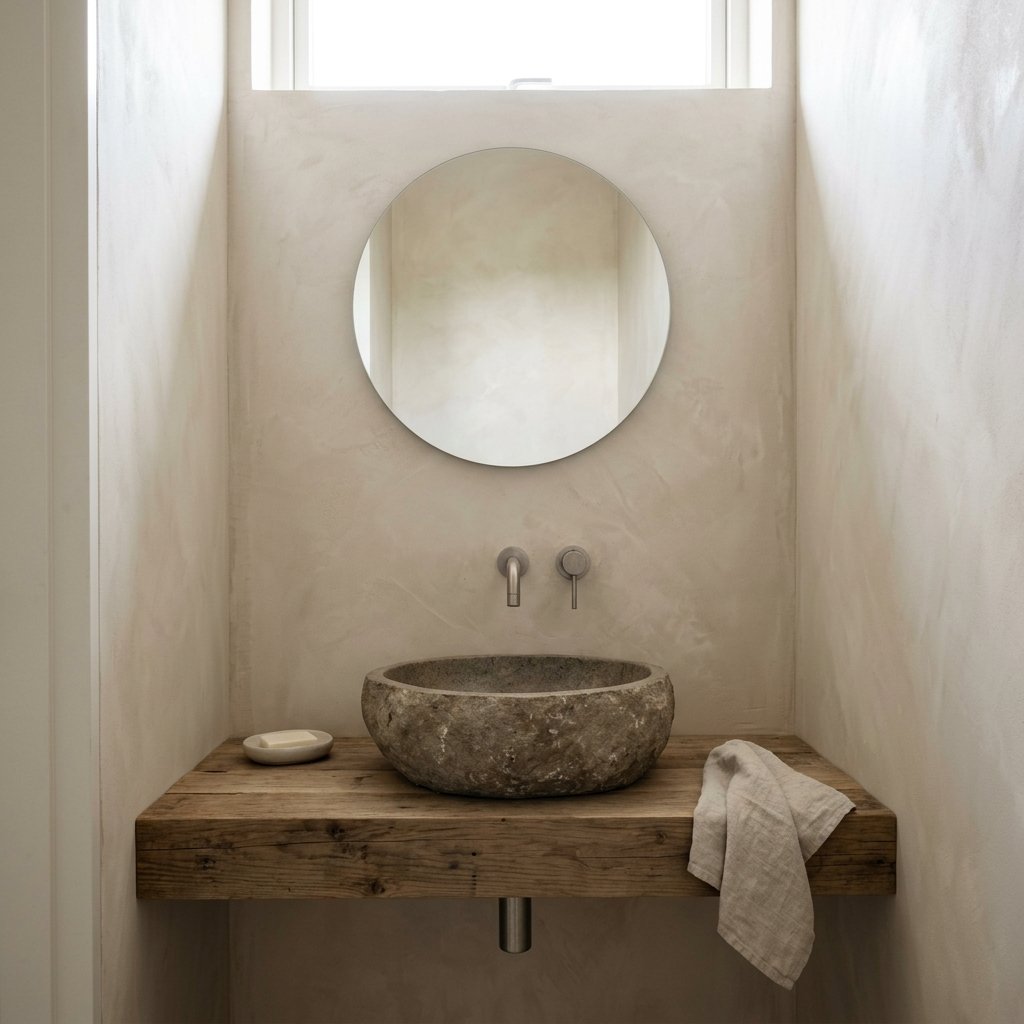
Even a small bathroom can embrace this style without feeling cramped or overly busy. Focus on one or two standout materials, like a stone sink or limewash accent wall. Keeping the rest of the space simple prevents visual overload in a tight footprint.
Mirrors, natural light, and pale color palettes can also help a small wabi sabi bathroom feel more open. The key is restraint, not compromise on character.
FAQs About Wabi Sabi Bathroom Ideas
What is a wabi sabi bathroom? A wabi sabi bathroom embraces natural materials, imperfection, and quiet, muted color palettes. It focuses on texture and authenticity instead of flawless, polished surfaces throughout the space.
How do you create a wabi sabi bathroom on a budget? Start with small swaps like linen towels, ceramic accessories, or wooden accents. A single limewash wall or stone basin can shift the mood without a full renovation.
What materials work best for wabi sabi bathroom ideas? Natural stone, raw wood, unglazed ceramic, clay, and linen all work exceptionally well. These materials age naturally and develop character rather than showing wear as damage.
Is wabi sabi the same as Japandi design? No, though the two styles overlap significantly in tone and material choices. Japandi blends Japanese and Scandinavian design, while wabi sabi centers specifically on imperfection.
Can a small bathroom use wabi sabi ideas effectively? Yes, small bathrooms can absolutely embrace this style with the right approach. Focusing on one or two key materials keeps the space calm rather than cluttered.
Conclusion
Wabi sabi bathroom ideas prove that beauty doesn’t require perfection or expensive, flawless finishes. From raw stone sinks to handmade pottery, every element offers a chance to add character. This style rewards creativity, patience, and a genuine appreciation for natural, imperfect materials.
Whatever direction you choose, the goal remains the same: a space that feels calm, honest, and personal. There’s no single correct way to build a wabi sabi bathroom, only endless room for inspiration.