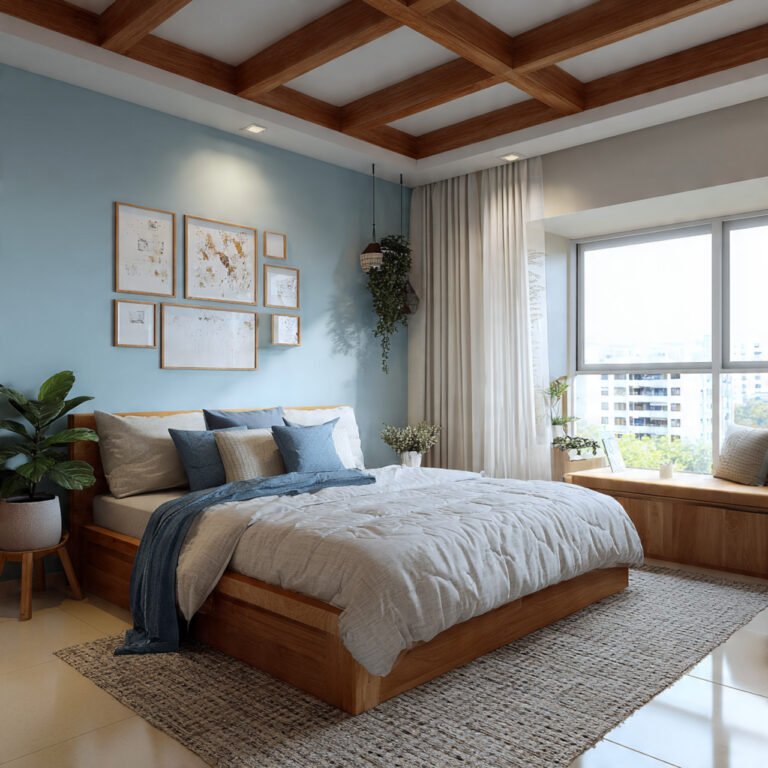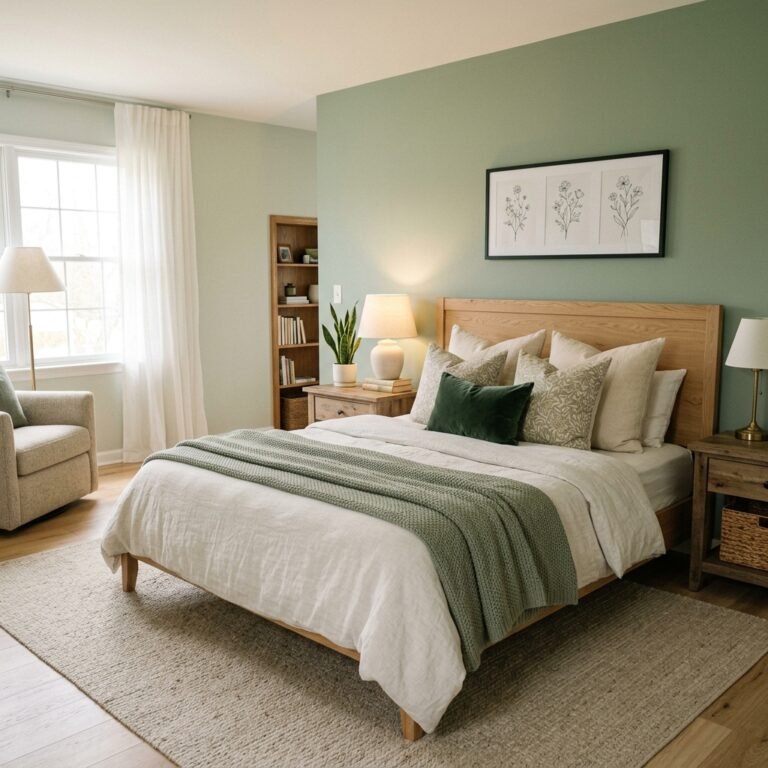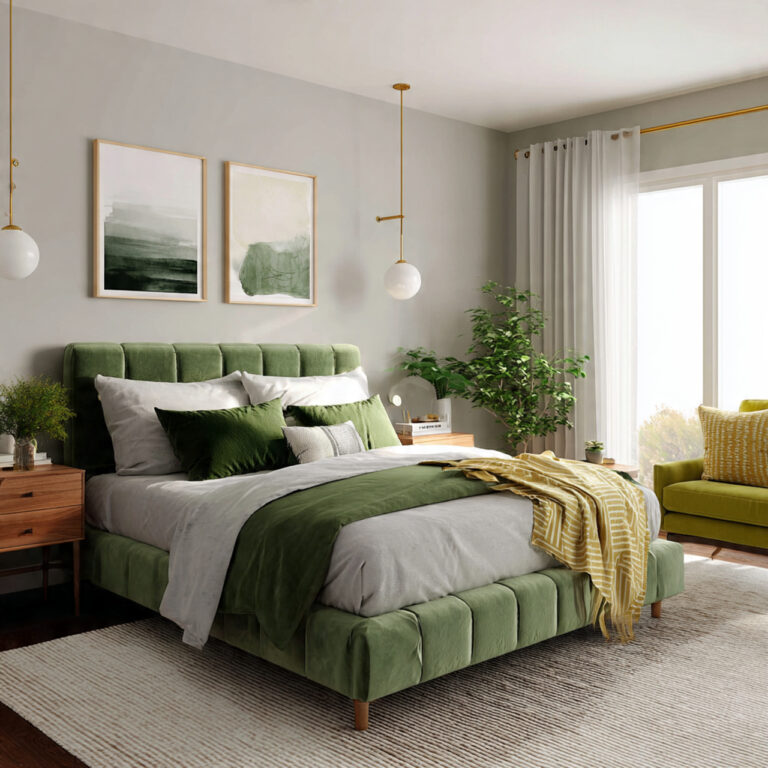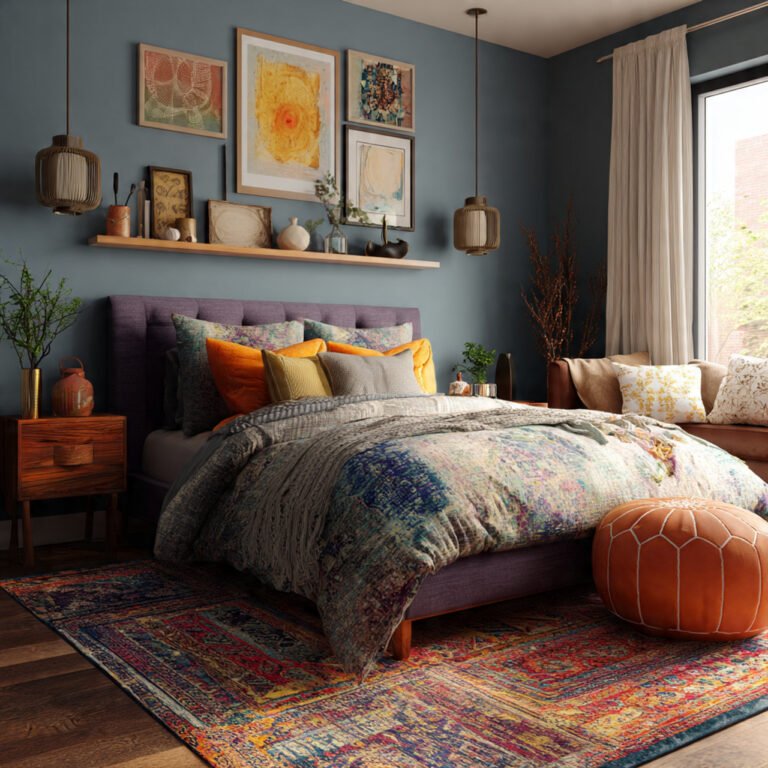
30 Beautiful Japandi Bedroom Ideas You Will Love
Japandi bedroom design brings together two of the world’s most beloved interior styles in one space. It takes the warmth of Scandinavian hygge and the quiet depth of Japanese wabi-sabi, creating rooms that feel both grounded and alive. This style is not about following a rigid set of rules. It is about building a space that breathes, rests, and restores you every single day.
People are drawn to this aesthetic because it speaks to something deeper than just visual appeal. A well-designed Japandi bedroom feels like a sanctuary, a place where the noise of daily life simply fades away. Natural materials, soft neutral tones, and intentional negative space all work together in perfect balance. Once you understand the soul of this style, creating your own version becomes a deeply personal and rewarding experience.
Best Japandi Bedroom Ideas to Try in Your Home
There is no single way to bring Japandi style into your bedroom, which is exactly what makes it so appealing to so many people. From the choice of furniture to the texture of your bedding, every decision in a Japandi bedroom carries meaning and intention. The ideas featured here span a wide range, from bold contrasts to soft earthy warmth, giving you many entry points to start your own journey.
Whether you are working with a large master bedroom or a compact urban space, these ideas will help you see what is possible. Some people start with a single piece of natural wood furniture and build outward from there. Others begin with the color palette and let the rest fall into place over time. Every idea here is a starting point, not a finish line.
Bedroom Color Palette Ideas
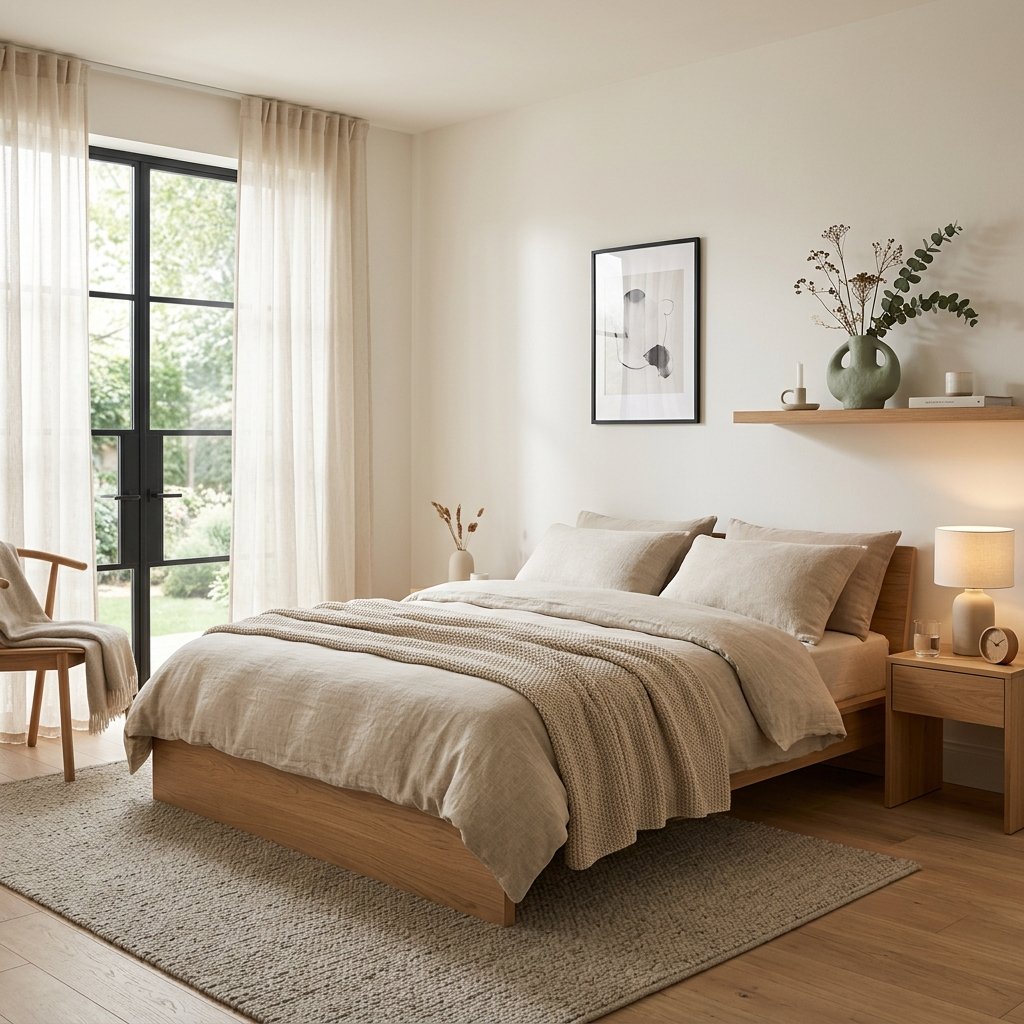
The right color palette is the foundation of any successful bedroom. Warm whites, soft greige, muted sage, and deep charcoal all belong in this world without ever competing for attention. These tones do not shout — they whisper, and that is exactly the point. Choosing colors that feel like nature in its quietest moments will set the entire mood of the room.
Black used as an accent color is one of the most powerful moves in a bedroom palette. A thin black frame, a dark lamp base, or a charcoal linen duvet can anchor the softness of lighter tones beautifully. The contrast adds definition without creating visual noise, which keeps the room feeling composed.
Wabi-Sabi Bedroom Decor Ideas
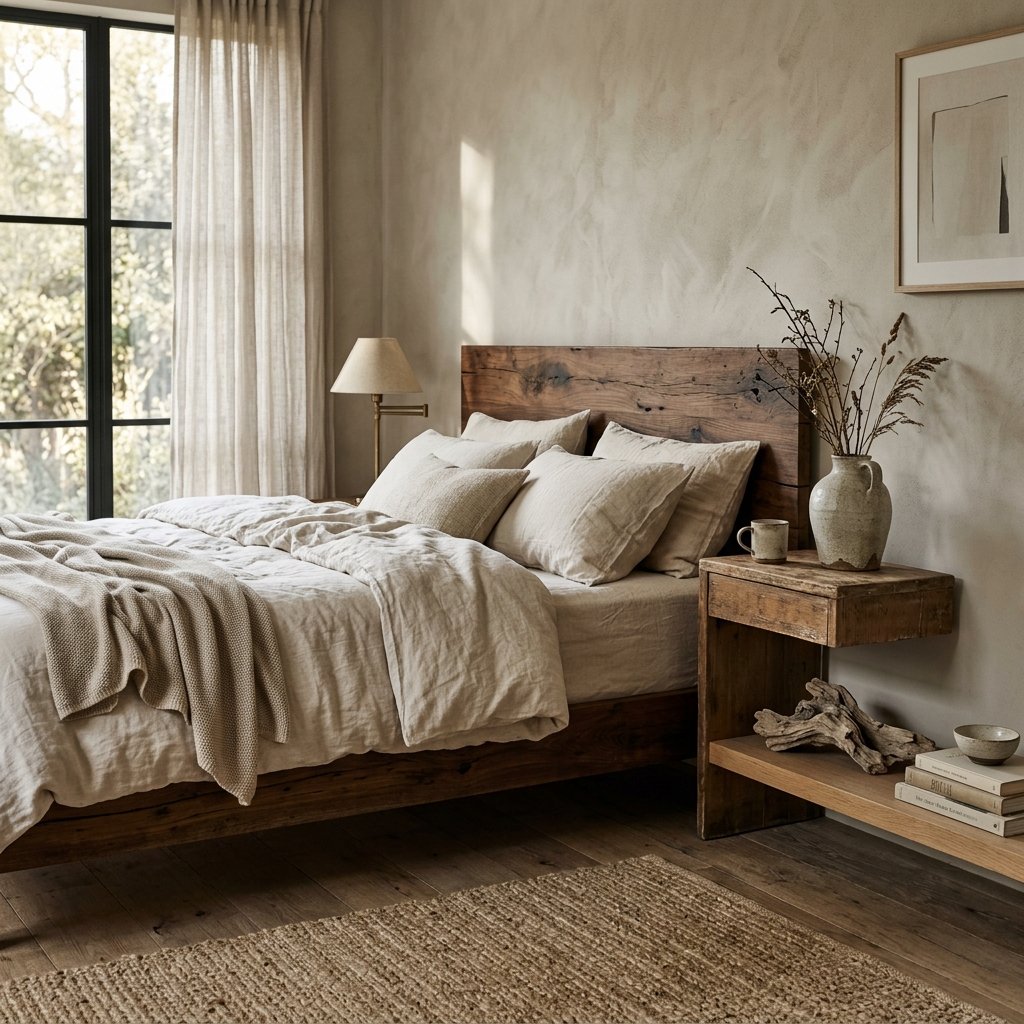
Wabi-sabi is the Japanese philosophy of finding beauty in imperfection, and it shapes the Japandi bedroom in profound ways. A slightly uneven ceramic vase, a handwoven throw with natural irregularities, or a piece of driftwood on a shelf — these are wabi-sabi at its finest. Nothing needs to be perfectly symmetrical or factory-finished to belong in this space.
Embracing the natural aging of materials is central to this idea. A worn wooden nightstand with gentle patina tells a story that a brand-new piece simply cannot. Your bedroom becomes richer and more personal over time when you allow objects to age gracefully around you.
Scandinavian Minimalist Bedroom Ideas
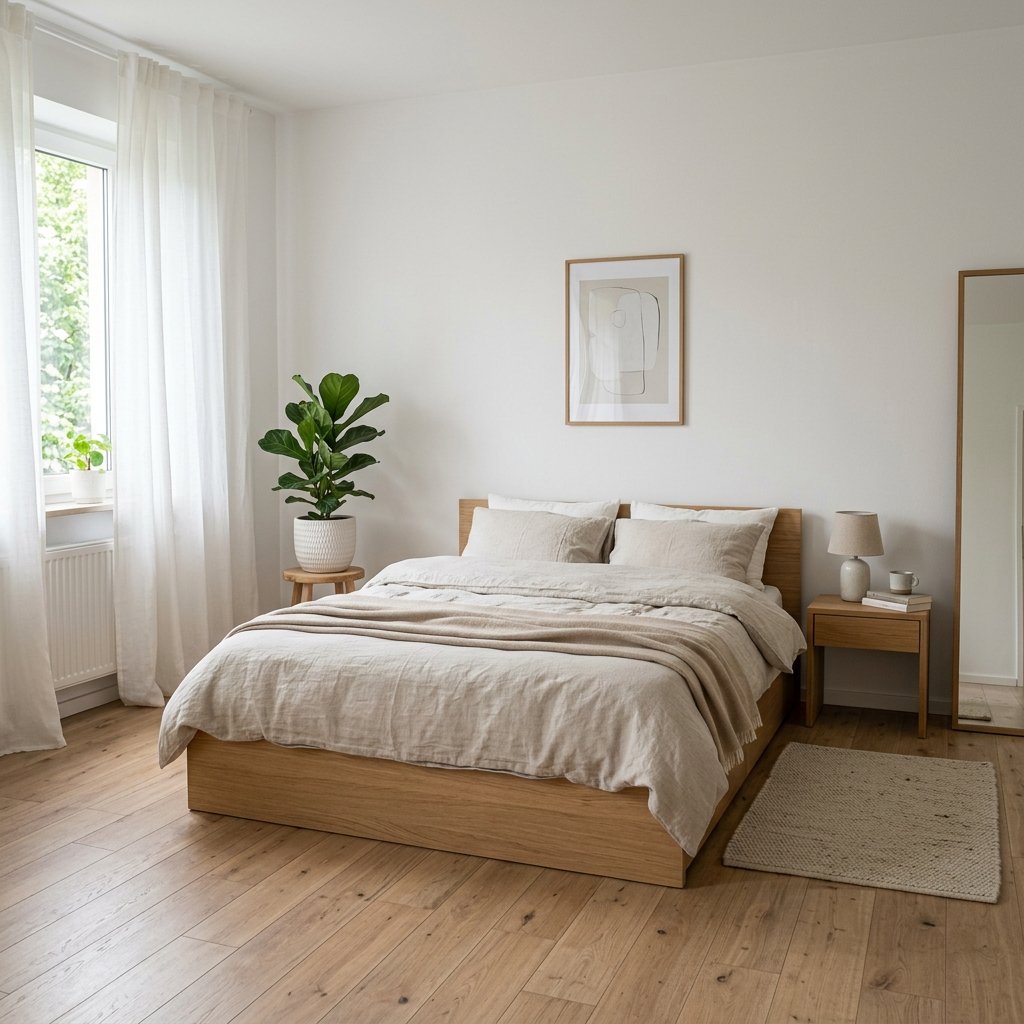
The Scandinavian side of Japandi brings lightness, functionality, and an almost poetic sense of order to the bedroom. Clean lines, uncluttered surfaces, and furniture that serves a clear purpose are all hallmarks of this Nordic sensibility. Every piece earns its place in the room, and nothing exists purely for decoration alone.
Light plays a central role in Scandinavian design, which naturally filters through into Japandi bedrooms. Sheer linen curtains that allow morning light to filter softly into the room create that signature Nordic glow. Pairing this with light oak floors or furniture brings the whole space to life in the most effortless way.
Read More: 29 Beautiful DIY Home Decor Ideas to Refresh Every Room in Your House
Japanese Zen Bedroom Ideas
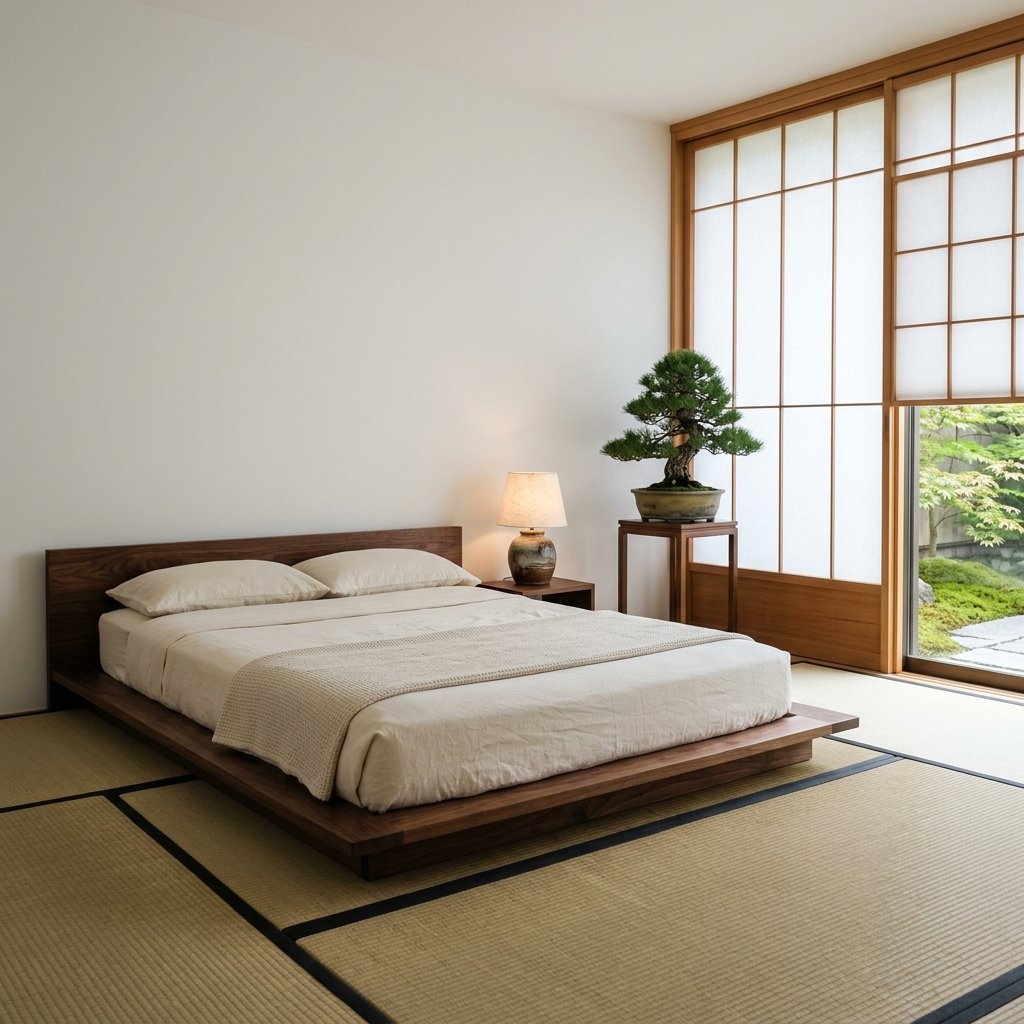
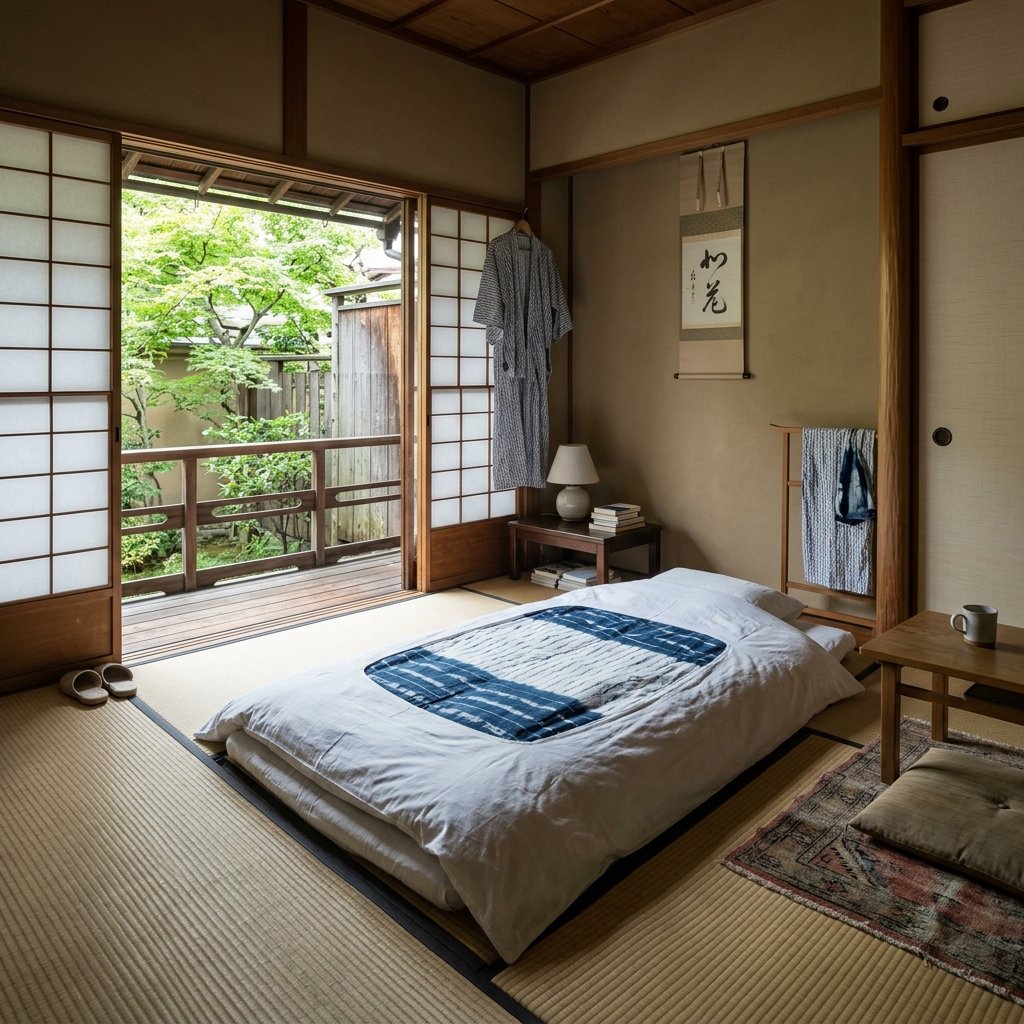
Japanese interior design is built on the concept of ma — the beauty of empty space. A Zen-inspired Japandi bedroom uses negative space not as absence, but as presence. The room breathes because you have given it room to breathe. Bare walls, a single low platform bed, and one considered decorative object are often all that is needed.
Bringing in traditional Japanese elements like a shoji screen or tatami-inspired flooring adds cultural depth to the space. These elements do not feel out of place in a modern bedroom they ground it and give it a sense of history that purely contemporary design often lacks.
Bedroom Furniture Ideas
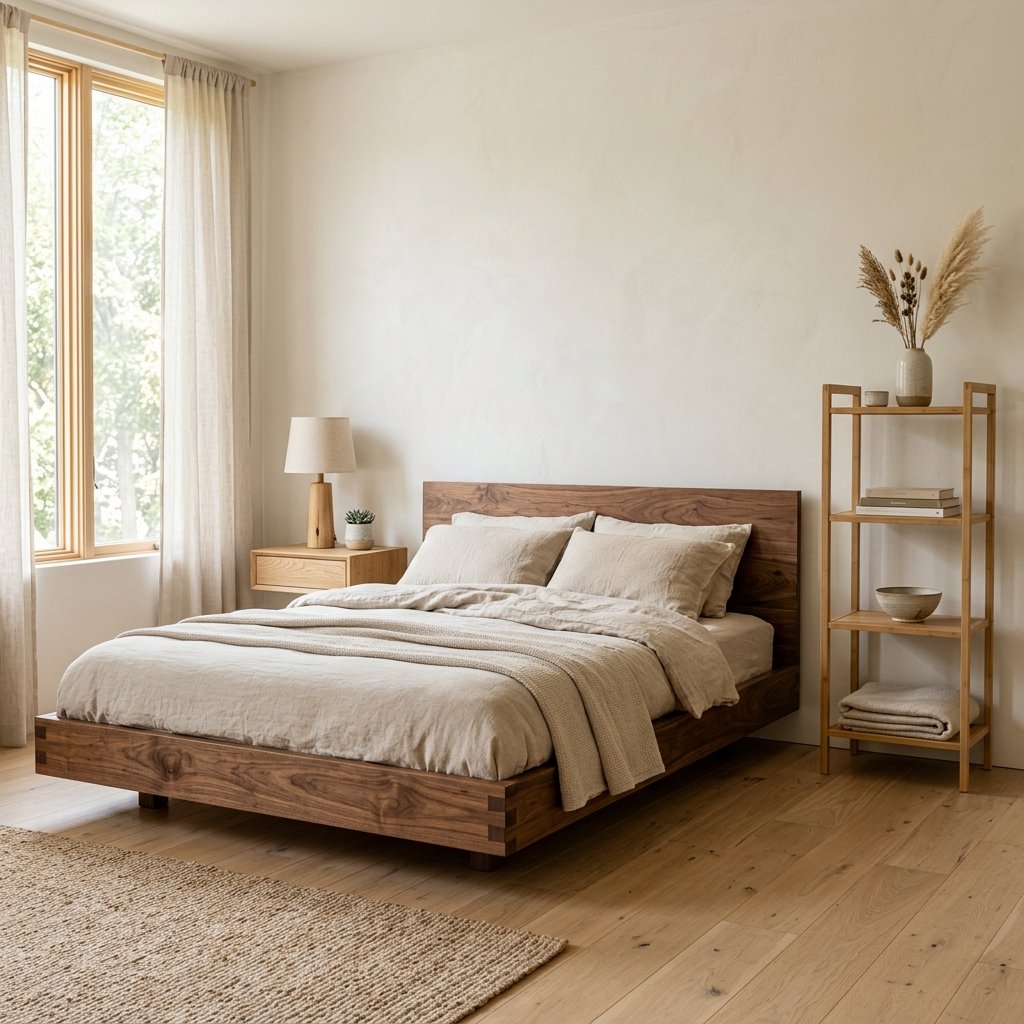
Furniture in a bedroom is chosen with great care and intention. Low-profile bed frames, floating nightstands, and simple storage ottomans all serve the aesthetic beautifully. The goal is furniture that feels close to the ground, modest in scale, and honest in its construction. Natural wood grains are left visible rather than painted over.
Brands like MUJI and HAY have built entire collections around this philosophy, making it easier than ever to find pieces that fit. Look for solid oak, walnut, or bamboo furniture with minimal hardware and clean silhouettes. These pieces will outlast trends and grow more beautiful with time.
Natural Wood Bedroom Ideas
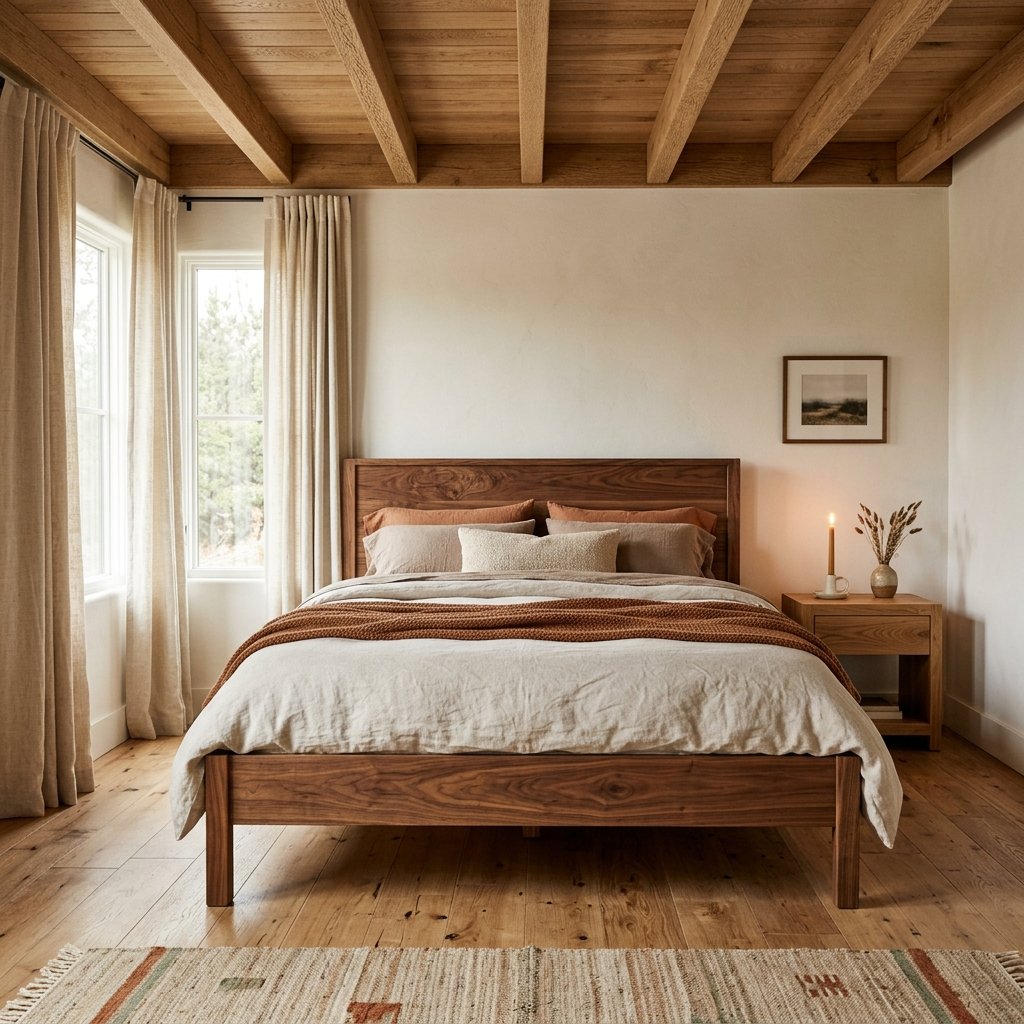
Natural wood is the single most important material in a bedroom, and how you use it defines the character of the entire space. A warm walnut bed frame paired with oak nightstands creates a layered, earthy depth that no painted furniture can replicate. The grain, the knots, the slight variation in color — all of it adds texture and story to the room.
You do not need to use wood exclusively on furniture. Wooden ceiling beams, hardwood floors, or even a simple wooden tray on your dresser all contribute to the natural material story. The key is keeping the wood tones in a warm, earthy family so the room feels cohesive rather than scattered.
Neutral Tones Bedroom Ideas
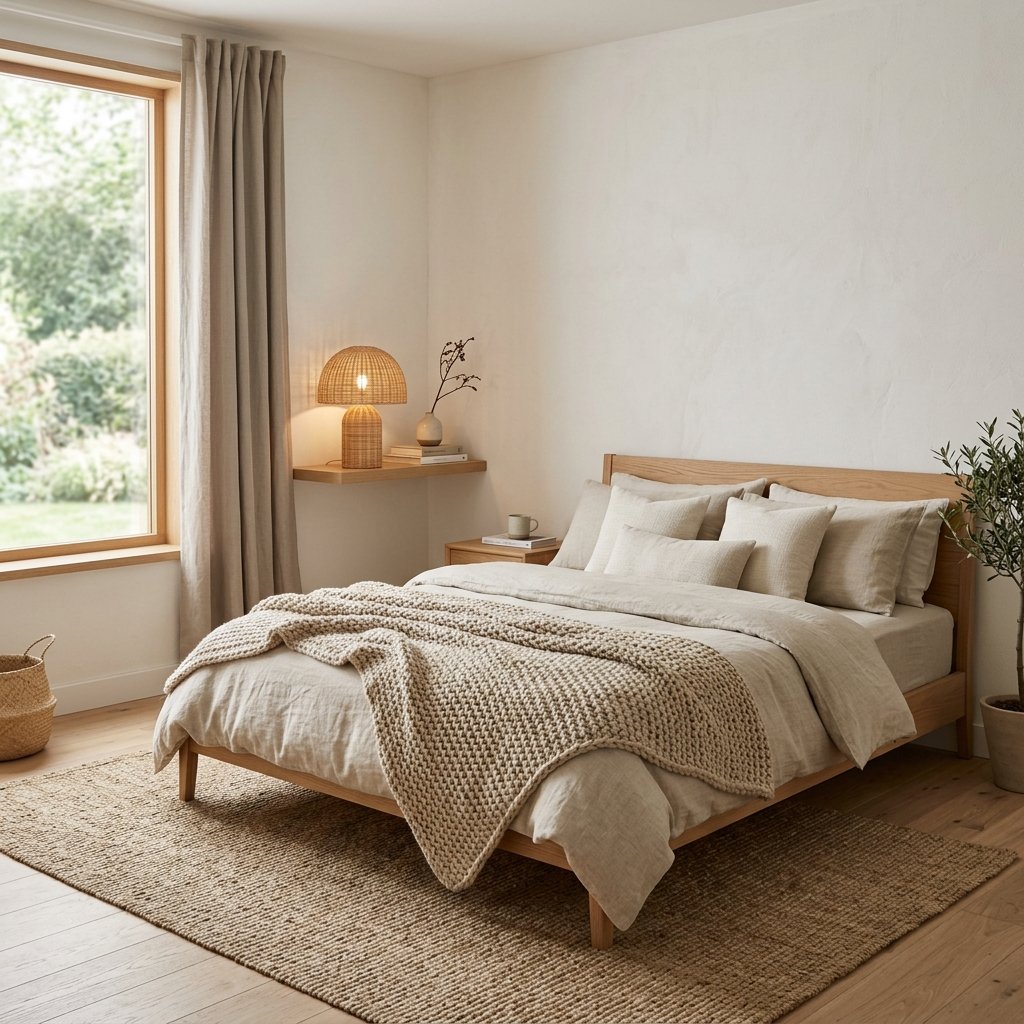
A neutral bedroom does not have to feel cold or sterile — in the Japandi world, neutrals are warm, layered, and deeply inviting. Think warm white walls paired with linen bedding in natural oat tones, a beige wool rug, and soft taupe curtains. Each element adds a slightly different shade of warmth, creating depth without any single bold color.
The secret to making neutrals work is variation in texture rather than variation in color. A chunky knit throw next to smooth linen pillowcases next to a woven rattan lamp creates visual interest that feels calm rather than busy. Texture is the color palette of a bedroom.
Japandi Small Bedroom Ideas
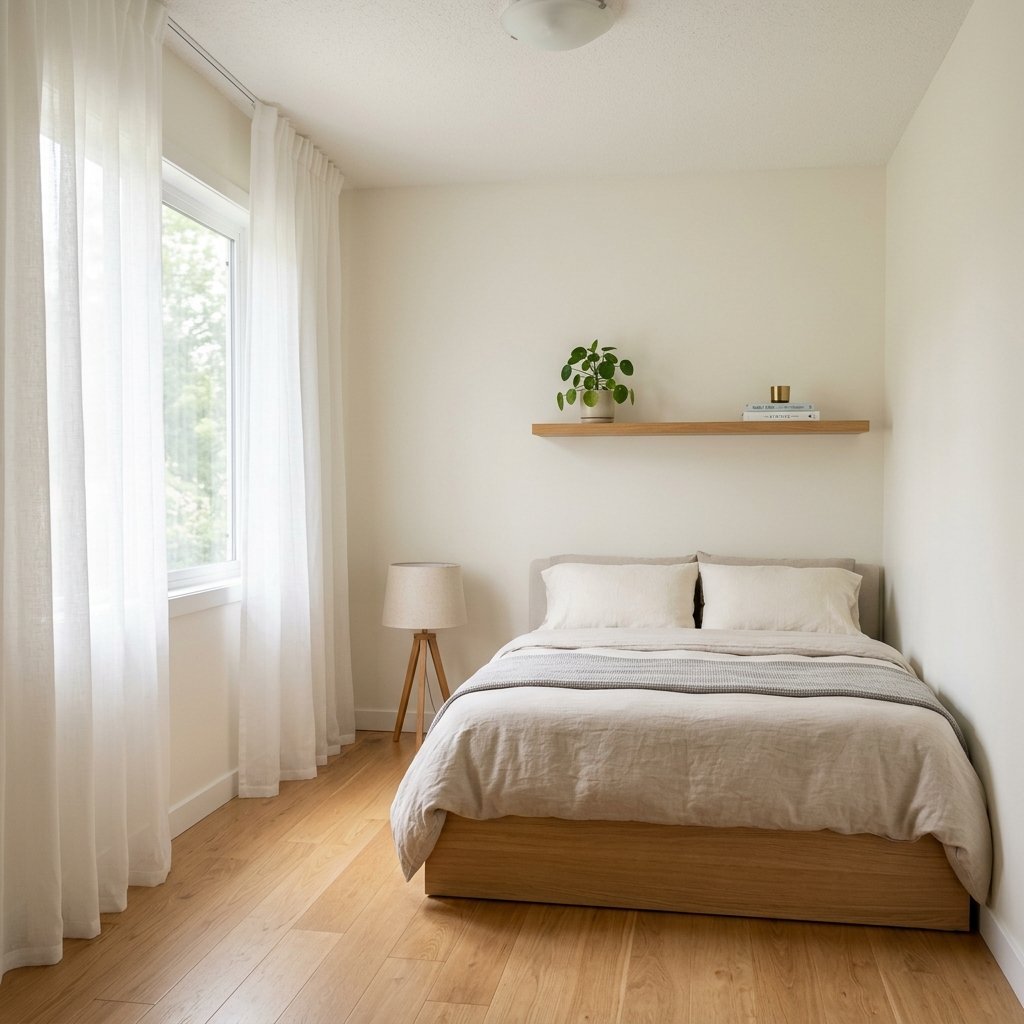
A small bedroom is actually an ideal canvas for Japandi design because the style thrives on restraint and intentionality. In a compact space, every piece of furniture must earn its place, which naturally leads to a cleaner, more considered room. A low platform bed, a single floating shelf, and a floor lamp are often all that a small bedroom needs.
Using light, airy colors on the walls and keeping window treatments minimal allows natural light to make the room feel larger. Mirrors with simple wooden or black metal frames also help expand the visual space without adding clutter. The key is resisting the urge to fill every corner.
Biophilic Bedroom Design Ideas
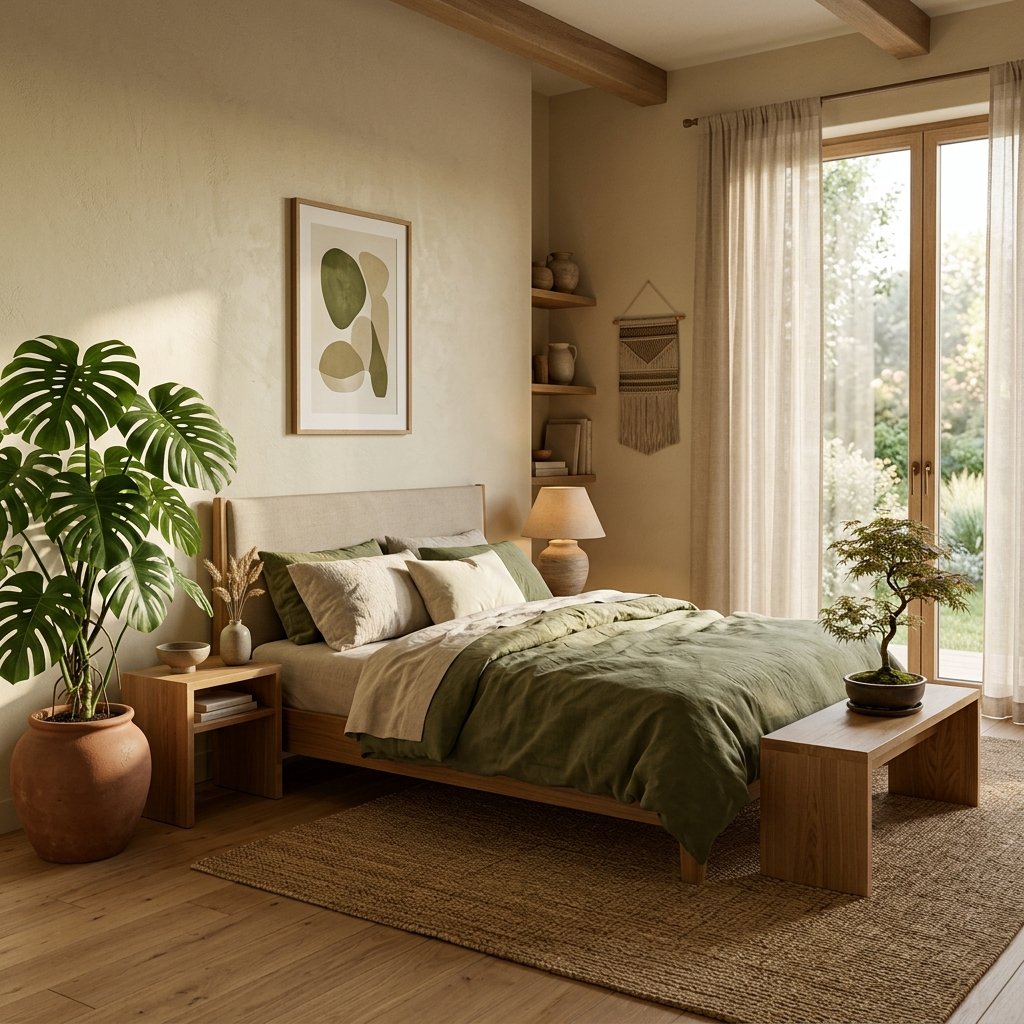
Biophilic design is the practice of connecting interior spaces to the natural world, and it sits at the very heart of Japandi style. Indoor plants bring life, movement, and a sense of calm to the bedroom in a way that no decorative object quite can. A bonsai on the windowsill, a snake plant in the corner, or a trailing pothos on a shelf all add organic energy to the space.
Beyond plants, biophilic design in a bedroom also means maximizing natural light and using organic shapes in your decor. Rounded ceramics, irregular stone objects, and natural fiber textiles all echo the forms found in nature. The bedroom begins to feel like an extension of the outdoor world rather than a retreat from it.
Bedroom Lighting Ideas
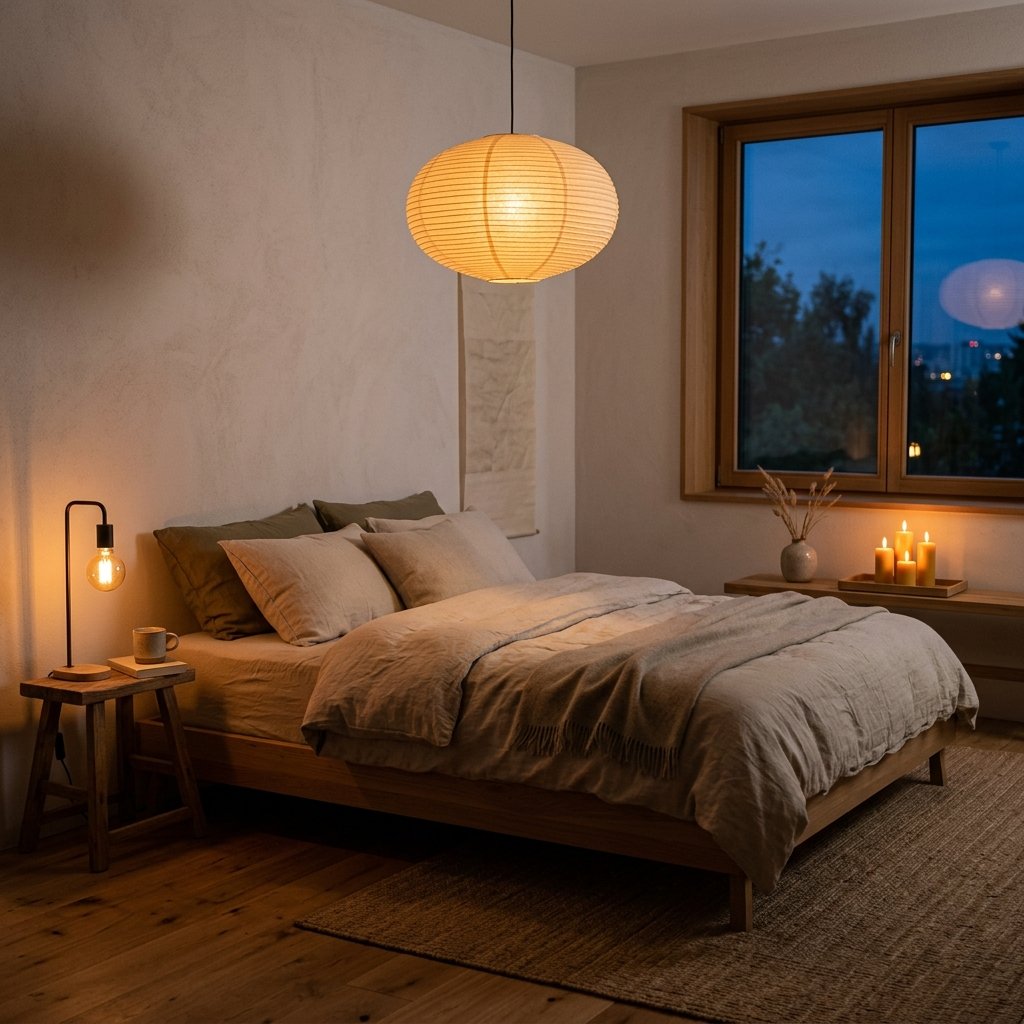
Lighting in a bedroom is always soft, warm, and layered. Harsh overhead lighting has no place here — instead, opt for dimmable warm-toned bulbs, wooden bedside lamps, and paper pendant lights that cast a gentle, diffused glow. The quality of light in the room directly affects how calm and restful it feels at the end of the day.
Washi paper lampshades are a particularly beautiful choice for Japandi bedrooms, as they honor the Japanese craft tradition while producing the softest, most flattering light imaginable. Pairing these with candles on a low wooden tray creates an evening atmosphere that is genuinely restorative.
Linen Bedding and Textile Ideas
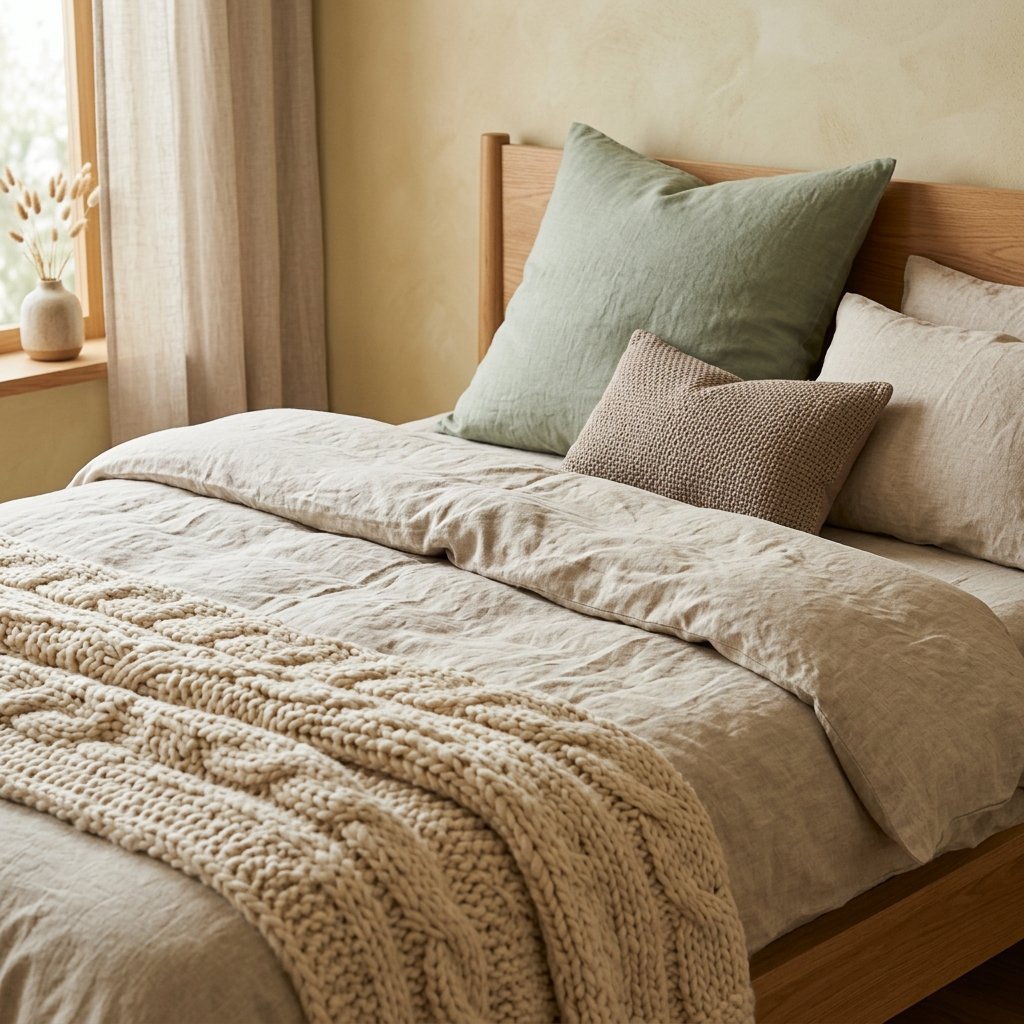
Linen bedding is to a bedroom what natural wood is to the furniture — completely non-negotiable. The natural texture, the gentle wrinkle, the way it softens with every wash — all of these qualities make linen the perfect textile for this aesthetic. Natural oat, warm white, and soft sage are the most beautiful linen colors for a Japandi bed.
Layering textiles adds warmth and visual depth without overwhelming the space. A chunky knit throw at the foot of the bed, a linen euro pillow, and a woven cushion in a slightly deeper tone create a bed that looks effortlessly beautiful. Always choose natural fibers — cotton, linen, wool, and jute — over synthetic alternatives.
Japandi Master Bedroom Ideas
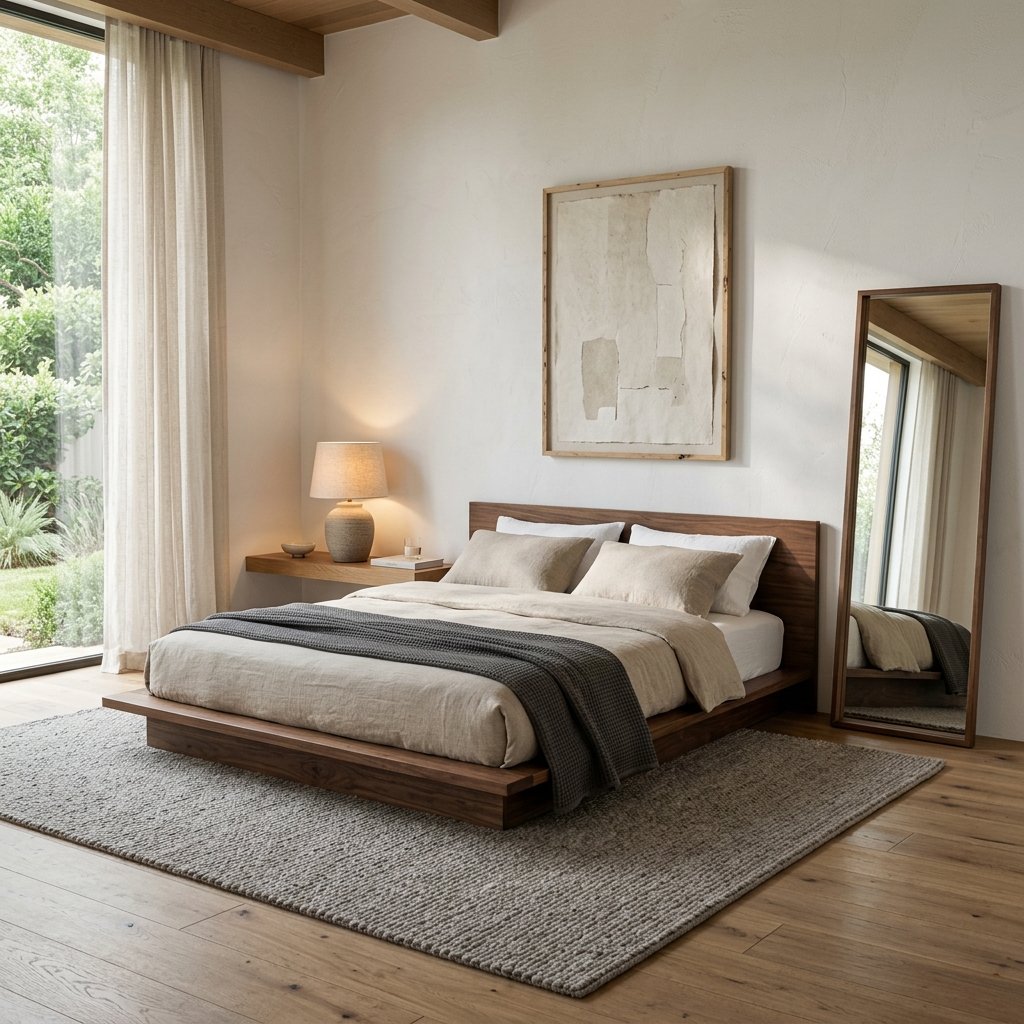
A Japandi master bedroom has the luxury of space, and the best designs use that space generously. Wide, low platform beds with clean walnut or oak frames become natural focal points without any decorative fuss around them. The rest of the room breathes freely, with generous negative space on either side of the bed.
In a master bedroom, you can afford to invest in quality pieces that define the entire room. A beautiful handcrafted ceramic table lamp, a full-length wooden mirror, and a quality wool area rug in a warm neutral tone are all pieces that will serve you for decades.
Low Profile Bed Frame Ideas
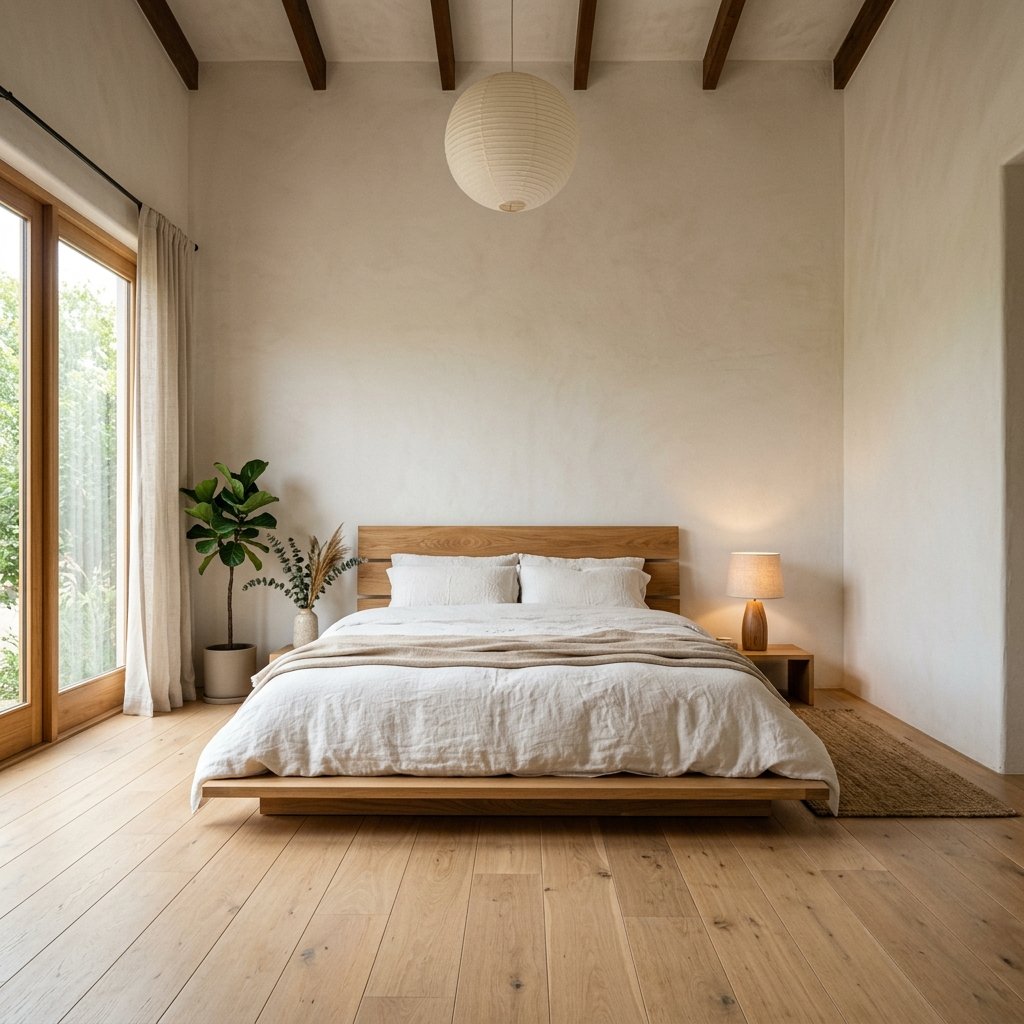
The low-profile bed frame is one of the most defining features of a bedroom. Sitting close to the floor, it creates a sense of groundedness and humility that perfectly captures the Japanese design spirit. These frames work beautifully in both large and small spaces, making the ceiling feel higher and the room feel more open.
Look for platform beds in solid wood with simple, clean joinery. Avoid ornate headboards or metal hardware — the beauty of a Japandi bed frame is in its honesty and restraint. A simple wooden slat headboard or no headboard at all are both perfectly appropriate choices.
Bedroom Plant Ideas
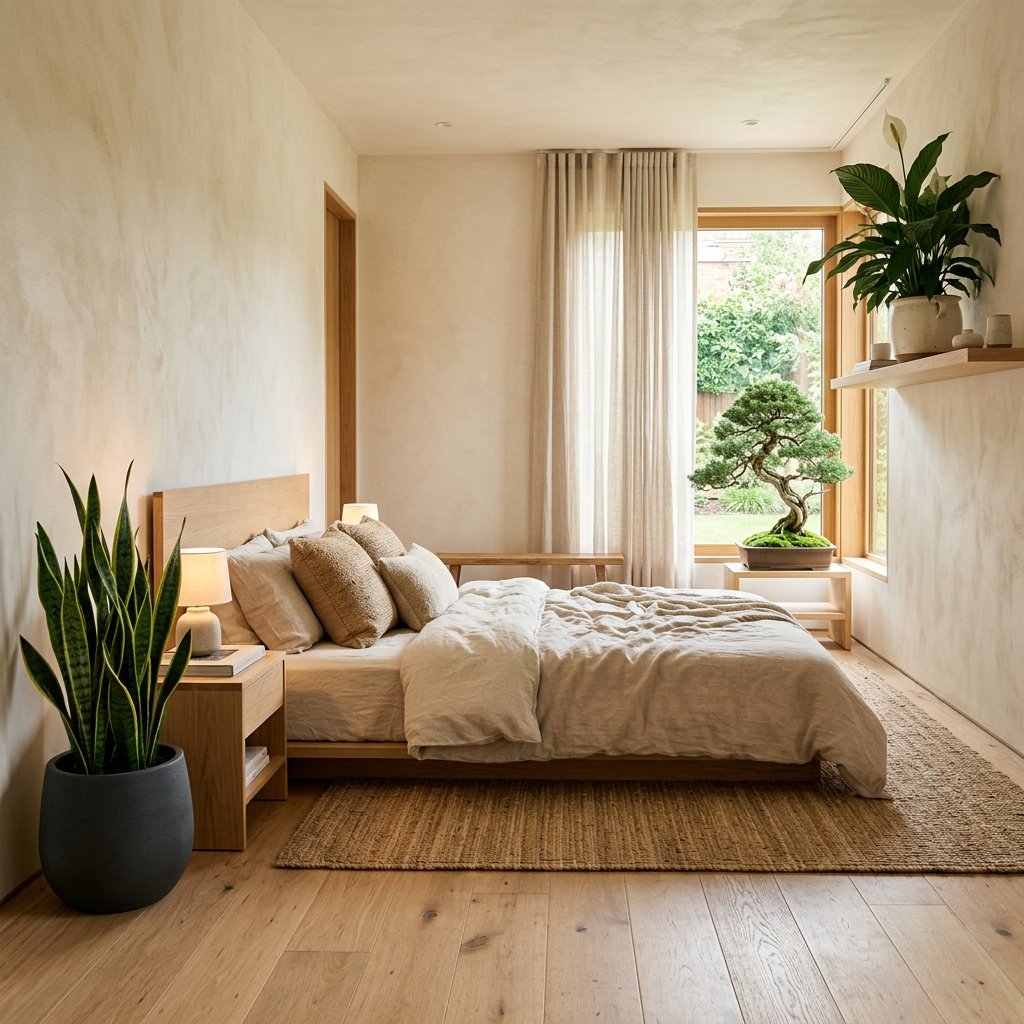
Plants in a bedroom should feel curated rather than collected. One or two well-chosen plants placed thoughtfully will always outperform a crowded shelf of greenery. A bonsai tree on a low wooden stand, a large monstera in a matte ceramic pot, or a simple peace lily by the window all bring quiet life to the room.
The choice of pot matters as much as the plant itself in a Japandi space. Matte ceramic pots in earthy tones — cream, terracotta, charcoal, or sage — complement the aesthetic beautifully. Avoid plastic pots or anything too shiny, as they break the visual harmony of the space.
Woven Texture and Rattan Bedroom Ideas
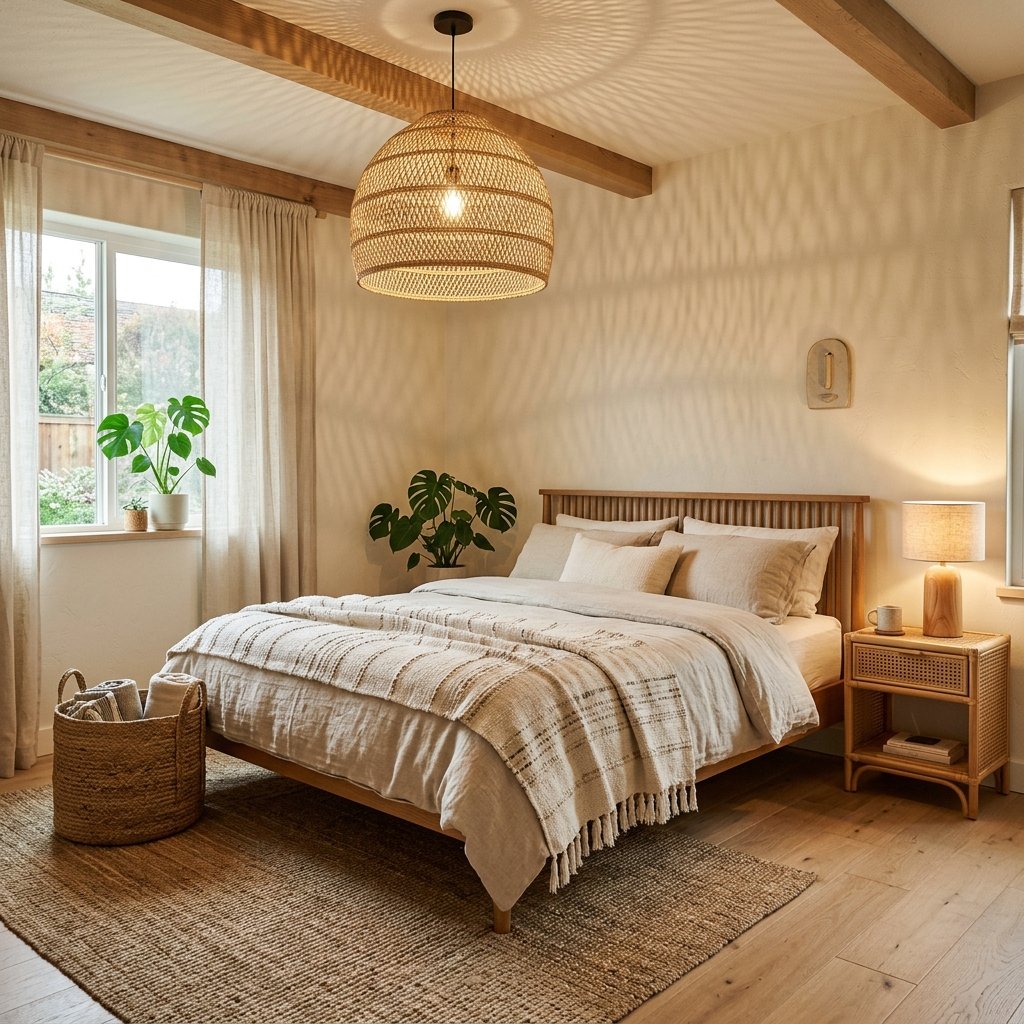
Rattan and woven textures bring a warm, handcrafted quality to the bedroom that feels both natural and deeply considered. A rattan pendant light above the bed, a woven basket for storage, or a jute rug underfoot all add tactile richness without visual clutter. These materials connect the room to craft traditions from both Japan and Scandinavia.
The beauty of rattan and woven pieces is that they age gracefully, softening and warming over time. A well-made rattan nightstand will look better in five years than it does today, which aligns perfectly with the wabi-sabi principle of embracing natural aging.
Bedroom Wall Decor Ideas
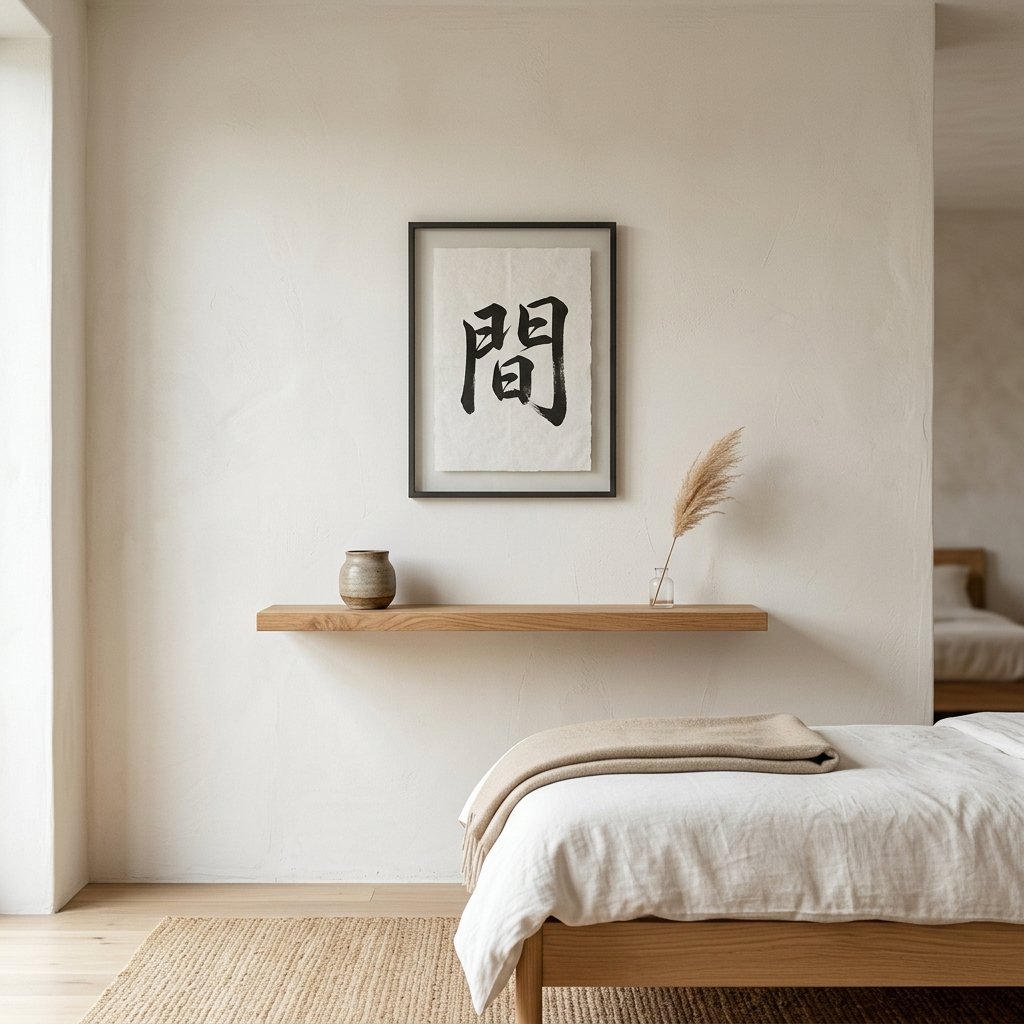
Walls in a bedroom are treated with great restraint. A single piece of Japanese calligraphy, a small original painting in muted tones, or a simple wooden shelf holding one or two objects is all that is needed. The empty wall around any decorative element is as important as the element itself — that is the concept of ma in action.
Avoid gallery walls, busy wallpaper patterns, or multiple decorative pieces competing for attention. If you use wallpaper, choose something subtle — a soft linen texture, a gentle grasscloth effect, or a barely-there geometric pattern in warm neutrals works beautifully.
Hygge Inspired Bedroom Ideas
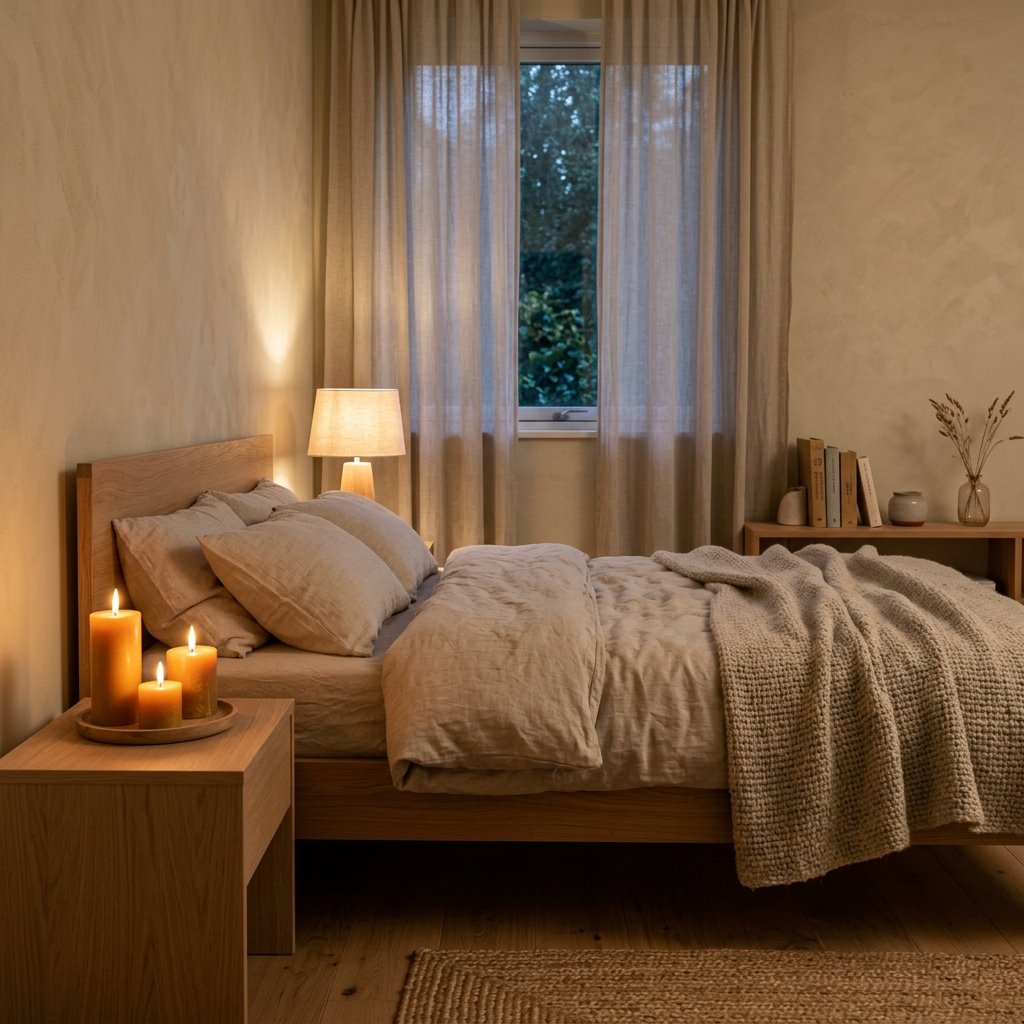
Hygge is the Danish concept of coziness and warmth, and it brings a softness to bedrooms that stops them from feeling too austere. Soft blankets folded at the foot of the bed, a cluster of candles on a wooden tray, and warm amber lighting in the evening all create that signature hygge atmosphere. The bedroom becomes a place you genuinely want to spend time in.
The key to hygge in a Japandi context is keeping the cozy elements natural and simple. A wool throw rather than a synthetic blanket, beeswax candles rather than plastic tea lights, and a wooden tray rather than a metal one — every small choice contributes to the overall feeling of warmth and authenticity.
Bedroom Rug Ideas
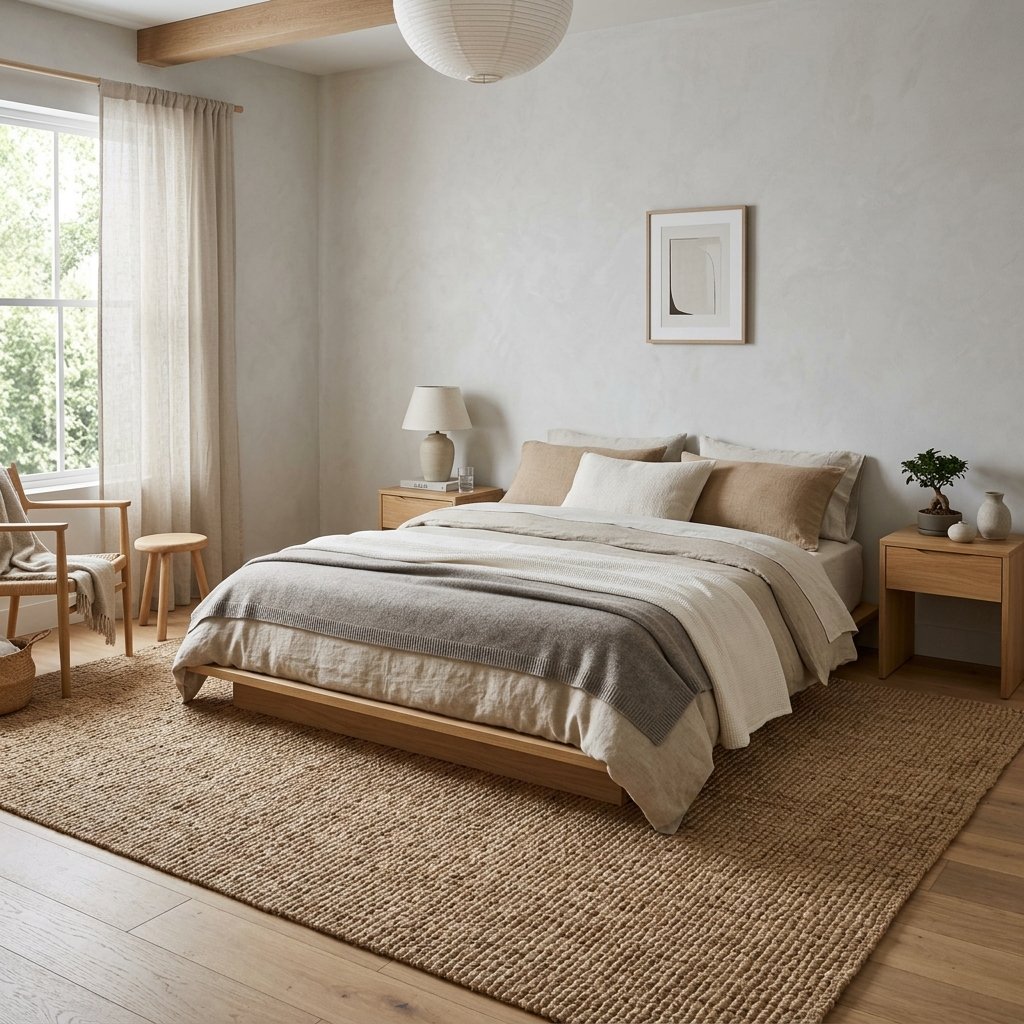
A rug grounds the entire bedroom and ties the space together in a way that no other single element can. Natural fiber rugs in jute, wool, or cotton in warm neutral tones work best. A low-pile wool rug in warm grey, a jute rug with a simple woven pattern, or a cotton flatweave in natural off-white are all excellent choices.
Size matters enormously with rugs in a bedroom. The rug should be large enough to sit under at least the front two legs of the bed, creating a cohesive zone rather than a small island in the middle of the floor. Oversized rugs make the room feel more generous and complete.
Bamboo Bedroom Furniture Ideas
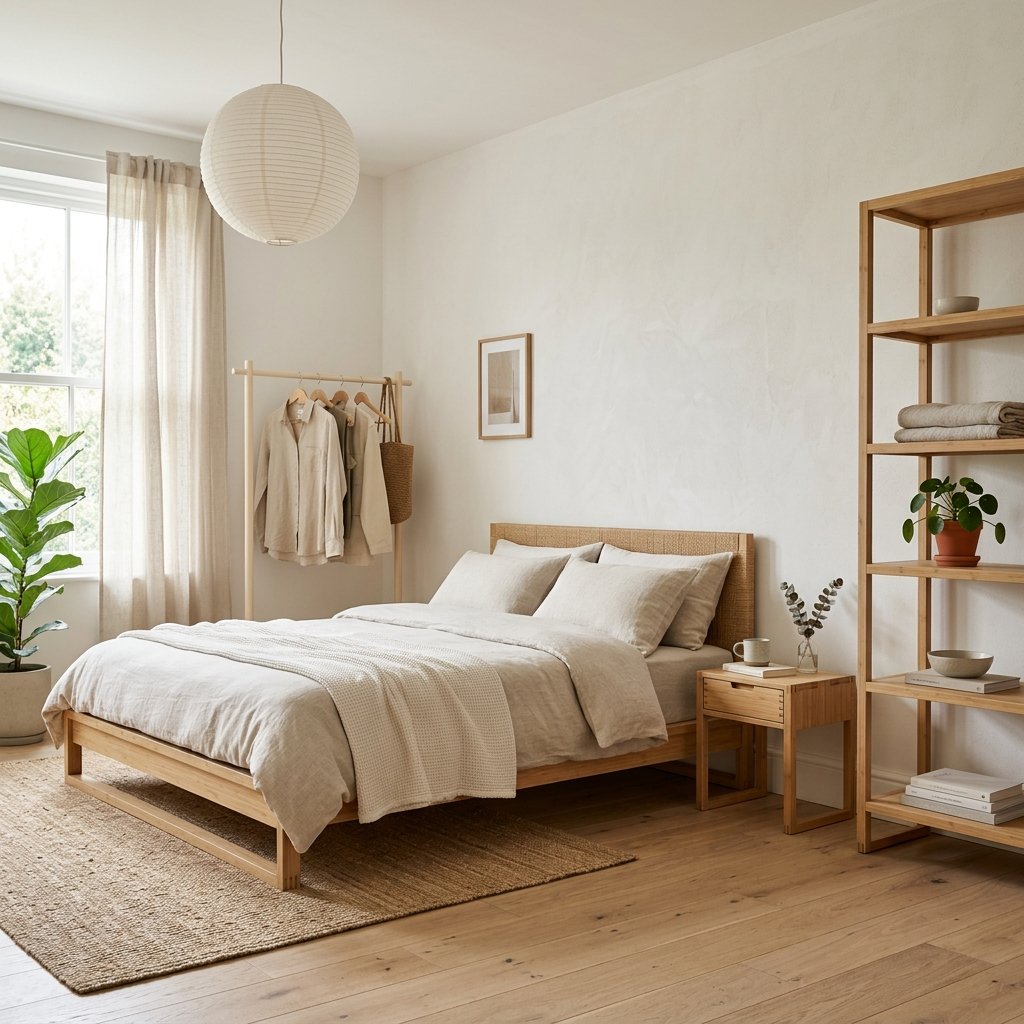
Bamboo furniture brings a light, fresh quality to bedrooms that heavier hardwoods sometimes cannot. A bamboo bedside table, a storage shelf, or a simple bamboo clothes rail all add organic structure to the room while keeping the visual weight low. Bamboo is also one of the most sustainable materials available, which aligns with the values of anyone drawn to this style.
Pair bamboo pieces with linen textiles and matte ceramic accessories for a look that feels fresh and deeply considered. The pale, warm tone of bamboo works particularly well against warm white walls and natural fiber flooring.
Bedroom Curtain Ideas
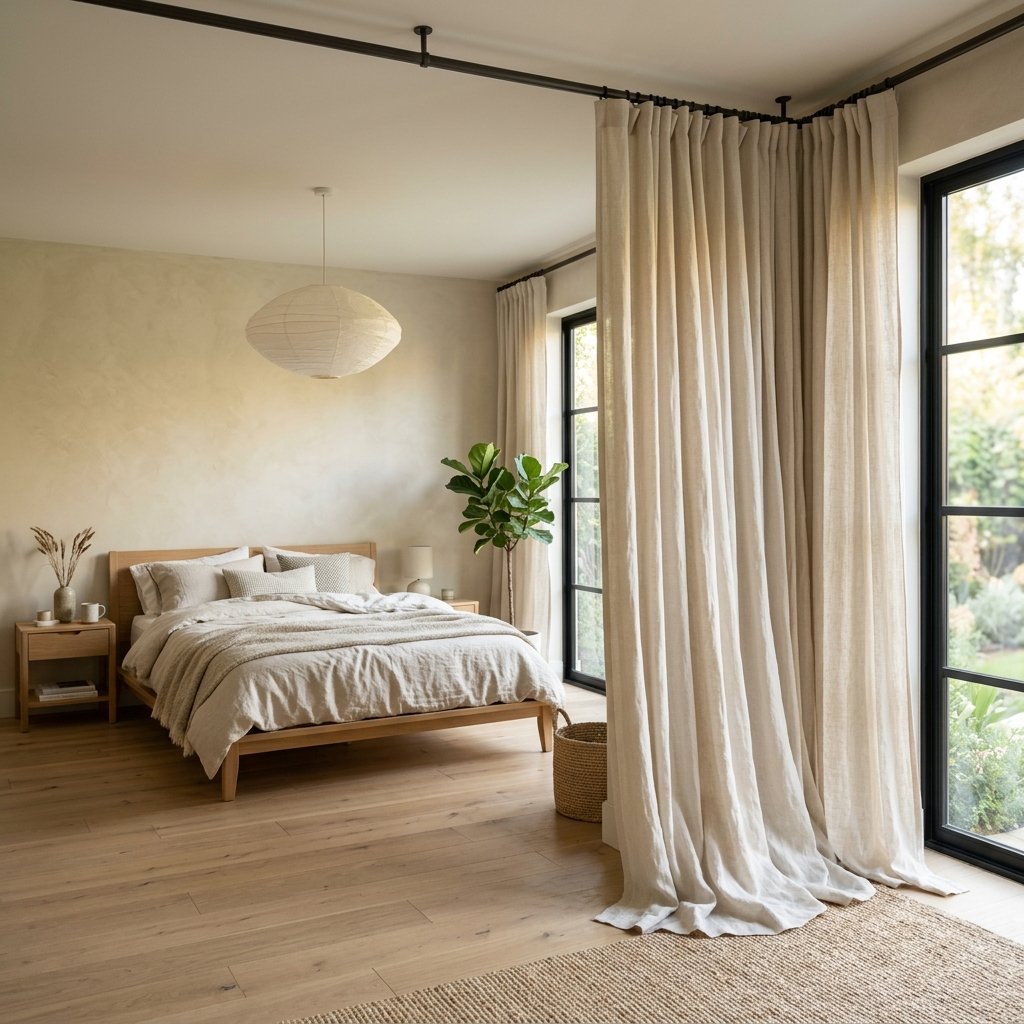
Curtains in a bedroom should be simple, natural, and floor-length. Linen or cotton curtains in warm white, natural ecru, or soft sage allow light to filter through gently while maintaining privacy. Avoid heavy blackout curtains in dark colors unless they are paired with a sheer inner layer that softens the look.
The way curtains hang is just as important as the fabric itself. Floor-length curtains with a slight puddle at the bottom create a soft, effortless look that suits the Japandi aesthetic perfectly. Mount the curtain rod close to the ceiling to maximize the sense of height in the room.
Japandi Dark Wood Bedroom Ideas
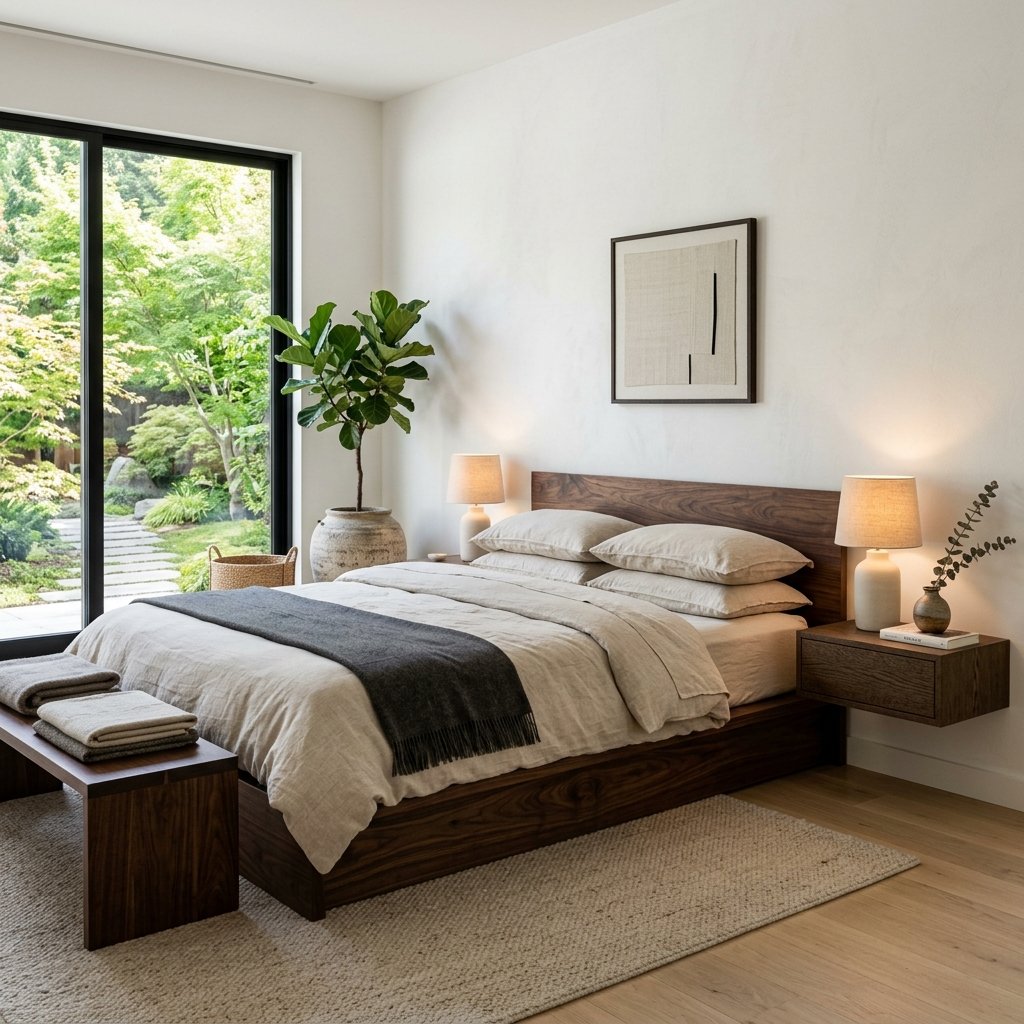
Dark wood brings a moody, sophisticated depth to bedrooms that lighter woods cannot. A walnut bed frame against warm white walls, a dark oak floating shelf, or a deep espresso side table all create beautiful contrast within the neutral palette. Dark wood does not make the room feel heavy when it is used with intention and restraint.
The key to using dark wood successfully in a Japandi bedroom is pairing it with plenty of light — light walls, light textiles, and generous natural light from windows. The contrast between the deep wood tones and the soft surrounding palette creates a room that feels rich and balanced at the same time.
Negative Space Bedroom Design Ideas
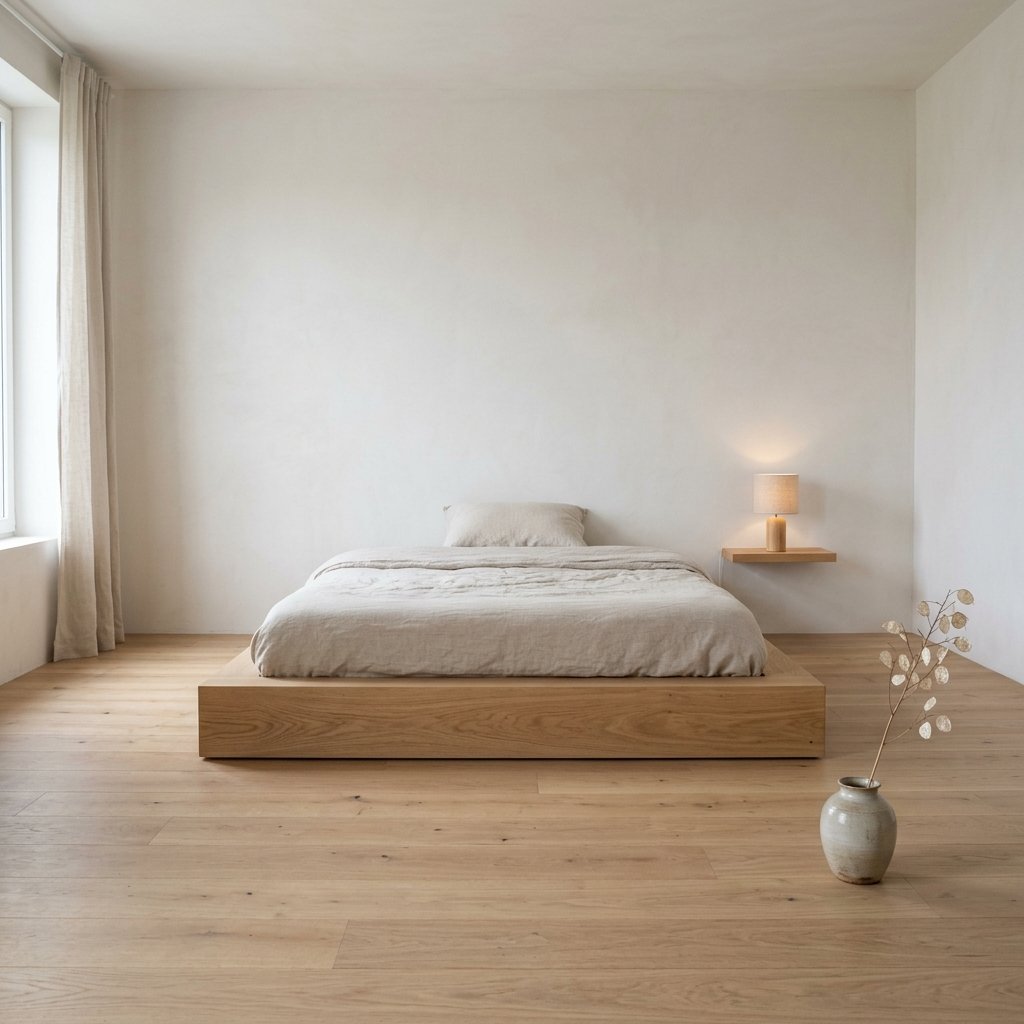
Negative space — the deliberate use of empty areas within a room — is one of the most powerful and misunderstood tools in Japandi design. An empty wall, a bare corner, a nightstand with nothing on it but a single lamp — these empty moments give the eye a place to rest and the mind a moment of quiet. Rooms that are too full, however beautiful the individual pieces, never achieve the serenity that Japandi promises.
Practicing restraint in a Japandi bedroom means editing ruthlessly and continuously. If something does not contribute to the calm of the space, it belongs elsewhere. The goal is not emptiness for its own sake, but intentional spaciousness that makes everything you do choose to display feel more meaningful.
Bedroom Storage Ideas
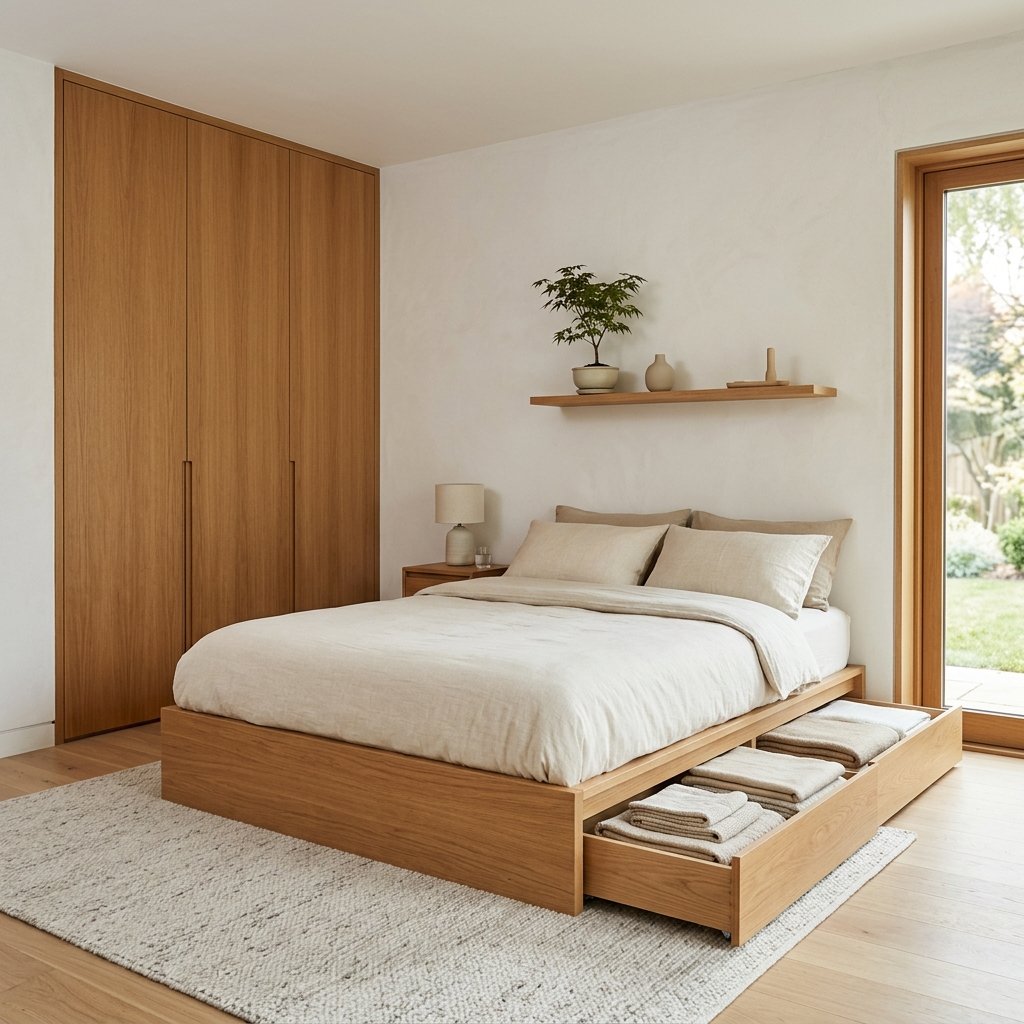
Storage in a bedroom is thoughtful, hidden, and beautiful. Built-in wardrobes with flat-panel doors in warm wood or matte white keep clothing out of sight without visual clutter. Under-bed storage in natural wood drawers is a practical solution that keeps the floor clear and the room feeling open.
Open storage, when used at all, should be kept extremely minimal and well-curated. A single floating shelf holding one plant, two books, and a small ceramic object is Japandi storage done right. The moment a shelf becomes crowded, it loses its role as a restful visual element.
Earthy Tones Bedroom Ideas
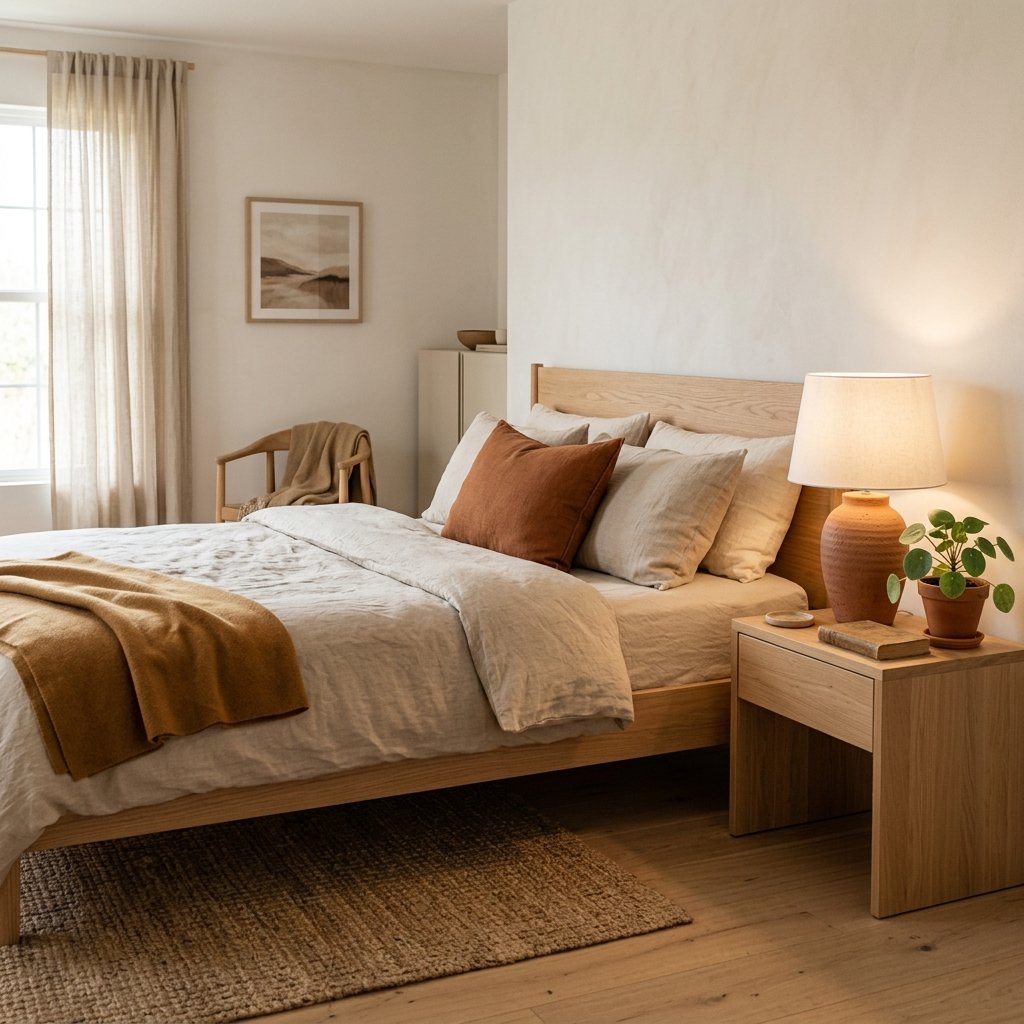
Earthy tones bring warmth, depth, and a sense of connection to the natural world that cooler palettes simply cannot replicate. Terracotta accents in ceramic accessories, a rust-toned linen cushion, or a warm ochre throw all add richness to the neutral Japandi palette. These tones work especially well in autumn and winter when the room needs an extra layer of warmth.
The trick with earthy tones in a Japandi bedroom is using them sparingly as accents rather than as dominant colors. Too much terracotta or rust can tip the space from serene into busy. One or two earthy accent pieces against a predominantly neutral backdrop is the sweet spot.
Bedroom Nightstand Ideas
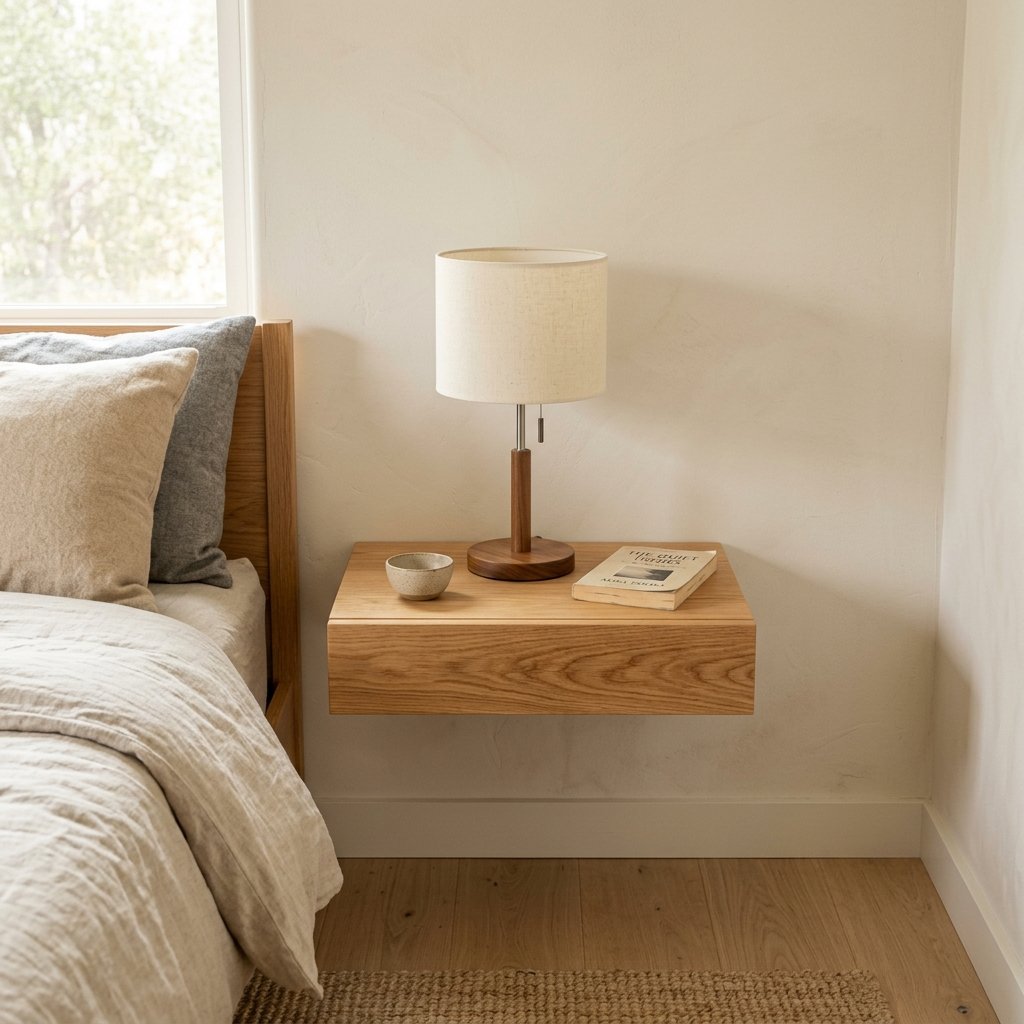
The nightstand is a small piece of furniture that carries enormous weight in a Japandi bedroom. A simple floating wooden shelf, a low-profile solid oak cube, or a single rattan side table beside the bed all make beautiful Japandi nightstand choices. Keep the surface of the nightstand almost entirely clear — a single lamp, one book, and perhaps a small plant is the Japandi ideal.
Wall-mounted nightstands are a particularly clever choice in smaller bedrooms because they keep the floor visible and the room feeling open. They also have the added benefit of being adjustable in height, which lets you tailor the space to exactly how you want it.
Shoji Screen Bedroom Ideas
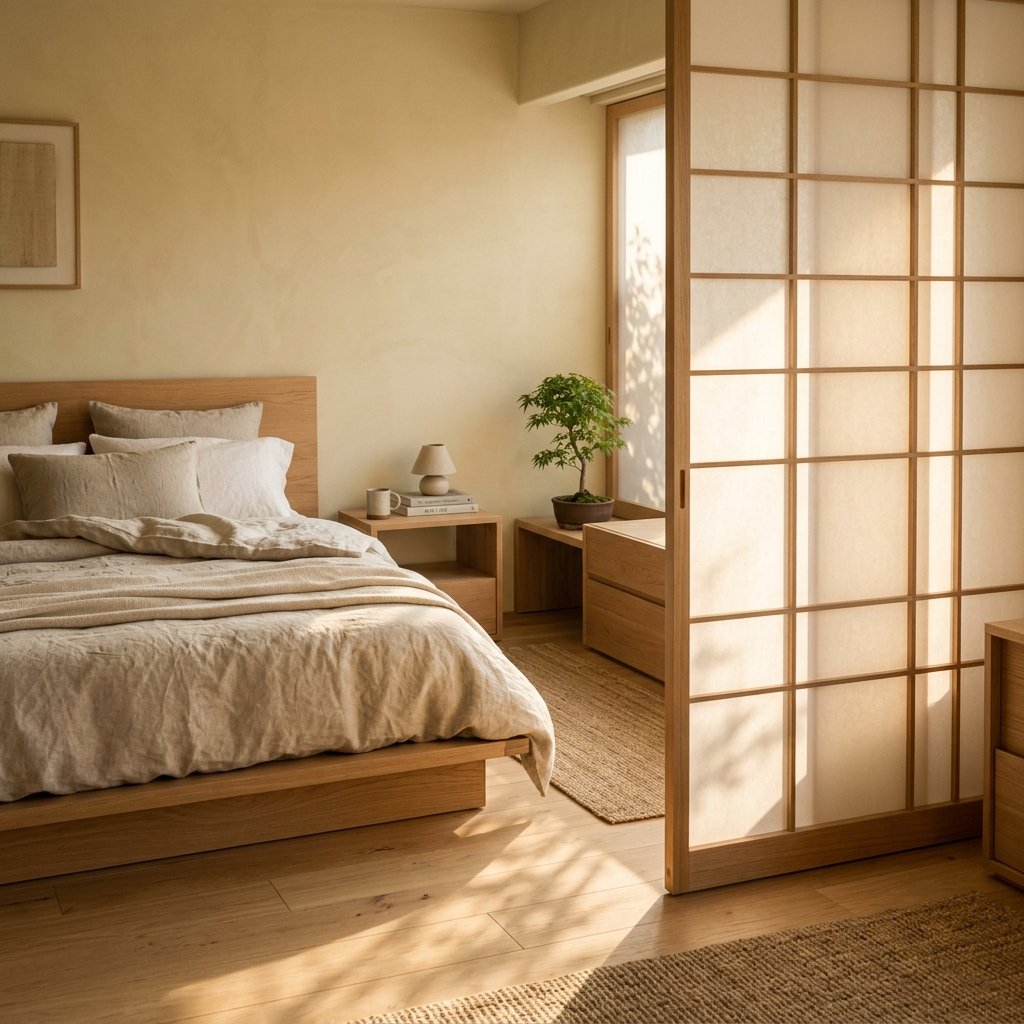
A shoji screen is one of the most direct and beautiful ways to bring Japanese interior design into a modern Japandi bedroom. These elegant sliding panels, traditionally made with wooden frames and translucent rice paper, diffuse light in the most gentle and flattering way. Used as a room divider, a wardrobe door, or a window treatment, a shoji screen adds cultural depth and visual warmth simultaneously.
Modern interpretations of the shoji screen are widely available and work seamlessly in contemporary bedrooms. Look for screens with simple oak or bamboo frames and frosted glass or paper panels. Even a single screen panel leaned against a wall makes a striking and meaningful decorative statement.
Japandi Black and White Bedroom Ideas
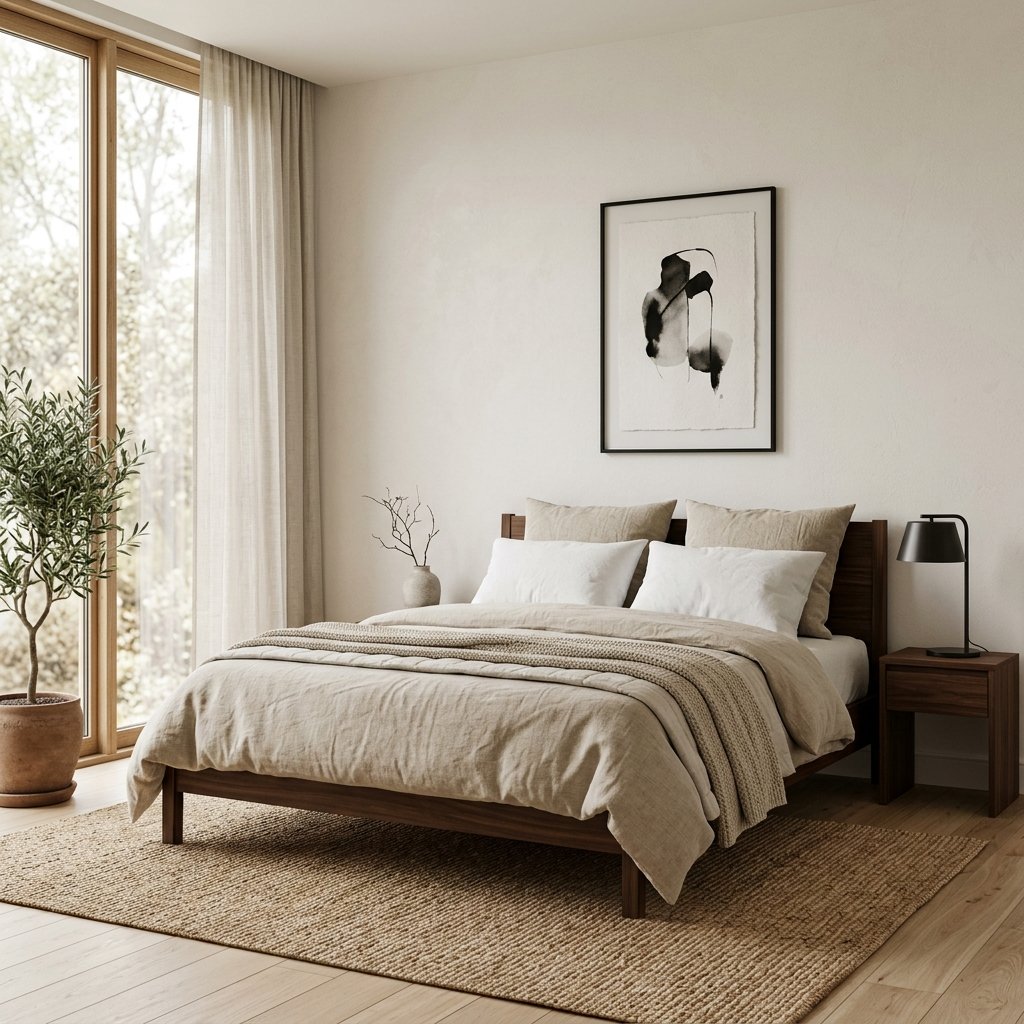
A black and white Japandi bedroom is one of the most striking interpretations of this style. Warm white walls and linen bedding paired with black metal lamp bases, dark walnut furniture, and black-framed artwork create a bedroom that feels both modern and deeply calm. The contrast is bold but never harsh because every element is chosen with care.
The key to making black and white work in a Japandi context is ensuring that neither color dominates entirely. The white provides the breathing room and light, while the black provides definition and grounding. Natural textures — linen, wood, jute — soften the contrast and keep the room from feeling stark.
Cozy Minimalist Bedroom Ideas
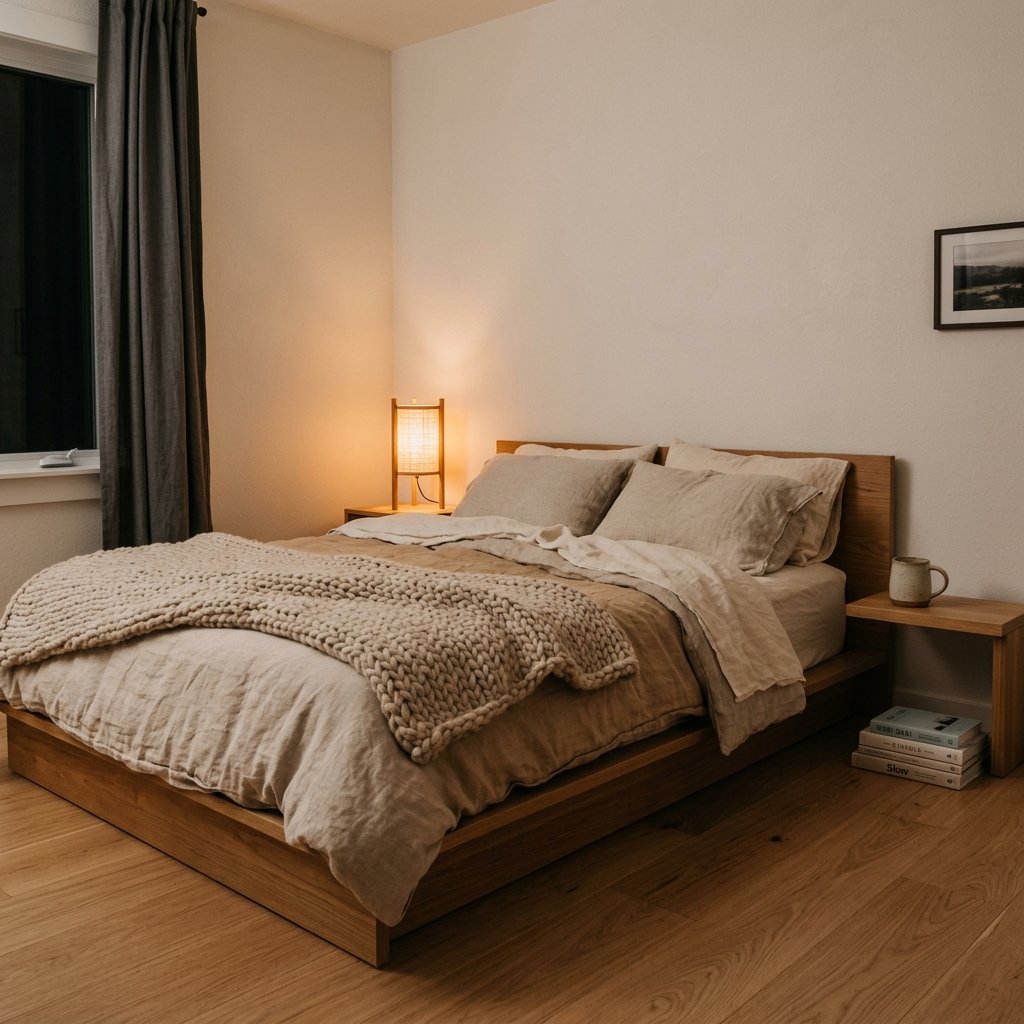
Cozy minimalism is the sweet spot where Japandi lives — spaces that are simple and uncluttered but still deeply warm and inviting. The myth that minimalist bedrooms must feel cold and sterile is completely dismantled by a well-executed Japandi space. Layered natural textiles, warm lighting, and a few carefully chosen objects create a room that is both visually quiet and emotionally rich.
Think of cozy minimalism as editing with warmth rather than stripping everything away. You keep what brings you genuine comfort and joy, and you let go of everything else. The result is a bedroom that feels curated rather than bare, intentional rather than empty.
Bedroom Ceiling Ideas
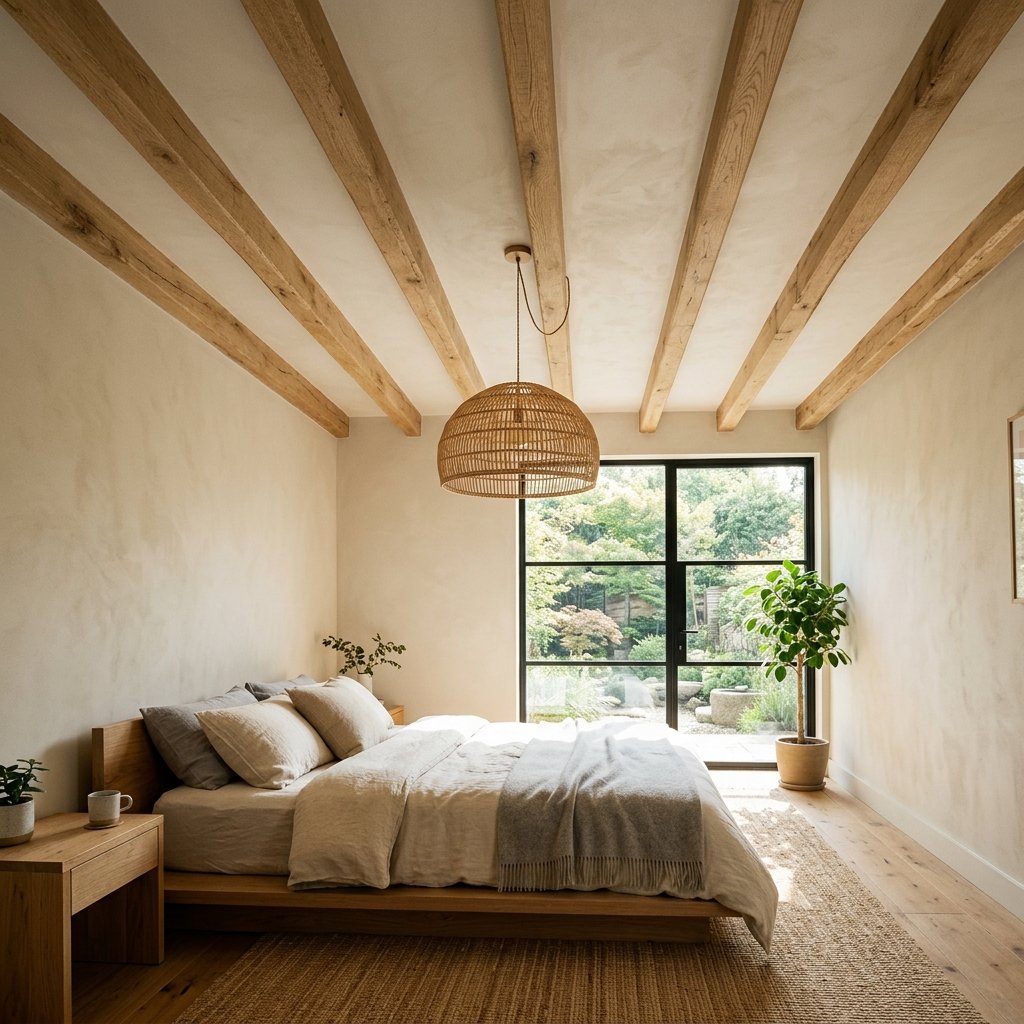
The ceiling is one of the most overlooked surfaces in a bedroom, and Japandi design treats it with the same quiet intention it gives to every other element. Warm white or very pale greige ceilings create a seamless, expansive feeling that works beautifully with the earthy tones below. Exposed wooden ceiling beams, where the architecture allows, bring the natural material story upward into the room.
Simple pendant lighting hung from the ceiling — a single paper lantern or a minimal rattan pendant — becomes a sculptural focal point that adds beauty without complexity. Avoid elaborate ceiling treatments, crown molding, or decorative plasterwork, as these conflict with the clean, honest spirit of Japandi design.
Affordable Japandi Bedroom Ideas
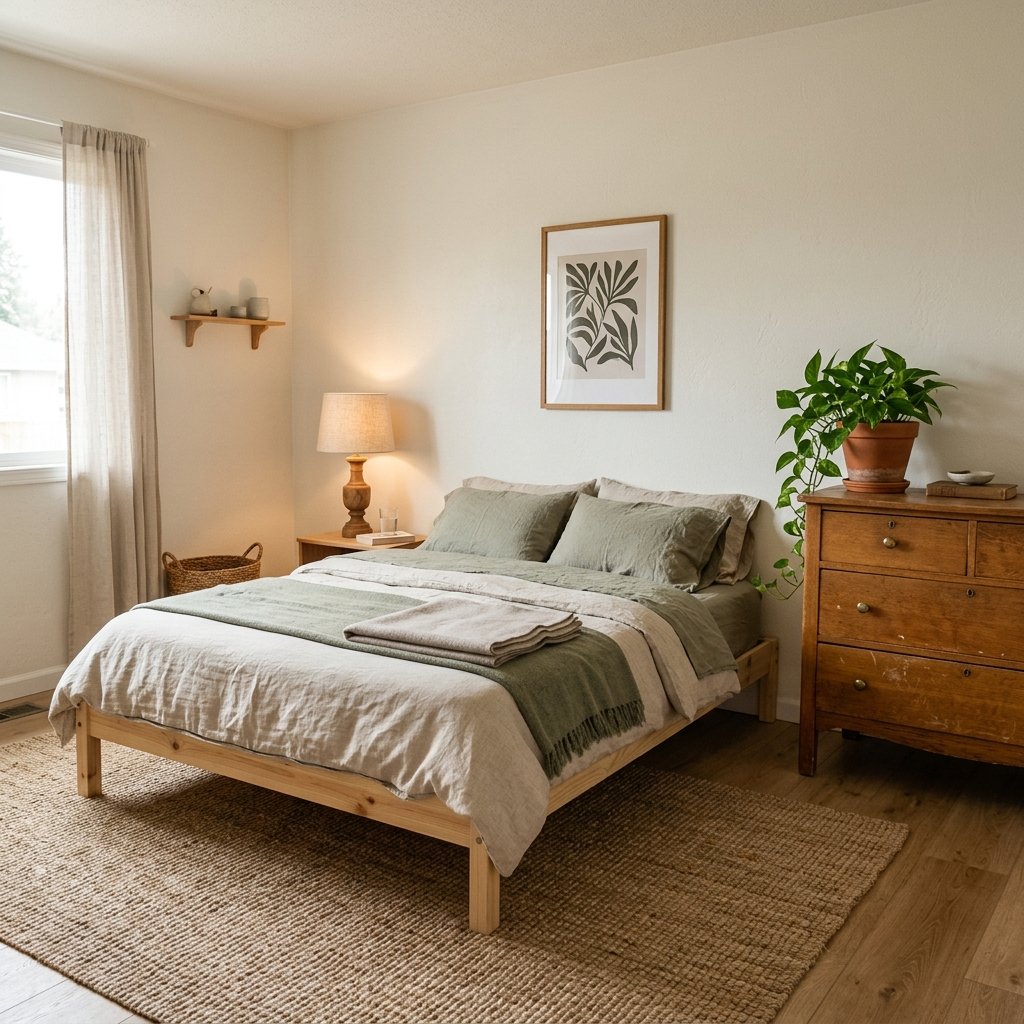
Creating a beautiful Japandi bedroom does not require a large budget — it requires good judgment and patience. Thrift stores and second-hand furniture markets are extraordinary places to find solid wood pieces that can be sanded and refinished to fit the aesthetic perfectly. A worn oak dresser stripped and lightly oiled costs a fraction of a new piece and carries far more character.
IKEA’s core range of simple wooden furniture, combined with quality linen bedding and a few carefully chosen natural accessories, can produce a Japandi bedroom that looks and feels genuinely beautiful. The investment is not always in expensive pieces but in choosing well and editing ruthlessly.
FAQs
What is the key difference between Japandi and Scandinavian bedroom design?
Scandinavian design focuses primarily on functionality, lightness, and hygge warmth. Japandi takes all of that and adds the Japanese principles of wabi-sabi, negative space, and a deeper connection to imperfection and natural aging. The result is a style that feels more grounded and meditative than pure Scandinavian design, while still retaining all of its warmth and practicality.
What colors work best in a Japandi bedroom?
Warm whites, soft greige, natural oat, muted sage green, warm charcoal, and deep forest tones all work beautifully in a Japandi bedroom. Black used as a deliberate accent color adds definition and sophistication. The key is staying within a palette that feels like nature — quiet, warm, and never synthetic or artificially bright.
How do I create a Japandi bedroom on a tight budget?
Start with what you already have and edit it down rather than buying new things. Sand and oil any existing wooden furniture to bring out the natural grain. Swap synthetic bedding for linen, add one or two natural fiber pieces like a jute rug or woven throw, and clear your surfaces down to almost nothing. These changes cost very little but completely transform the feeling of the room.
What type of furniture is best suited for a Japandi bedroom?
Low-profile, solid wood furniture with clean lines and minimal hardware suits a Japandi bedroom best. Platform beds in oak or walnut, floating nightstands, simple storage ottomans, and bamboo shelving units all work beautifully. Avoid furniture that is too ornate, too shiny, or too high off the ground — Japandi furniture stays close to the earth in every sense.
Can I mix Japandi style with other interior design styles?
Japandi blends most naturally with other nature-inspired or restrained styles like wabi-sabi, Japandi, slow living, and soft contemporary design. It does not mix well with maximalist, industrial, or heavily ornate styles because the visual contrast is too great. The strongest Japandi bedrooms are those where the aesthetic is committed to fully rather than treated as one element among many competing styles.
Conclusion
A Japandi bedroom is ultimately an act of creative editing — a daily practice of choosing what truly matters and letting go of everything else. Every idea shared here, from the darkest wood tones to the softest linen textures, is a way of expressing that same central philosophy. The bedroom you create with these ideas will be entirely your own, shaped by your instincts, your memories, and what brings you genuine peace.
There is no perfect Japandi bedroom waiting to be copied from a magazine. There is only your version of calm, your version of beauty, and your particular way of combining the Japanese and Scandinavian spirits into a space that restores you. Start with one small change, stay curious, and let the room evolve naturally. The most beautiful spaces are always the ones that grow with the people who live in them.