26 French Farmhouse Living Room Ideas for a Cozy, Character-Filled Home
French farmhouse living room design has a way of pulling you in before you even realize it. There’s something about the combination of worn textures, faded colors, and old wooden pieces that makes a space feel genuinely lived in. It doesn’t shout for attention — it earns it slowly, quietly, the way a good book does.
What makes this style so appealing is how personal it feels. No two French farmhouse living rooms look exactly the same, because the whole point is to collect, layer, and arrange things that carry a story. Whether you’re drawn to the sun-warmed walls of a Provence cottage or a more pared-back, modern take on rustic French style, there’s room for your own interpretation here.
Best French Farmhouse Living Room Ideas to Try
If you’ve been circling this style for a while, you already know how wide the range actually is. Some rooms lean heavily into stone and iron, while others stay soft with linen, aged wood, and muted florals. Both directions work, and so does everything in between.
The ideas below cover that full spectrum. Some are big moves — like a stone fireplace or exposed ceiling beams. Others are smaller, more accessible changes that still shift the whole feeling of a room. Take what speaks to you and leave the rest.
Shiplap Accent Wall French Farmhouse Living Room
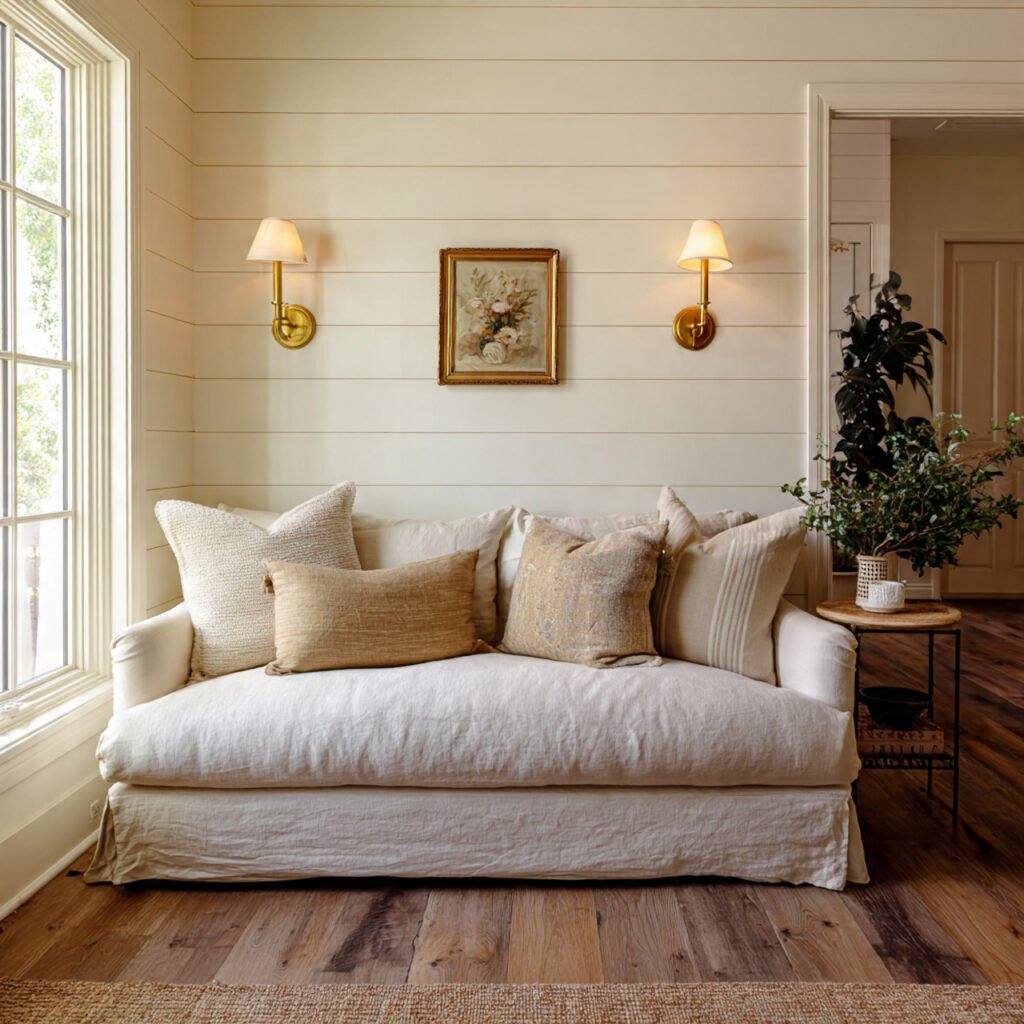
A shiplap wall is one of those additions that changes the entire character of a room. The horizontal lines add texture without visual noise, and the painted finish — usually soft white or warm cream — keeps things light. It works especially well behind a sofa or around a fireplace where you want one wall to quietly anchor the space.
What makes shiplap feel specifically French farmhouse rather than just rustic is how you style around it. Pair it with linen upholstery, a few ceramic pieces on a nearby shelf, and some aged brass hardware, and the room starts to feel like it belongs somewhere just outside Lyon.
Exposed Wooden Beam Ceiling
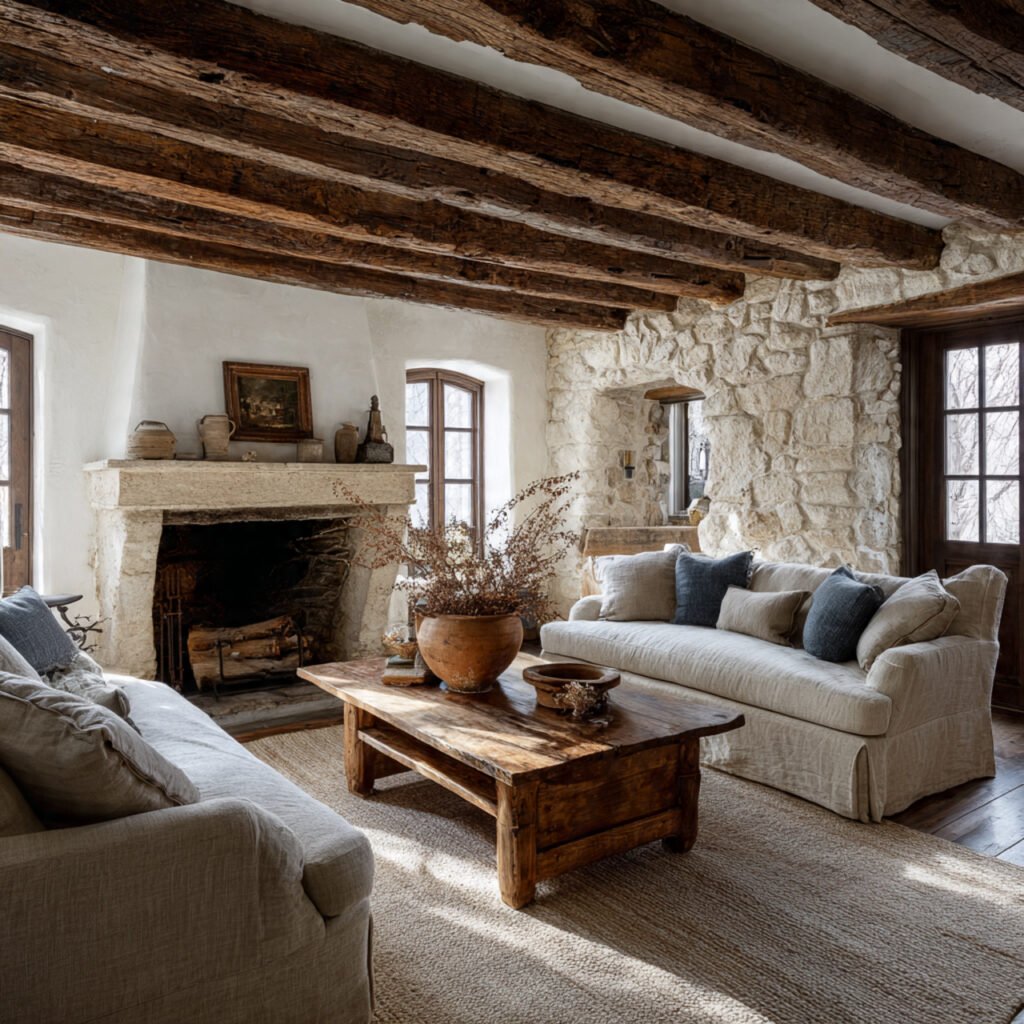
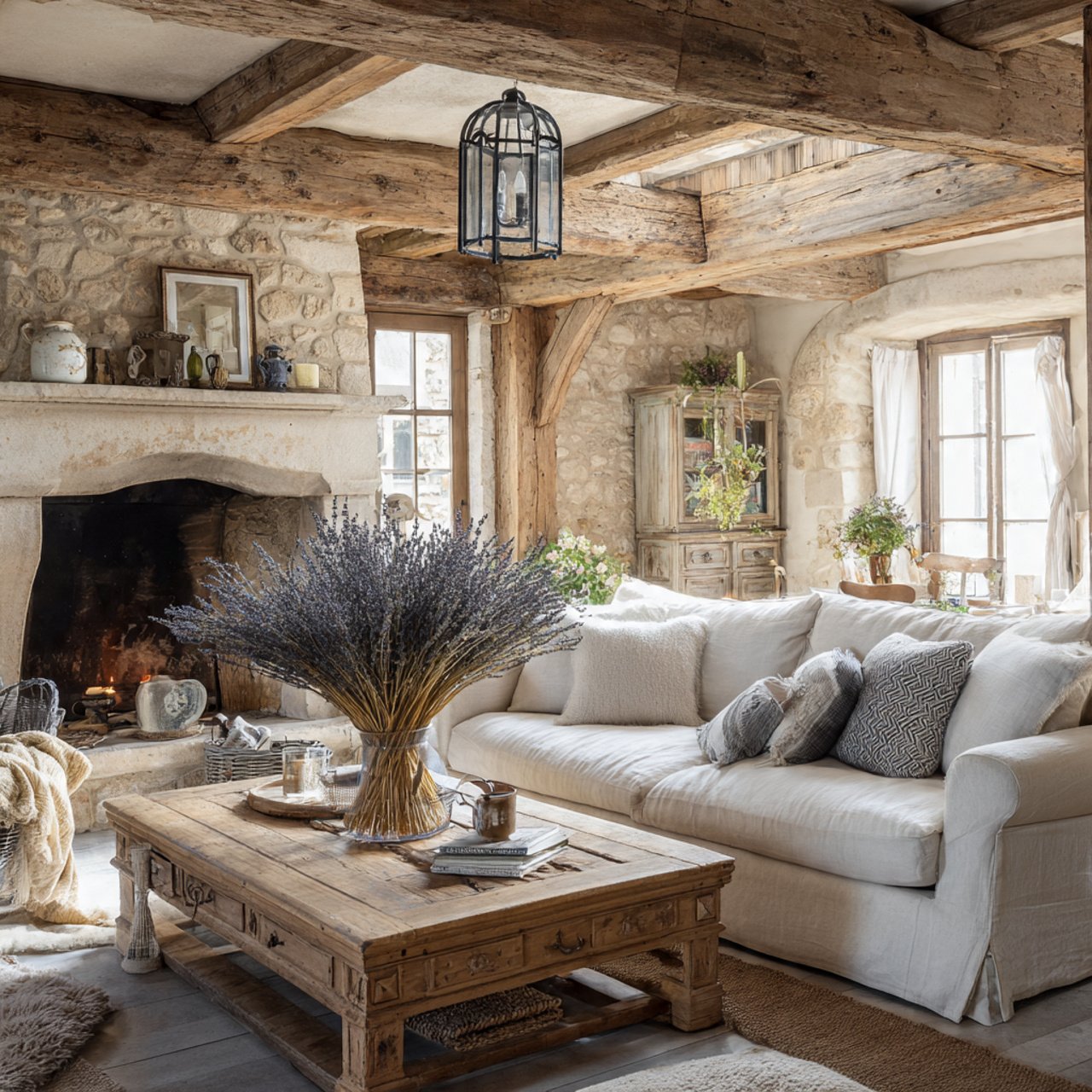
Ceiling beams do something no paint color or furniture piece can — they change the architecture of a room. Real reclaimed beams carry visible history in every knot and grain line. Even faux beams, done well, add that same sense of structural warmth that makes French farmhouse interiors feel so grounded.
The key is keeping the rest of the ceiling simple. White or off-white plaster between dark beams is the classic combination, and it works because the contrast is strong without being harsh. Let the beams do the talking.
Distressed Linen Sofa
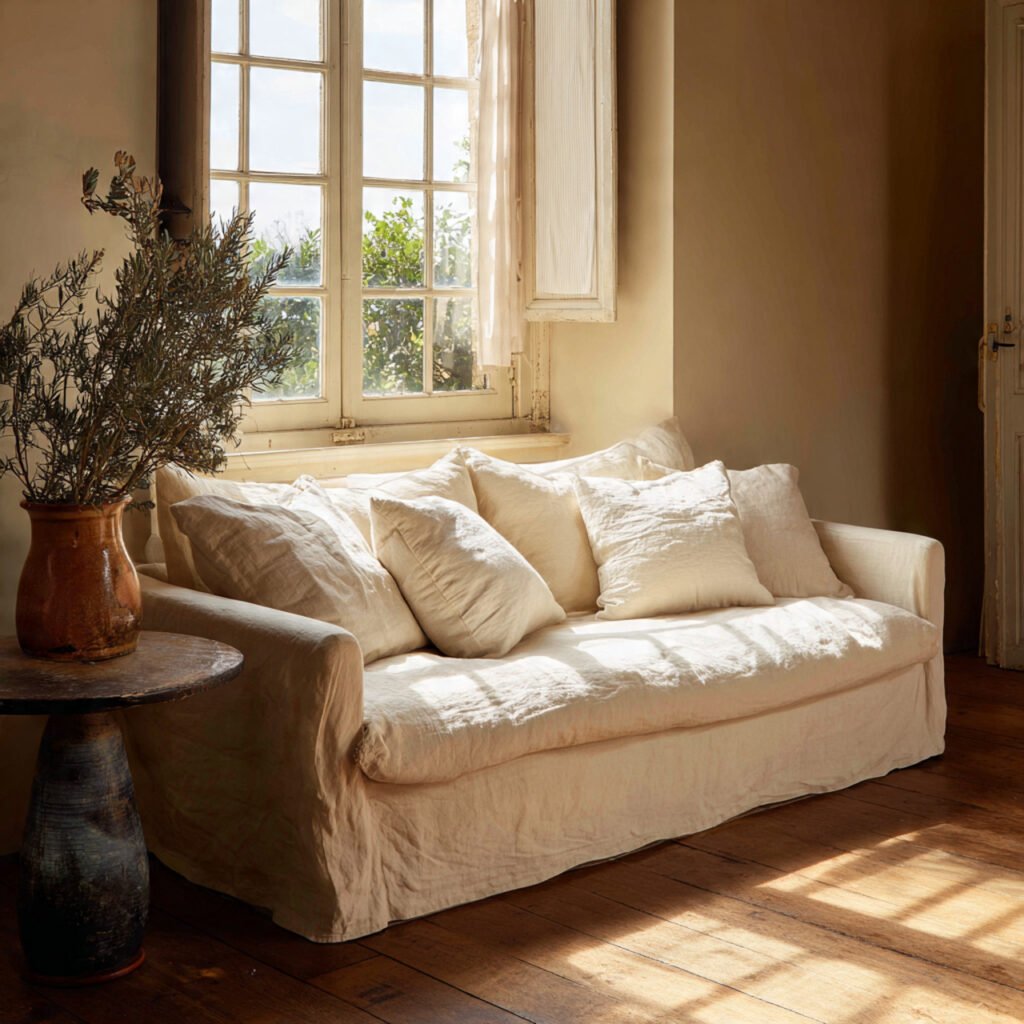
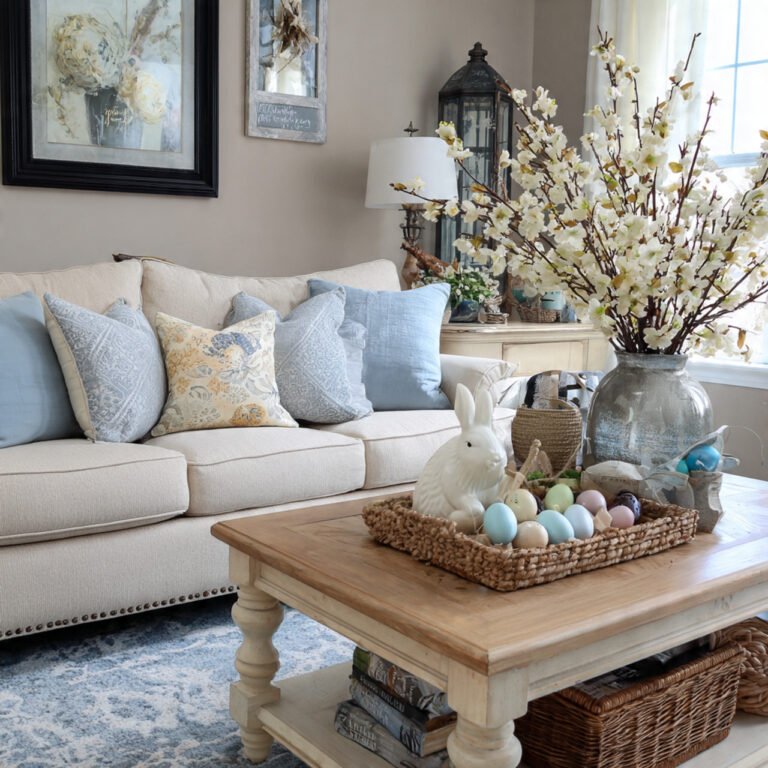
Linen is the fabric most associated with French farmhouse style, and for good reason. It wrinkles beautifully, softens with every wash, and comes in exactly the kind of natural, undyed tones that suit this aesthetic. A distressed linen sofa — slightly worn at the arms, cushions a little imperfect — looks more at home in a French farmhouse living room than anything pristine ever could.
Choose slipcover styles if you want flexibility, or go for a tighter upholstered version in oatmeal, ecru, or faded flax. Either way, resist the urge to keep it perfect. This style is better when things look gently used.
Read More: 25 Stunning Patio Furniture Ideas for Small and Large Spaces
Stone Fireplace Surround
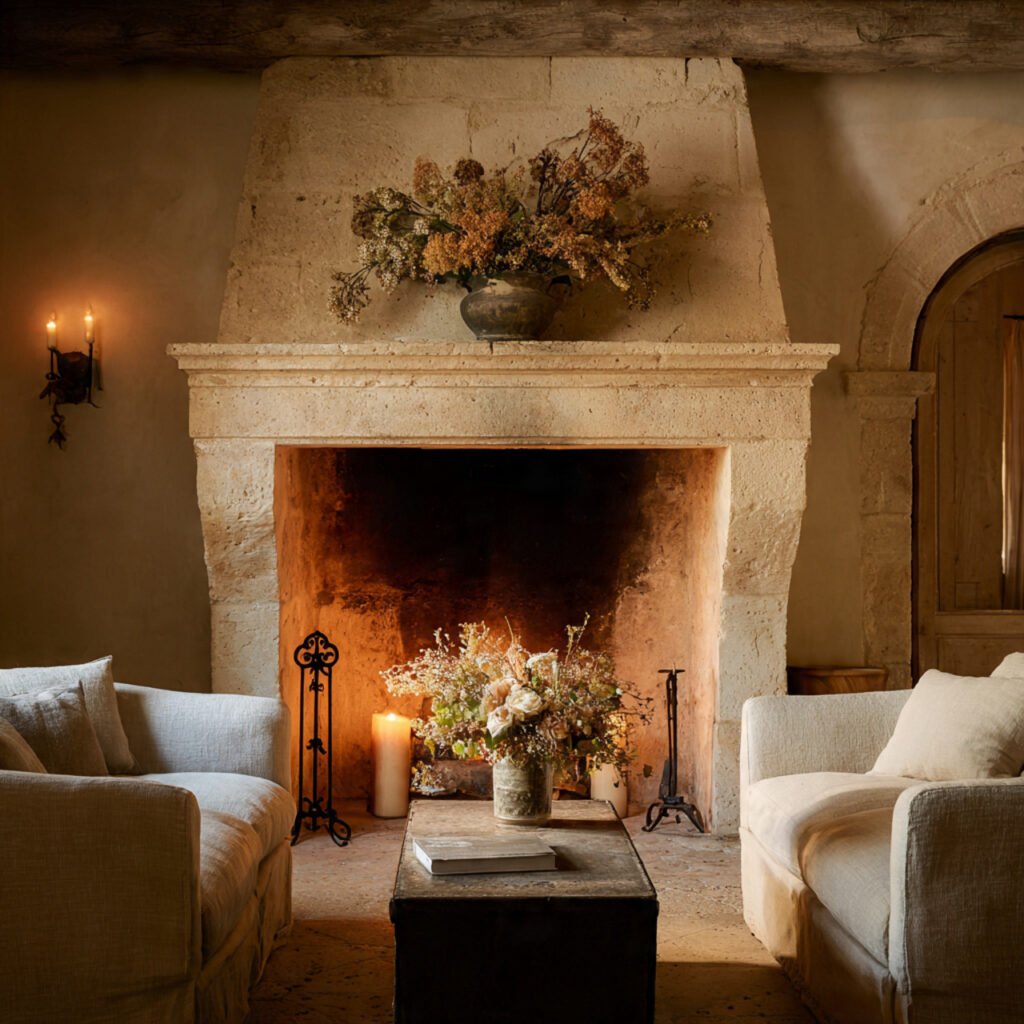
Nothing grounds a French farmhouse living room quite like a stone fireplace. Whether it’s original limestone, stacked fieldstone, or a plaster surround with rough texture, a fireplace becomes the natural center of the room. Furniture arranges itself around it without any effort.
If you’re working with an existing fireplace that doesn’t quite fit the aesthetic, consider a limewash or plaster treatment over the surround. It softens hard edges and adds that aged, slightly imperfect quality that makes stone fireplaces feel genuinely old rather than newly installed.
Vintage French Market Finds
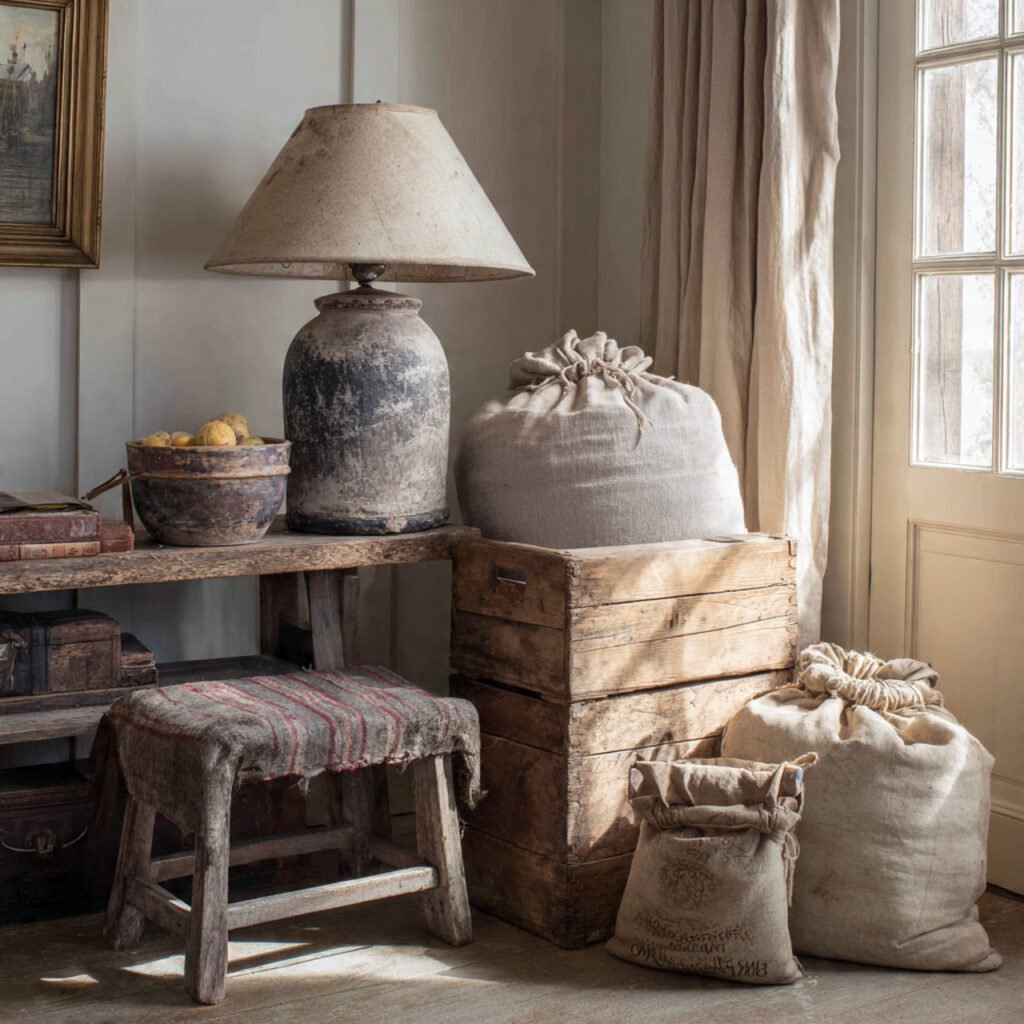
Some of the best pieces in a French farmhouse living room aren’t purchased from a store — they’re found. Flea markets, estate sales, antique fairs, and even thrift shops can turn up the kind of worn, characterful objects that no retailer can reproduce at scale. An old painted stool, a chipped ceramic lamp base, a stack of French linen grain sacks — these things carry weight that new pieces simply don’t.
Building a room around market finds takes patience, but the result is a space that feels genuinely personal. You end up with things that can’t be replicated, arranged in a way that no interior design catalog could plan for you.
Washed Wood Coffee Table
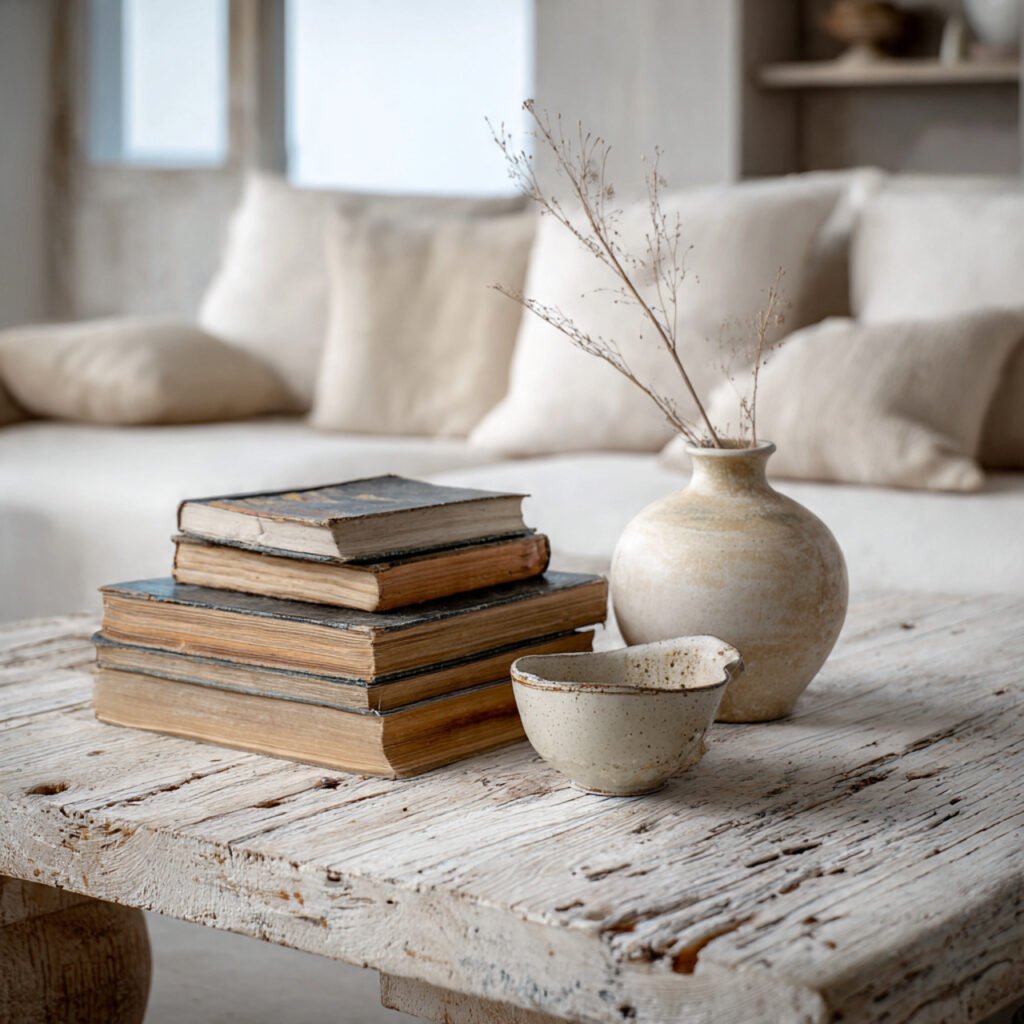
A washed or whitewashed wood coffee table brings that soft, bleached quality that reads immediately as French farmhouse. The finish suggests age and sun exposure — like the piece spent years in a farmhouse kitchen before making its way into the living room.
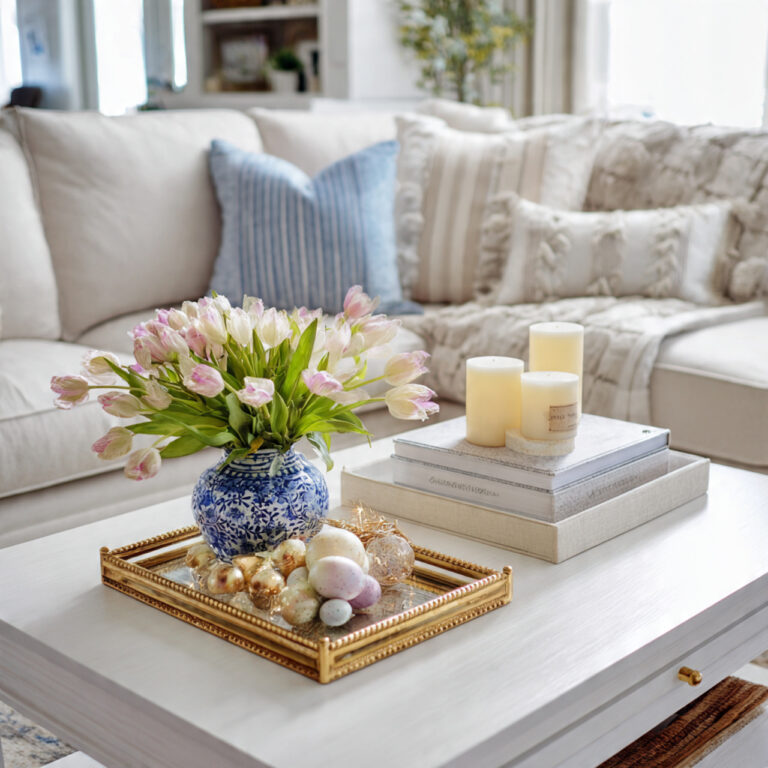
Look for tables with visible grain, slightly uneven legs, or simple joinery. The imperfections are the point. Style the surface simply — a stack of books, a small ceramic bowl, a single dried stem — and let the wood itself be the feature.
Antique Mirror Wall Display
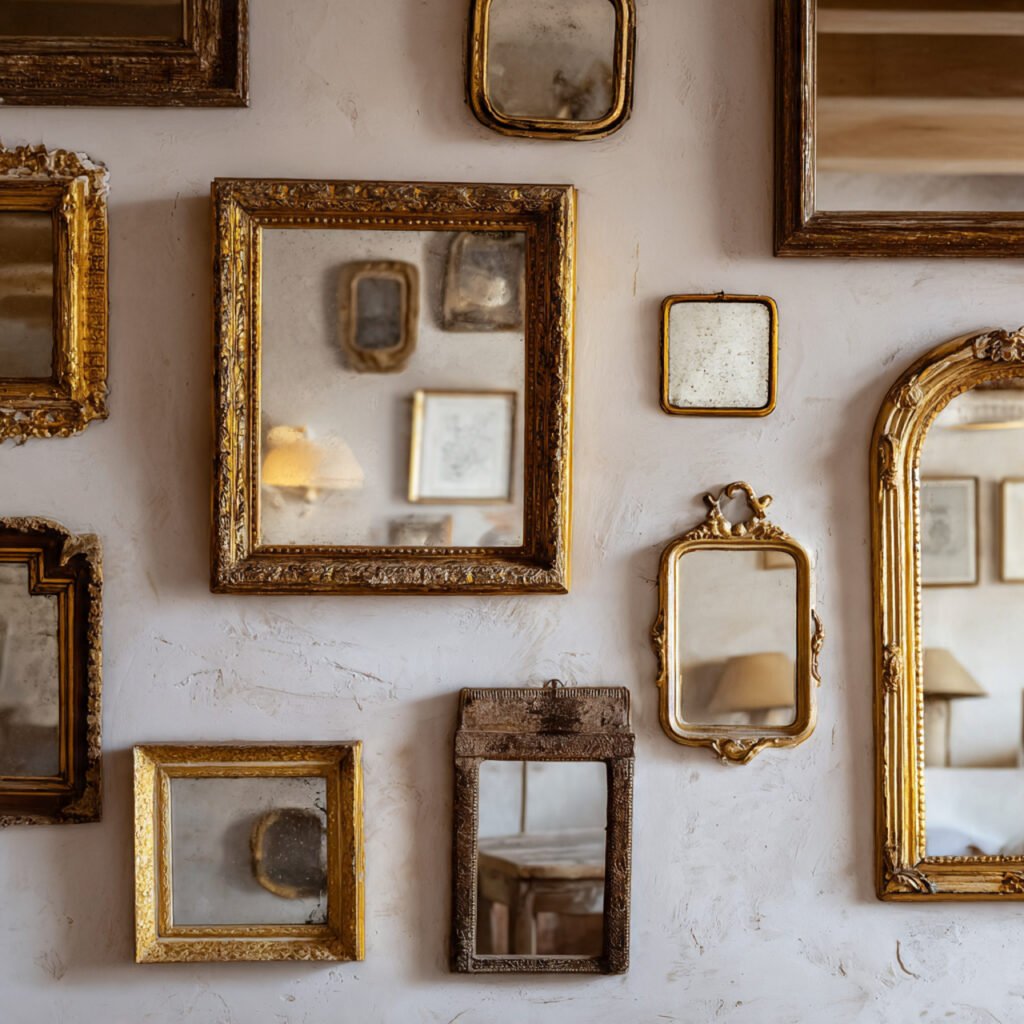
Antique mirrors with foxed glass and ornate frames add a layer of old-world character that’s hard to achieve any other way. A single large mirror above a console or fireplace is a classic move, but a grouping of smaller mismatched mirrors on one wall creates something more interesting and unexpected.
The foxing — those dark, cloudy spots that develop on old mirror glass — is actually something to look for rather than avoid. It’s what separates a genuinely old piece from a reproduction, and it catches light in a softer, more flattering way than clear mirror glass.
Neutral Color Palette With Warm Undertones
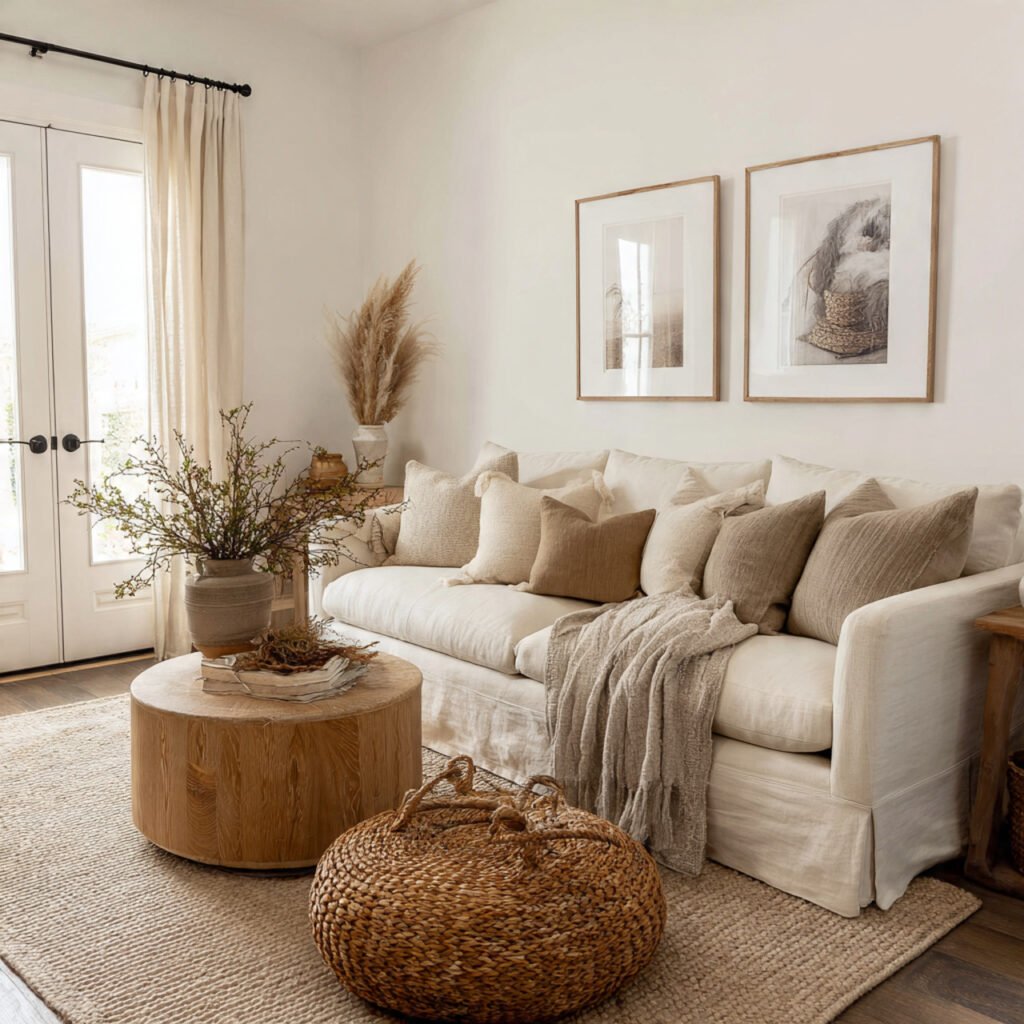
French farmhouse living rooms rarely use cool grays or stark whites. The palette tends to lean warm — creamy whites, soft beiges, warm taupes, and dusty naturals that shift depending on the light. These tones feel easy to live with and they age well, deepening rather than looking dated as years pass.
When building your palette, test paint colors in different lights throughout the day. What looks like a clean warm white in the morning can pull yellow or pink by late afternoon. The goal is a tone that stays settled and quiet across all lighting conditions.
Wrought Iron Lighting Fixtures
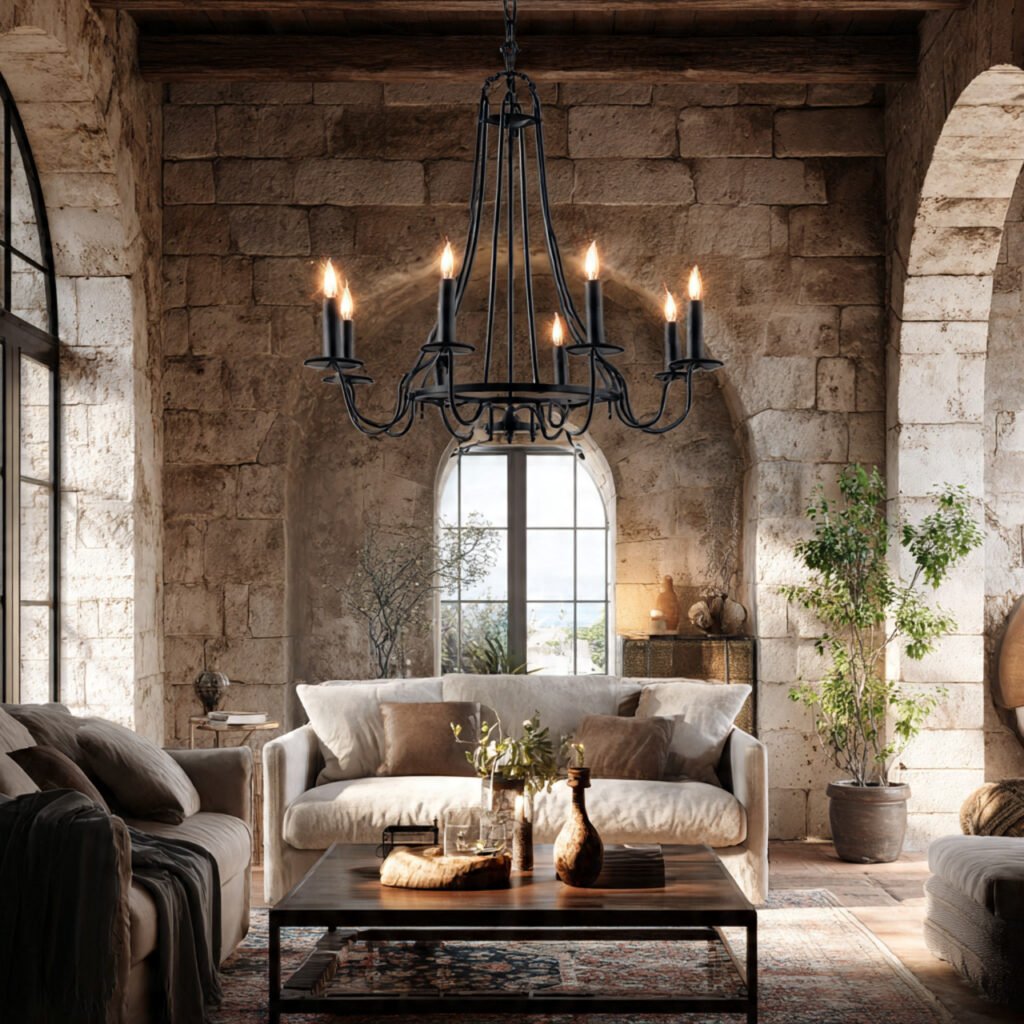
Iron chandeliers and pendant lights carry serious French farmhouse character. The material has been used in rural French interiors for centuries, and its combination of strength and craftsmanship fits the aesthetic perfectly. A simple iron chandelier with candle-style bulbs above a seating area immediately reads as old-world without trying too hard.
Finish matters here. Matte black or oil-rubbed finishes work better than anything shiny or overly polished. The goal is a fixture that looks like it might have been in the room for decades, not one that arrived last week.
French Farmhouse Open Shelving
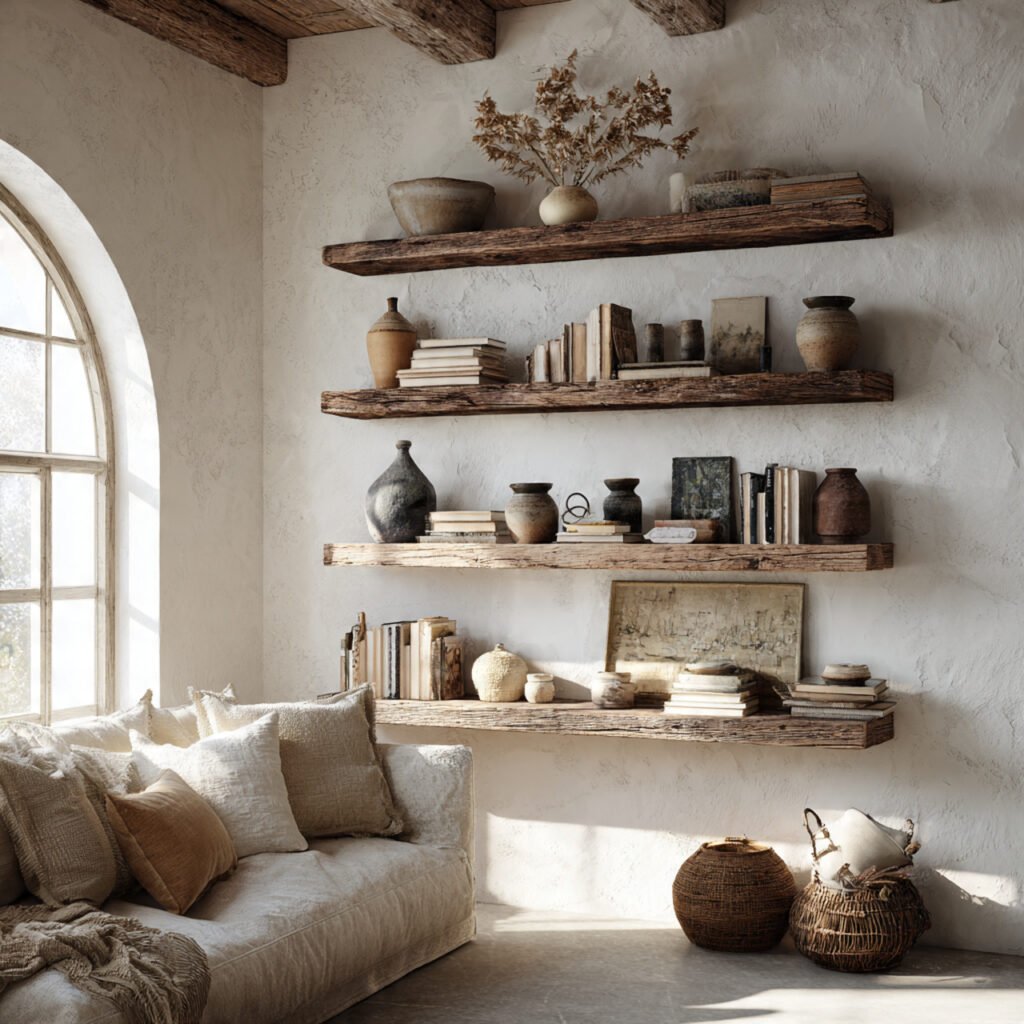
Open shelves in a French farmhouse living room serve both function and display. Styling them well means resisting the urge to fill every inch. Leave gaps. Let things breathe. A few ceramic pieces, some worn books, a small plant or dried arrangement, and maybe one personal object — that’s usually enough.
The shelf material matters too. Thick reclaimed wood brackets mounted directly into plaster walls, with simple iron supports, will carry the aesthetic far better than anything with a factory finish.
Toile De Jouy Fabric Accents
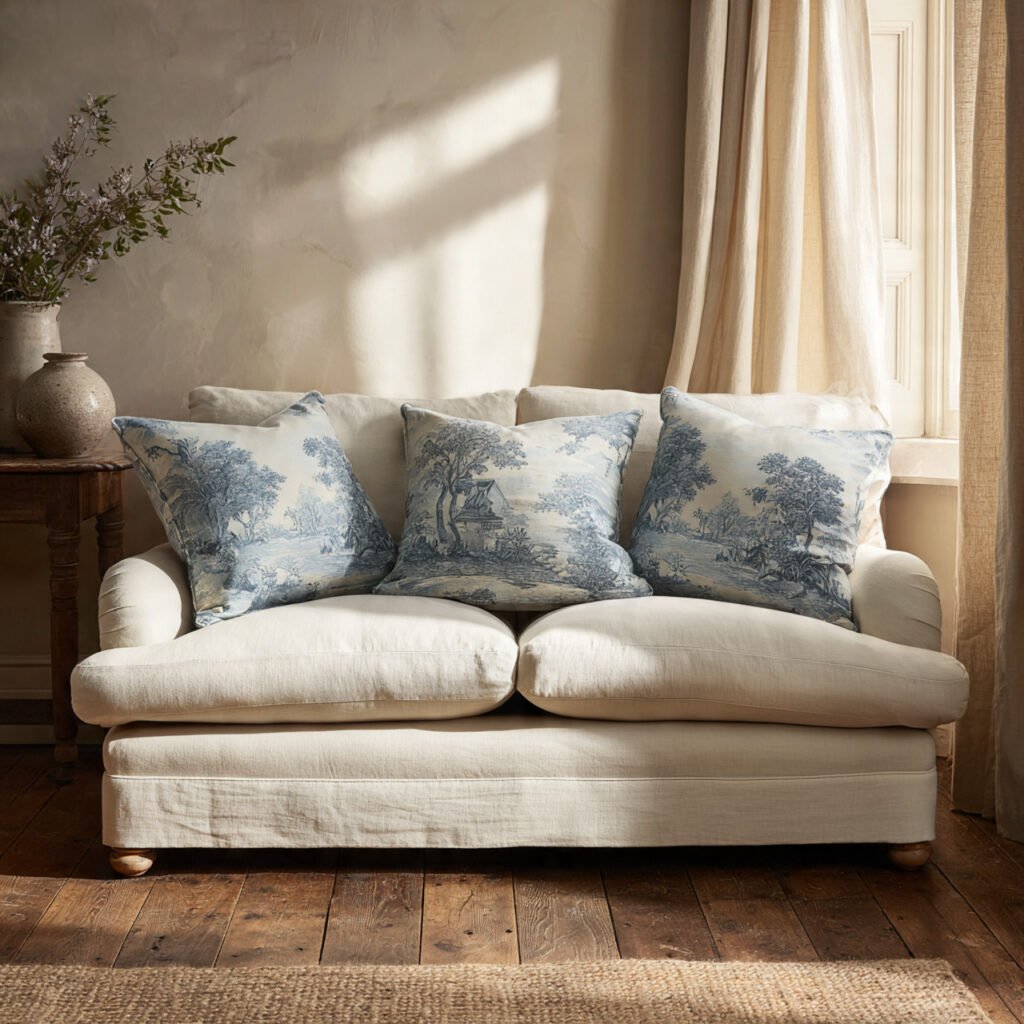
Toile de Jouy is one of the most distinctly French patterns in textile history. The intricate pastoral scenes printed in a single color on cream or white linen have been associated with French country style for over 200 years. A pair of toile throw cushions, a single armchair upholstered in it, or even a framed piece of the fabric used as wall art — any of these brings immediate French character into the room.
Use it as an accent rather than a dominant pattern. Toile has a strong personality and works best when the rest of the room stays quiet and neutral around it.
Reclaimed Wood Flooring
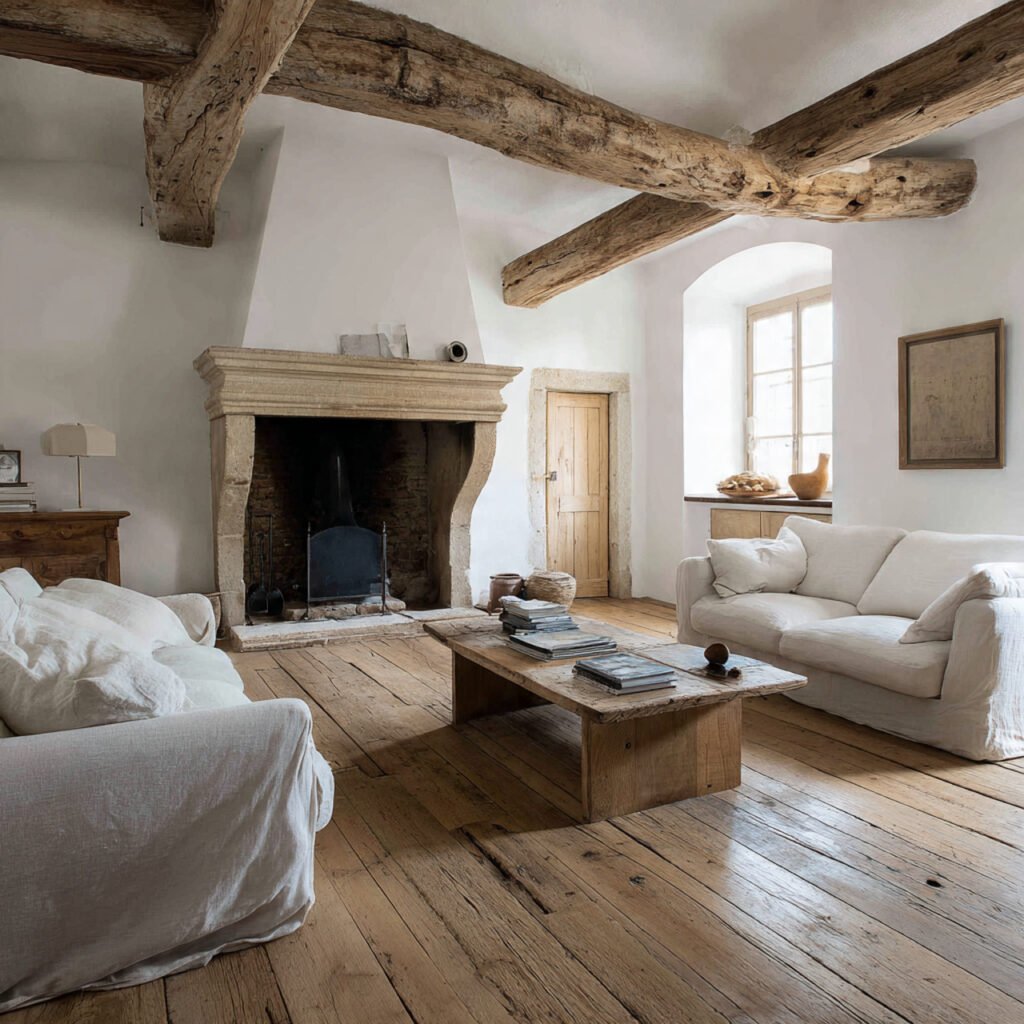
Floors set the tone before anything else in a room. Wide-plank reclaimed wood floors, with their varied tones, visible wear, and natural character, form the perfect base for a French farmhouse living room. They warm up a space in a way that new flooring simply can’t replicate.
If full reclaimed wood isn’t possible, aged or hand-scraped engineered options can get close. The width of the plank matters — go as wide as your budget allows. Narrow strips feel modern; wide planks feel old, which is exactly what you want here.
Wicker and Rattan Furniture Pieces
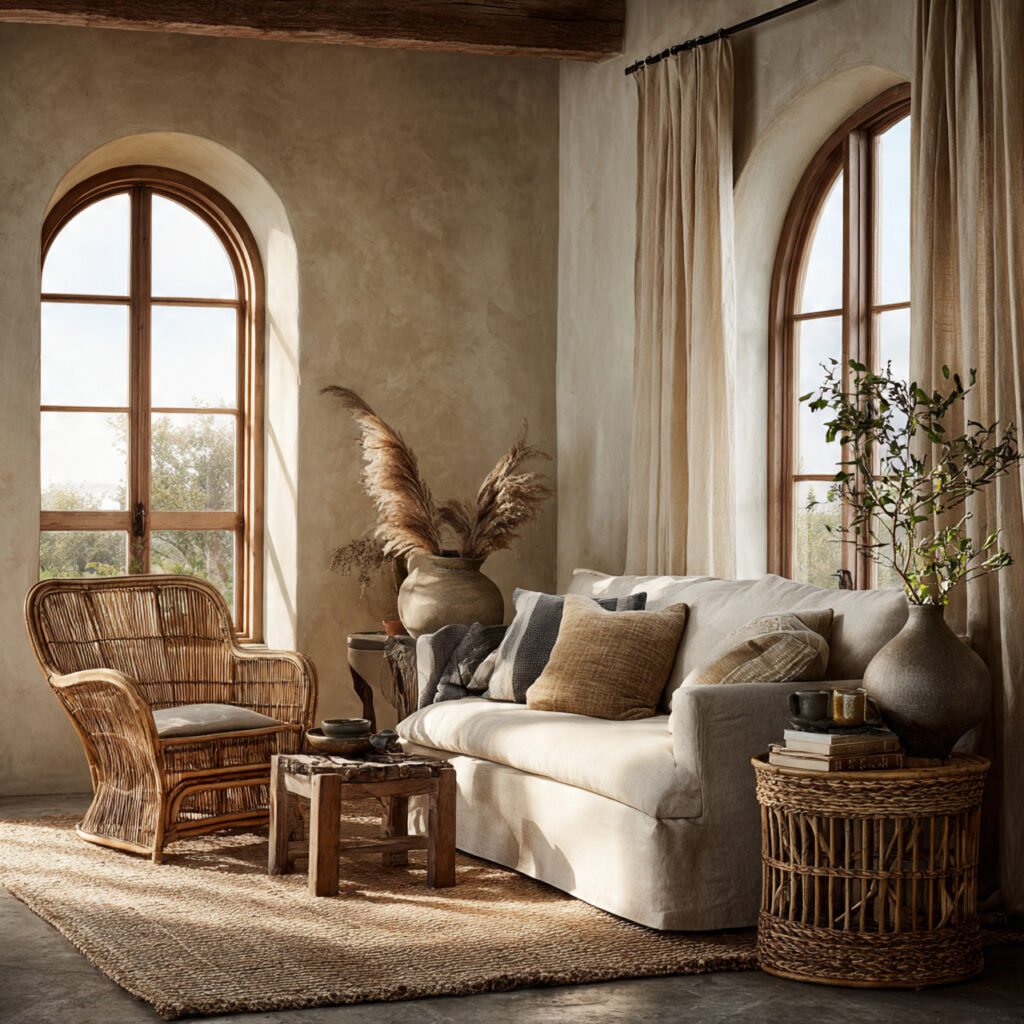
Wicker and rattan bring a lightness to French farmhouse interiors that heavier wood and iron pieces can’t. A rattan armchair, a wicker side table, or even a woven basket used for storage adds organic texture without visual weight. These materials have been used in French country homes for generations and feel completely natural in this setting.
Mix them with linen upholstery and aged wood for the best result. Rattan next to stone or iron creates a textural balance that keeps the room from feeling too heavy on one end of the material spectrum.
Provence-Inspired Floral Arrangements
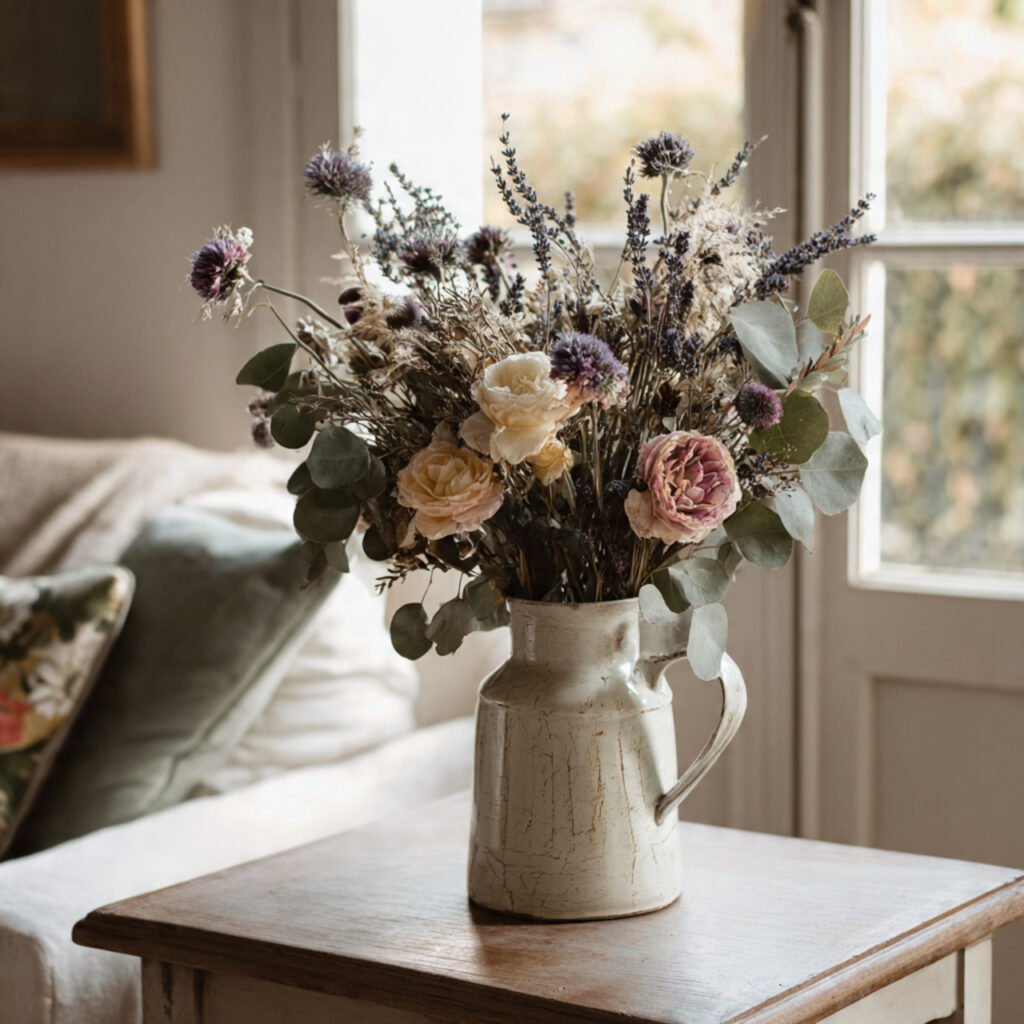
Flowers in a French farmhouse living room are never stiff or formal. Think loose, slightly wild arrangements — lavender stems, dried peonies, garden roses, eucalyptus, or whatever happens to be in season. An old ceramic jug or a chipped enamel pitcher makes a far better vase than anything modern and purpose-built.
Dried arrangements work especially well in this style. A bundle of dried lavender tied with linen twine, or a vase of dried wheat or pampas grass, stays beautiful for months and adds a permanence that fresh flowers can’t offer.
Layered Area Rugs on Stone Floors
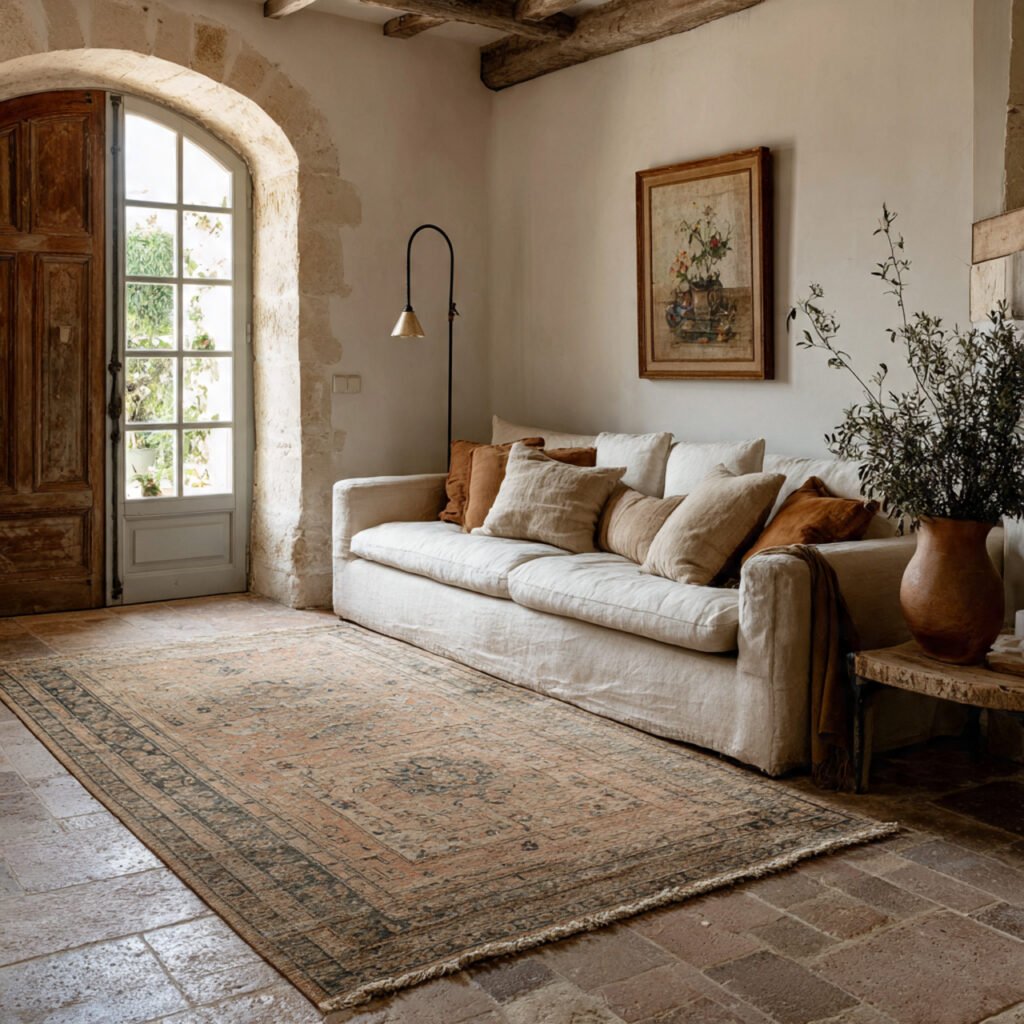
Layering rugs on stone or tile floors is a practical French farmhouse solution that also happens to look beautiful. A natural jute or sisal rug as the base layer, topped with a smaller vintage or faded Persian-style rug, adds warmth and color without committing to wall-to-wall carpet.
The key to layering rugs well is letting them overlap naturally rather than centering everything too precisely. A slightly off-center placement, where the top rug sits closer to the seating area, looks more relaxed and less staged.
Painted Brick Fireplace Wall
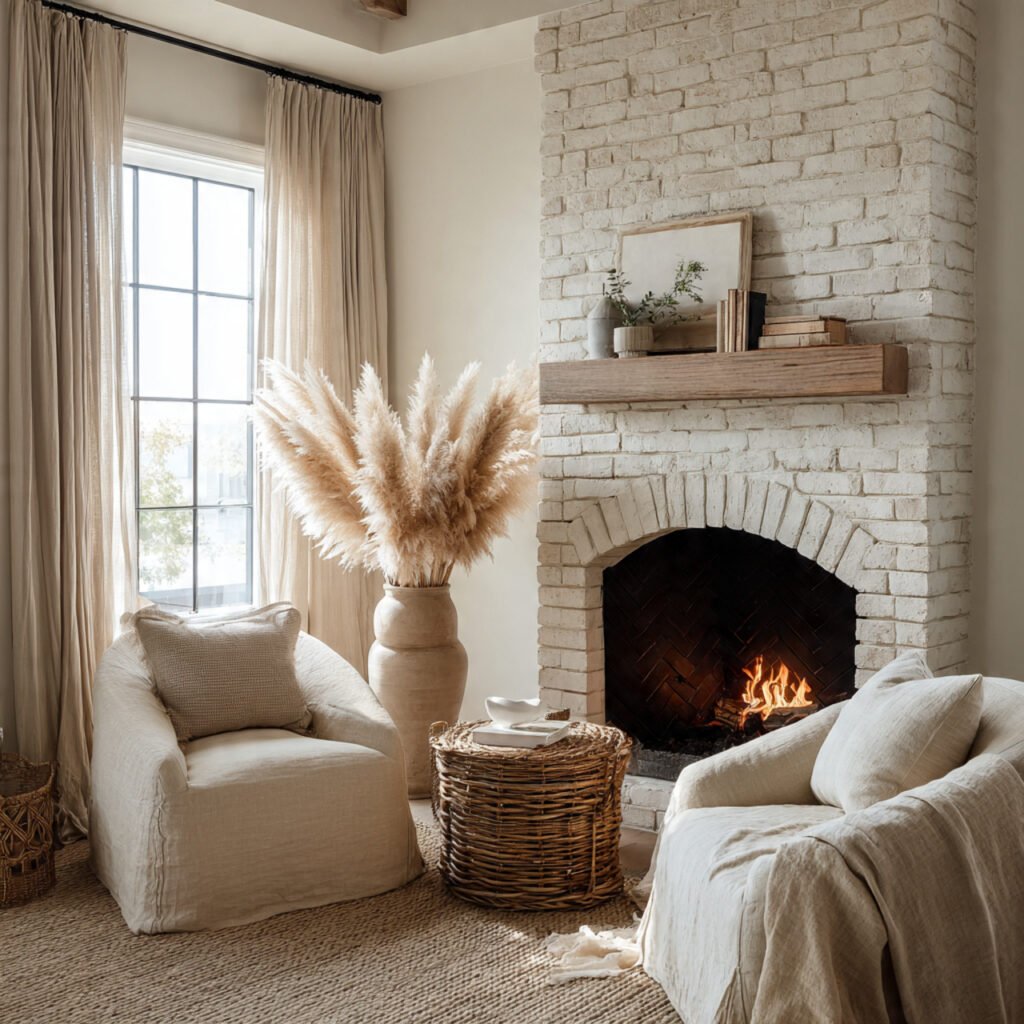
Raw brick carries a different energy than stone — it’s more urban, more industrial by default. But paint it in the right tone — a soft lime white, a warm plaster gray, or a chalky cream — and brick becomes a beautiful French farmhouse surface. The texture remains visible beneath the paint, which is exactly what gives it character.
A limewash paint treatment works particularly well on brick because it soaks into the surface unevenly, creating depth and variation that solid paint can’t achieve. The result looks genuinely aged rather than freshly painted.
Rustic Window Shutters Indoors
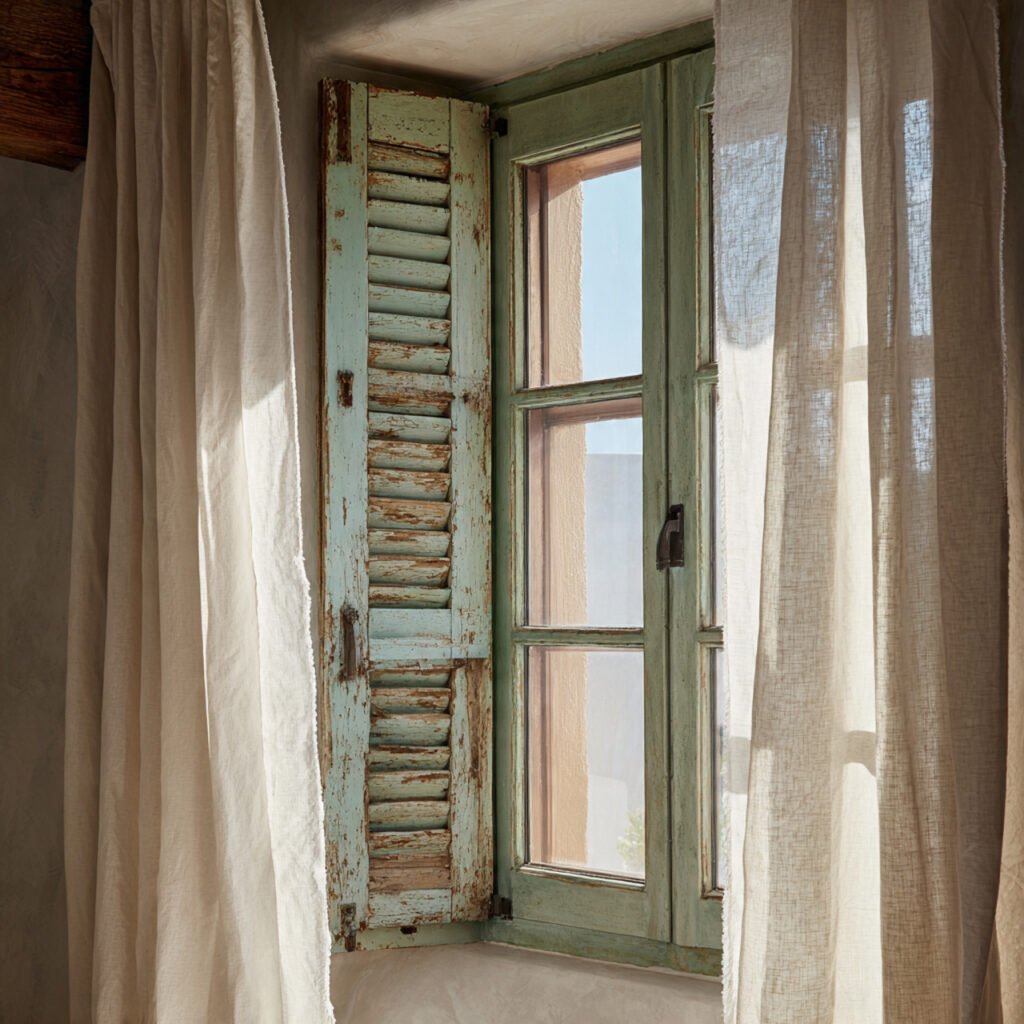
Interior shutters, especially those with visible wear and slightly uneven paint, carry strong French farmhouse energy. Fixed or hinged against the window frame, they frame the light coming in while adding architectural interest to an otherwise plain wall.
Painted shutters in soft blue-gray, faded sage, or worn white work best. Avoid anything too sharp or freshly lacquered. The worn look is deliberate here — shutters that look like they’ve been opening and closing for fifty years are far more interesting than ones that look newly installed.
French Country Armchairs
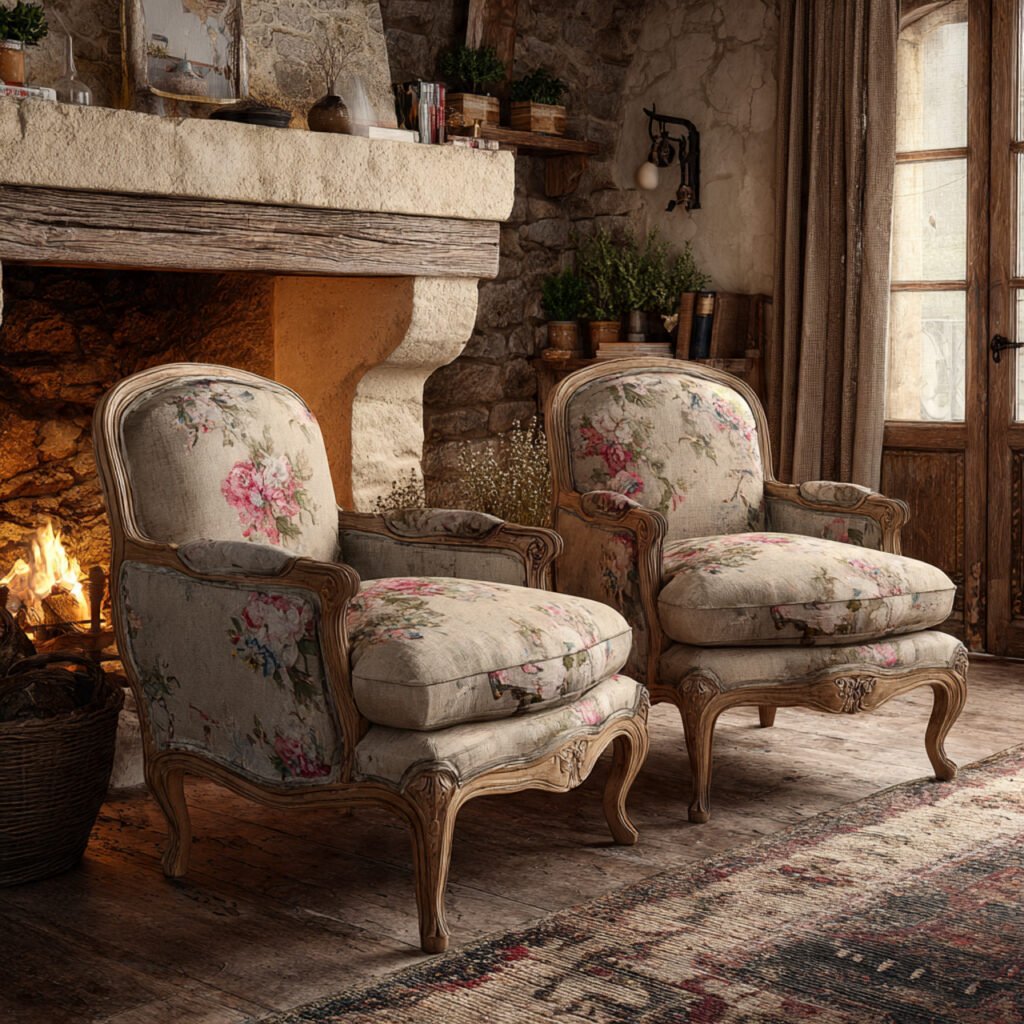
A pair of French country armchairs — curved legs, upholstered seat and back, slightly worn fabric — brings a formal but comfortable quality to a French farmhouse living room. They sit differently than a deep sofa. They invite you to sit upright, hold a conversation, or read by a window rather than sink in and watch television.
Look for chairs with exposed wood frames in aged walnut or painted finishes. Upholstery in faded florals, solid linen, or even a worn velvet in dusty rose or sage adds the kind of quiet color that this style handles so well.
Ceramic and Pottery Decor Accents
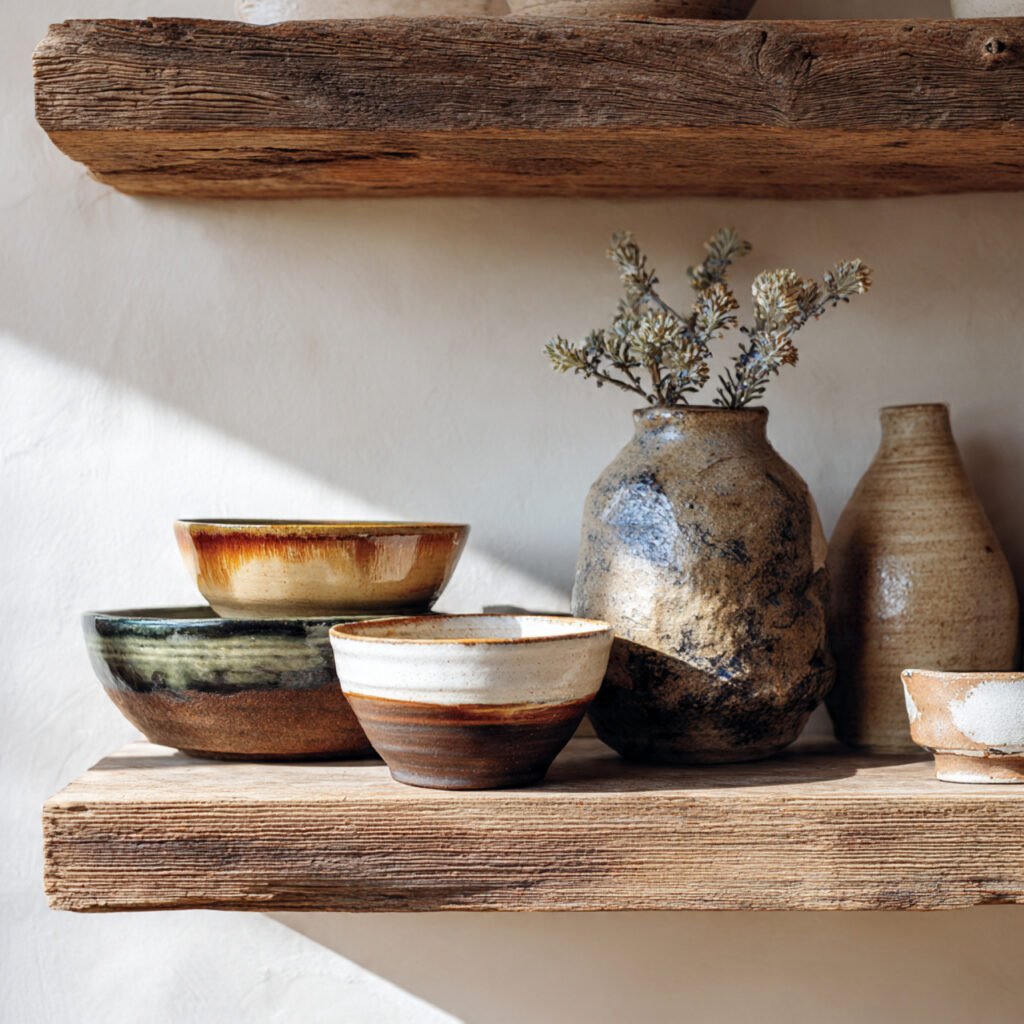
Hand-thrown ceramics and earthenware pottery are among the most authentic decorative elements in French farmhouse style. A rough-textured bowl on a coffee table, a set of mismatched ceramic candleholders, or a large glazed pot in the corner — these objects carry a handmade quality that mass-produced decor can never replicate.
Shop for pieces with visible throwing marks, uneven glazing, or slight asymmetry. These are signs of hand craftsmanship, and they’re exactly what makes a ceramic piece feel right in this context rather than out of place.
Linen Curtains With Relaxed Draping
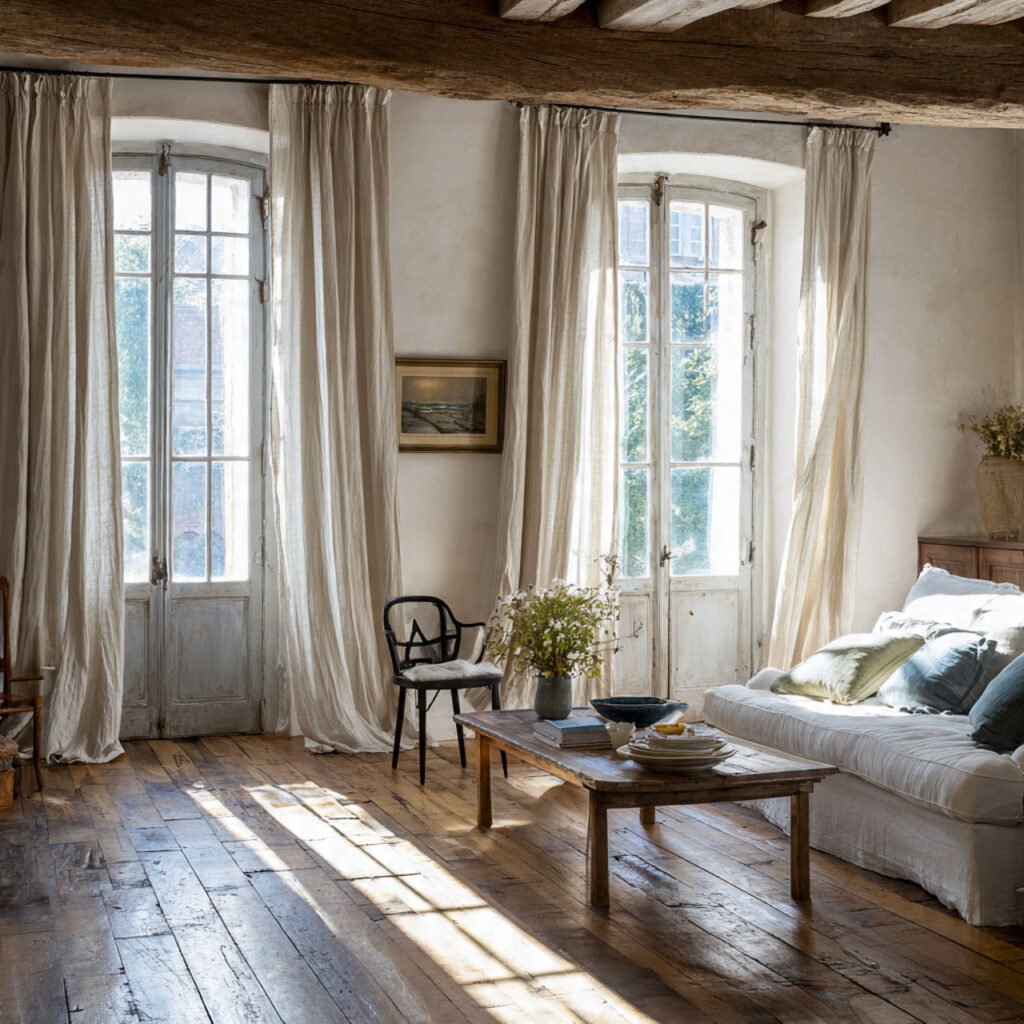
Linen curtains that pool slightly on the floor, or hang with natural folds rather than crisp pleats, suit a French farmhouse living room far better than anything structured. The fabric moves with air from an open window, catches light softly, and wrinkles in a way that looks intentional rather than careless.
Hang curtains high and wide — close to the ceiling and well beyond the window frame — to make the window feel larger and the ceiling feel taller. In a French farmhouse room, this simple trick adds architectural presence without any construction.
Weathered White Wood Furniture
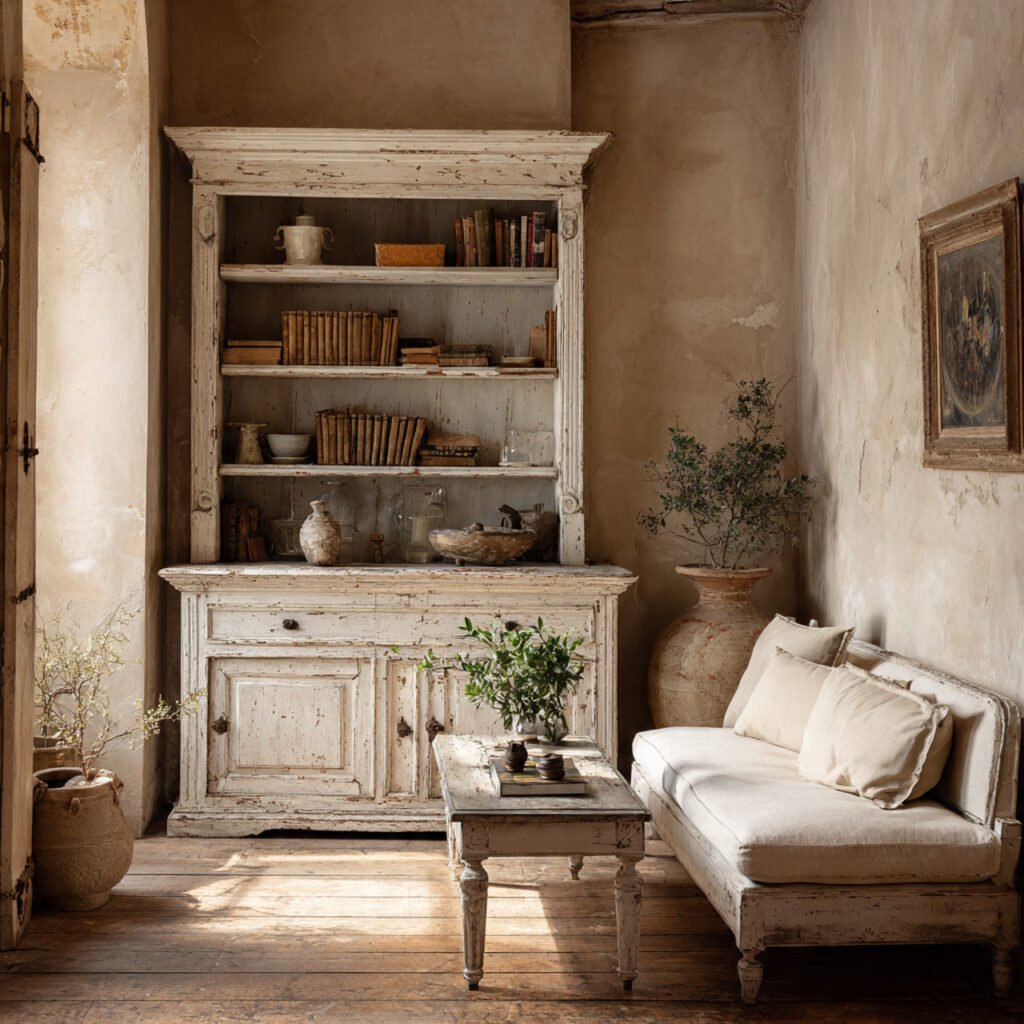
Furniture painted in aged or weathered white has been a French farmhouse staple for as long as the style has existed. A console table with chipping paint around the edges, a bookcase with visible brush strokes, a sideboard with worn corners — these pieces look like they arrived through inheritance rather than a recent purchase.
The aging doesn’t need to be faked. Real wear that comes from years of use is always more convincing than artificially distressed finishes. But if you’re working with a newer piece, a chalk paint treatment followed by gentle sanding at the edges can get close.
Vintage Trunk as Coffee Table
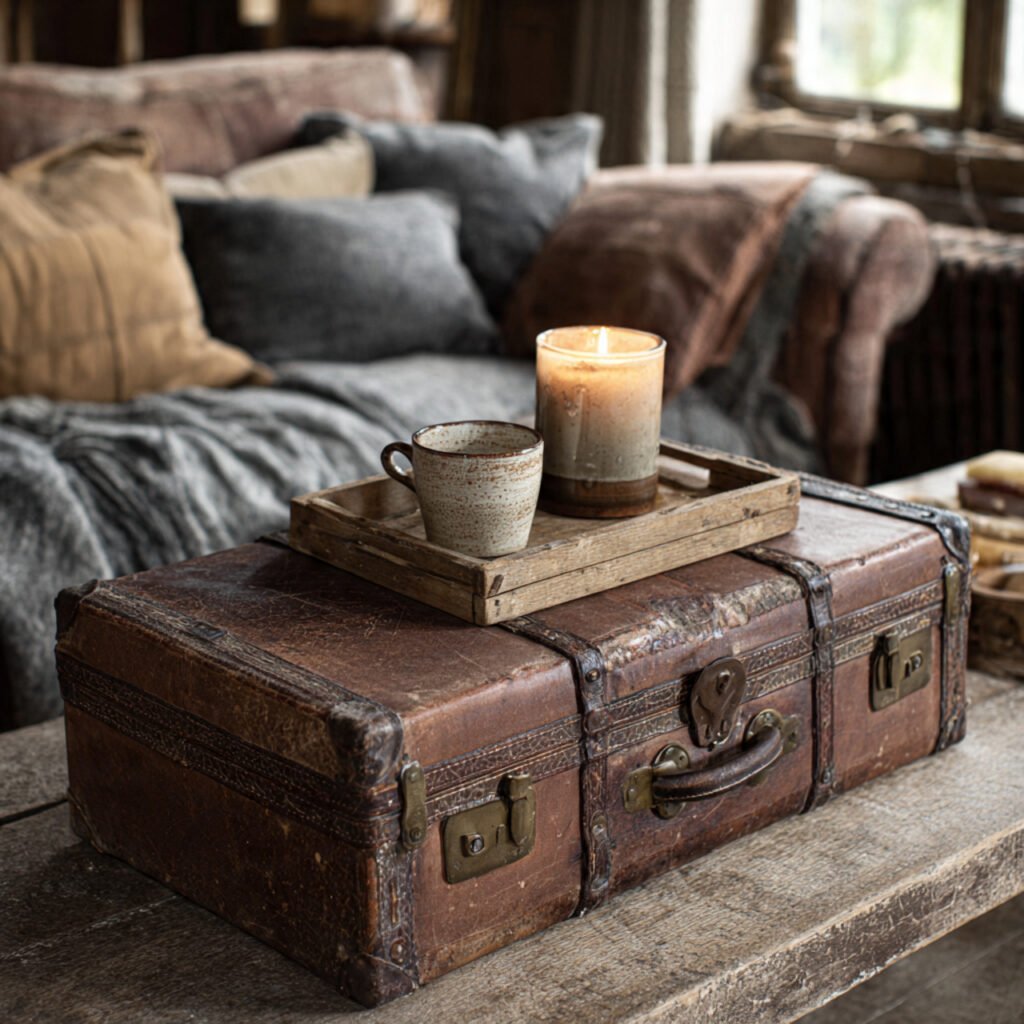
A vintage trunk used as a coffee table solves two problems at once — it adds genuine character to the room and provides hidden storage underneath. Leather trunks, wooden steamer trunks, or old painted blanket chests all work. The surface doesn’t need to be perfect; dents, scratches, and worn hardware only add to the appeal.
Style the top simply — a tray with a candle and a small ceramic piece is usually enough. The trunk itself is the feature, and layering too much on top distracts from its character.
Galvanized Metal Accents
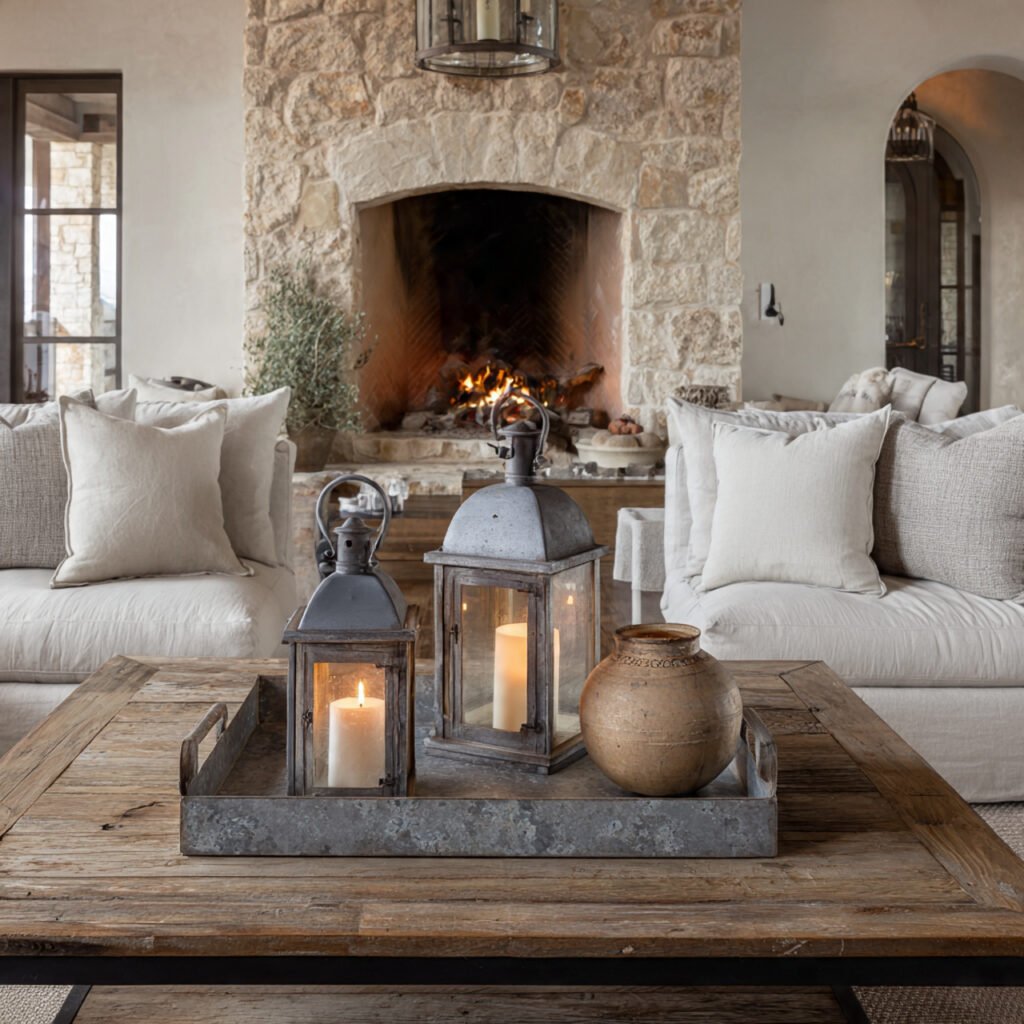
Galvanized metal — buckets, trays, planters, lanterns — brings an honest, utilitarian quality to a French farmhouse living room. It’s the material of barns and market stalls, and it sits surprisingly well alongside linen, wood, and stone without clashing.
Use it sparingly. A galvanized tray on a coffee table, a small metal planter holding a potted herb, or a pair of metal lanterns flanking a fireplace is enough. Too much galvanized metal starts to feel more industrial than farmhouse.
French Farmhouse Gallery Wall
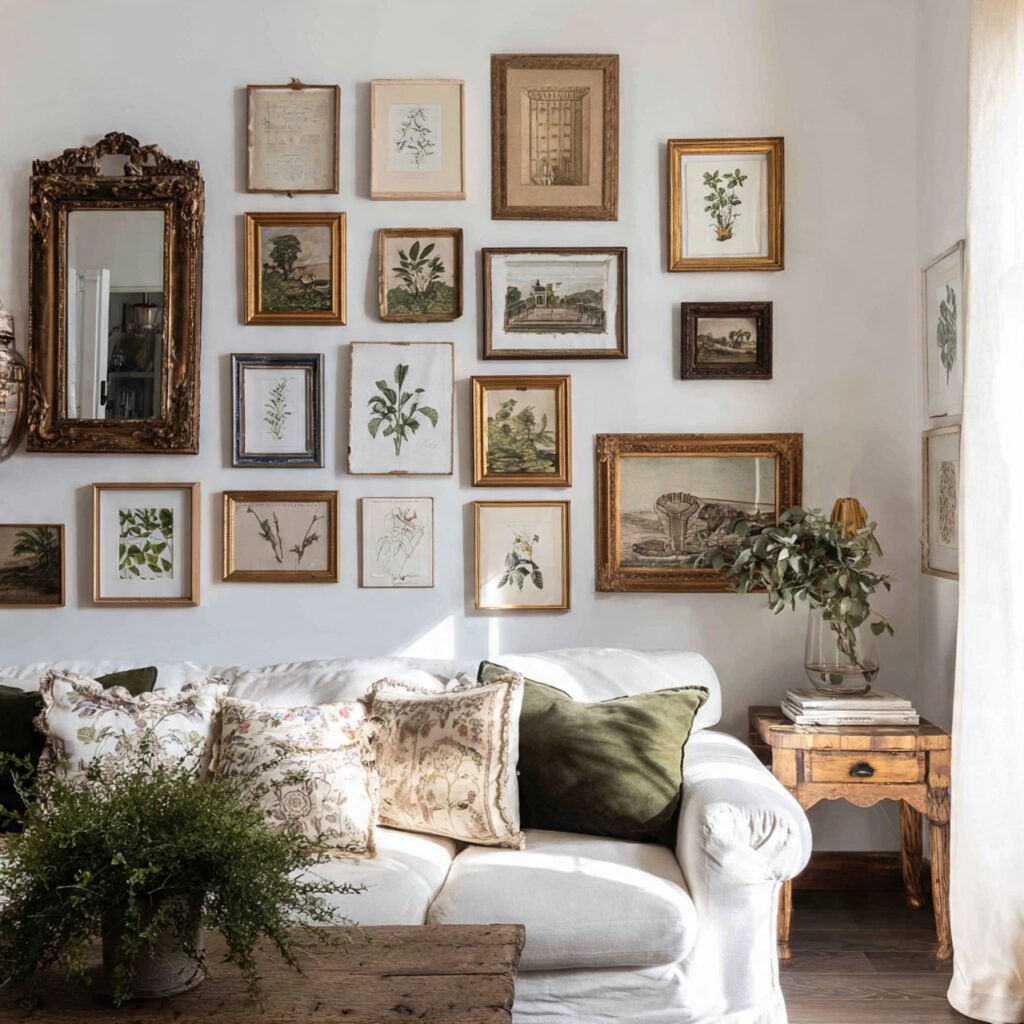
A gallery wall in a French farmhouse living room looks best when it feels collected rather than curated. Mix framed botanical prints with small oil paintings, a piece of antique sheet music, a black and white photograph, and maybe a small mirror. The frames don’t need to match — aged gold, worn black, and natural wood all work together.
Hang pieces at varying heights and let the spacing be slightly irregular. The goal is a wall that looks like it grew over time, not one that was planned in an afternoon.
Candlelight and Lantern Styling
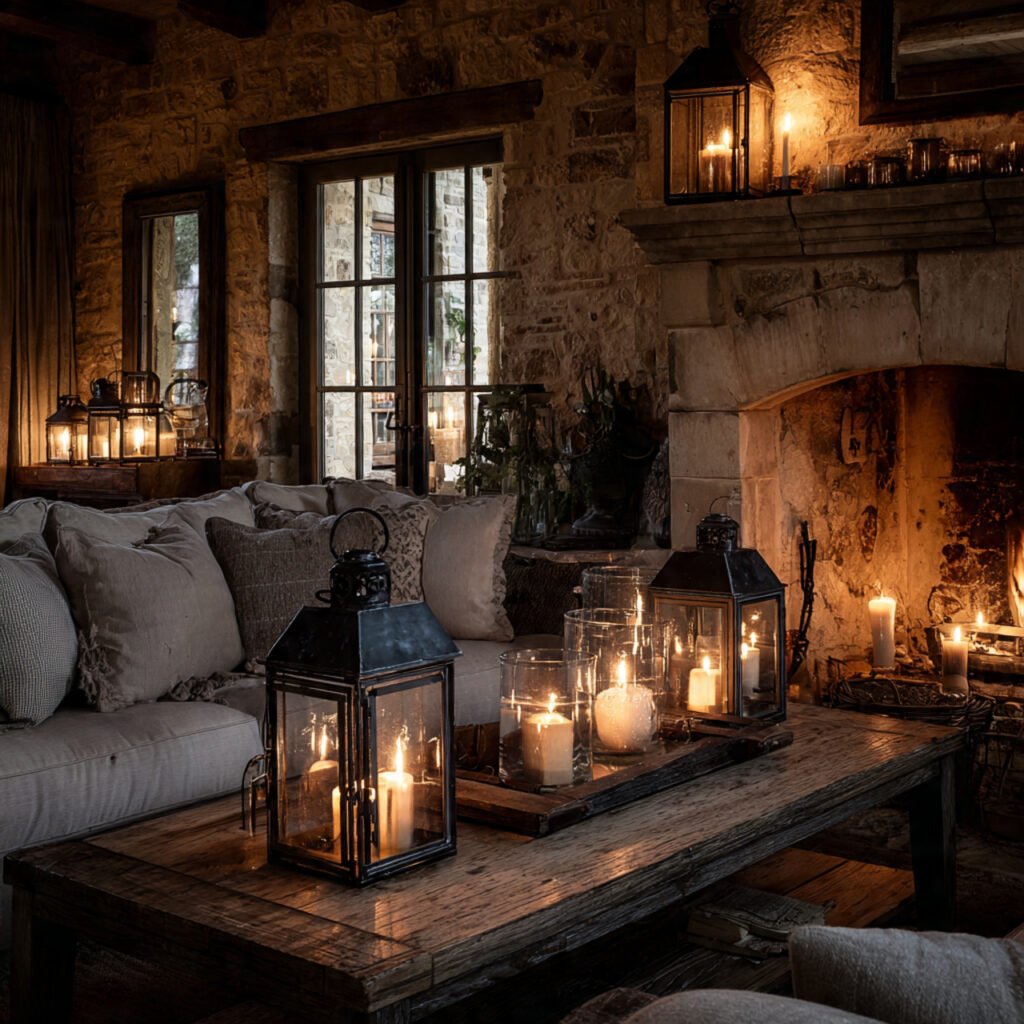
Candlelight is irreplaceable in a French farmhouse living room. No electrical light source recreates the warmth and movement of a real flame. Pillar candles on a mantle, taper candles in iron holders, lanterns on a coffee table — any of these adds an evening quality to a room that overhead lighting simply can’t achieve.
Old iron lanterns, whether hung or placed on surfaces, hold candles beautifully and add to the overall aesthetic even when unlit. During the day they’re decorative objects. After dark they become the atmosphere.
Muted Sage and Dusty Blue Color Pairings
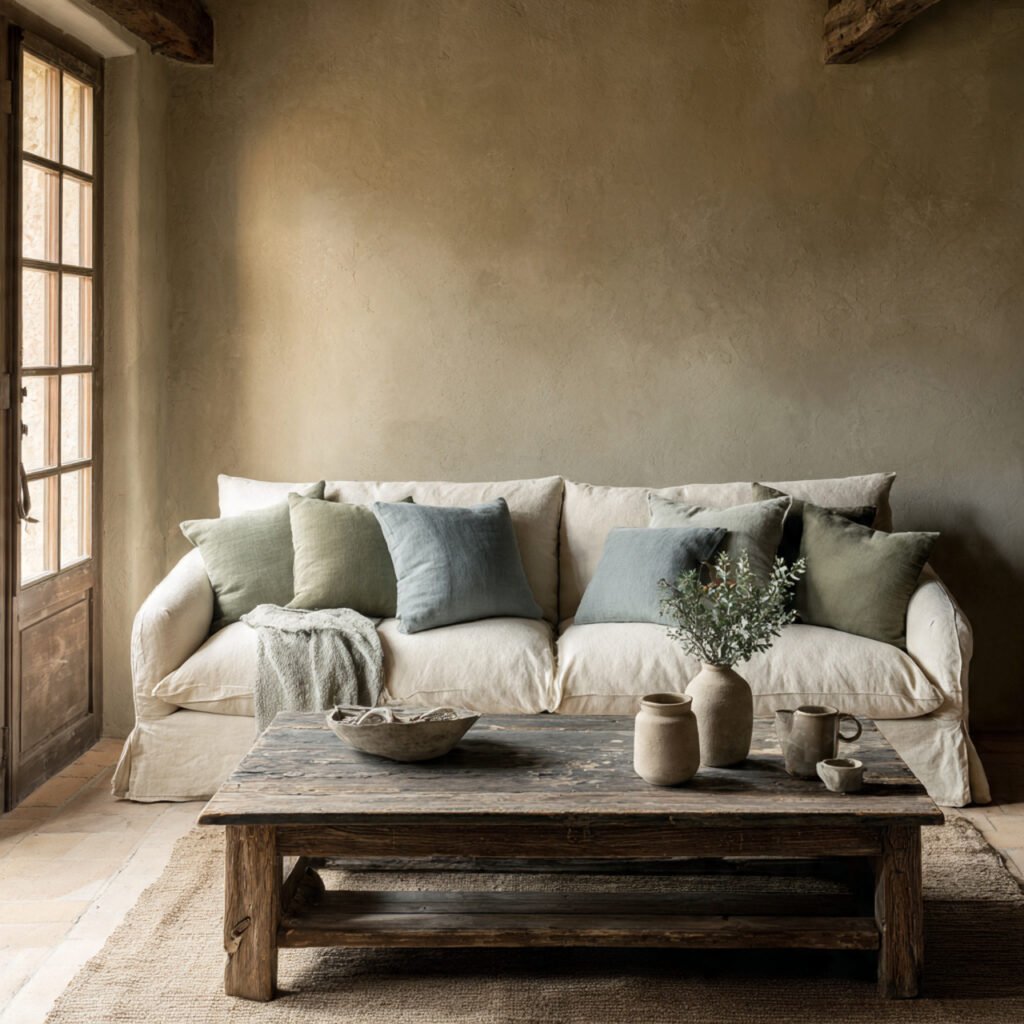
Soft sage green and dusty blue are the two accent colors most associated with French farmhouse style. Neither is bright or saturated — they’re the tones you’d find on weathered shutters, faded garden furniture, or old painted pottery. Used together, or separately against a neutral base, they bring just enough color to a room without disrupting its quiet character.
The best way to bring these colors in is through fabric — cushion covers, a throw, a single upholstered chair. Paint can work too, but keep it to a single wall or a piece of furniture rather than the whole room.
FAQs About French Farmhouse Living Room Ideas
What colors work best in a French farmhouse living room?
Warm neutrals form the foundation — creamy whites, soft beiges, warm taupes, and sandy naturals. Accent colors like muted sage, dusty blue, and faded terracotta appear in fabric and smaller decorative pieces. The overall palette should feel sun-warmed and slightly aged, never stark or cool. Avoiding bright whites and sharp contrasts keeps the room feeling settled and authentically farmhouse in character.
How do I mix old and new pieces in a French farmhouse living room?
The key is letting older pieces set the tone while newer ones fill in around them. Start with one or two genuinely vintage or antique items — a found market piece, an inherited chair, an old mirror — and build the rest of the room around their character. New pieces work best when they have natural materials, simple lines, and matte finishes that don’t draw attention to their newness.
What fabrics are most authentic to French farmhouse design?
Linen is the most authentic fabric, used for upholstery, curtains, cushion covers, and throws. Natural cotton canvas, worn velvet in muted tones, and toile de Jouy are also strongly associated with this style. The common thread is natural fiber and a slightly worn or lived-in quality. Avoid anything synthetic, shiny, or overly structured — those textures belong to a different aesthetic entirely.
Can a small living room pull off the French farmhouse look?
A smaller room actually suits this style well, because French farmhouse interiors are meant to feel intimate and cozy rather than grand or open. Keep the furniture count low, choose pieces with legs rather than those that sit directly on the floor, and use linen curtains hung high to create the impression of height. A single large antique mirror can make a small room feel considerably larger while adding the right kind of character.
What is the difference between French farmhouse and shabby chic style?
Both styles share a love of worn finishes, soft colors, and vintage pieces, but they go in different directions from there. Shabby chic tends toward the overtly feminine — lots of florals, distressed white paint, and a deliberately romantic quality. French farmhouse is more grounded and earthy, with stone, iron, linen, and reclaimed wood playing a larger role. It feels more rural and honest, less deliberately pretty than shabby chic.
Conclusion
French farmhouse living room style rewards patience and a genuine curiosity about old things. The best versions of this look aren’t assembled quickly — they grow through careful choices, market finds, inherited pieces, and a willingness to leave space for the room to breathe. There are no strict rules here, only a general direction toward warmth, texture, and quiet character.
If you take anything from these ideas, let it be this: the rooms that carry this aesthetic most convincingly are the ones where the homeowner made personal choices rather than following a formula. Use these ideas as a starting point, then trust your own eye. The French farmhouse living room you build will be far more interesting for it.